What Is an HO6 Insurance Policy? A Condo Owner's Guide to Coverage, Gaps, and Claims
By: Shoreline Public Adjusters
Updated: March 2026 · 9 min read
In This Post:
- What an HO6 Insurance Policy Covers
- The Six Coverage Components of an HO6 Policy
- How Much HO6 Coverage Do You Actually Need
- Where HO6 Claims Go Wrong
- How Insurers Underpay HO6 Condo Claims
- Real Outcome: Naples Condo Unit After Water Damage
- Common Mistakes Condo Owners Make With HO6 Insurance
- Frequently Asked Questions About HO6 Insurance Policies
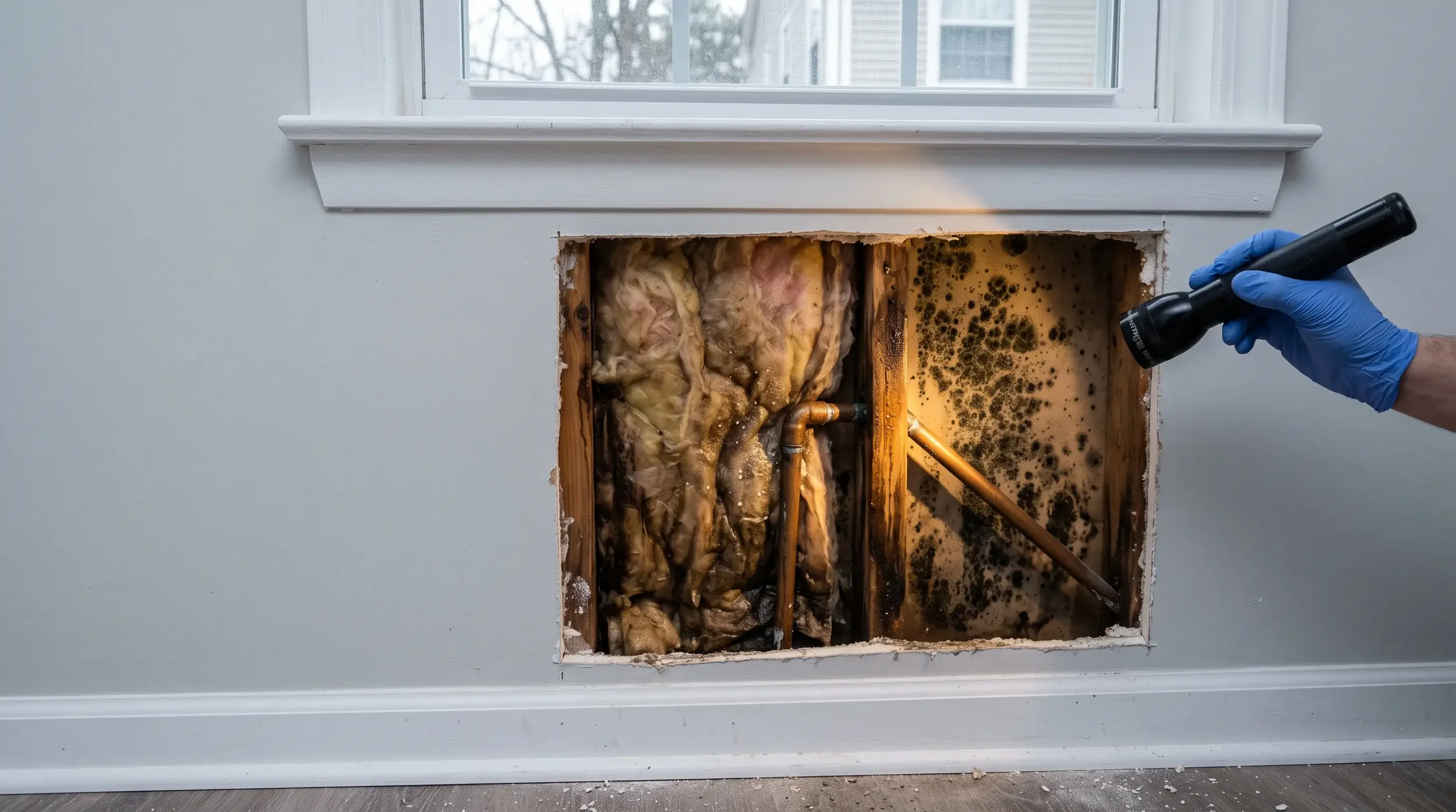
A condo owner in Naples filed an HO6 claim after a pipe burst in the unit above flooded her kitchen and living room. Hardwood floors buckled, kitchen cabinets swelled, drywall absorbed water up to three feet, and mold was visible within 72 hours.
Her interior damage totaled $31,400. Her HO6 policy had a dwelling coverage limit of $15,000 — barely enough to cover the flooring alone. The insurer paid $4,200 after depreciation and the deductible.
She didn't know her dwelling coverage was set too low until the adjuster's estimate arrived. By then, the gap between what she owed and what the policy would pay was $27,200 — her problem entirely.
Why Every Condo Owner Needs to Understand Their HO6 Policy
I spent over a decade in enterprise risk management, watching how organizations structure insurance programs to eliminate coverage gaps before a loss event forces them to discover one. The same principle applies to condo owners — but almost none of them do it.
Your HO6 insurance policy is your individual coverage as a condo unit owner. It covers your unit's interior, your personal belongings, your liability, and the gaps your association's master policy doesn't fill.
What none of the insurer-written guides tell you is how often HO6 claims are underpaid, why most condo owners carry dangerously low limits, and what happens when the insurer applies depreciation to your interior finishes after a covered loss.
What an HO6 Insurance Policy Covers
An HO6 insurance policy — also called condo insurance or condo unit owner's insurance — covers the interior of your condominium unit, your personal property, and your personal liability. It fills the gaps between what your condo association's master policy covers and what you're responsible for as a unit owner.
The HO6 is one of the standard homeowners policy forms established by the Insurance Services Office (ISO). It's specifically designed for condominium and co-op unit owners — not single-family homeowners (who carry an HO3) or renters (who carry an HO4).
⚠️ What Insurers Won't Tell You: Most HO6 policies are sold with default dwelling coverage limits of $15,000–$25,000. Under a bare walls-in master policy — the most common type in Florida — that limit needs to cover your entire unit interior: flooring, cabinets, countertops, fixtures, drywall finish, appliances, and any upgrades. A full interior rebuild on a 1,200 sq. ft. unit can easily exceed $80,000–$120,000.
The Six Coverage Components of an HO6 Policy
Coverage A — Dwelling (Unit Interior)
This covers the physical interior of your unit: walls, floors, ceilings, built-in cabinets, countertops, fixtures, and appliances. Under a bare walls-in master policy, Coverage A must rebuild everything the master policy doesn't cover — which is essentially your entire living space from the drywall inward.
This is the coverage most condo owners get dangerously wrong. The default limit is almost always too low. If you've upgraded flooring, kitchen finishes, or bathrooms, your Coverage A needs to reflect the replacement cost of those improvements — not what the builder originally installed.
Coverage B — Personal Property
Your furniture, clothing, electronics, jewelry, artwork, and other belongings. The master policy never covers personal property regardless of type. Most owners underestimate the replacement value of their contents by 40–60%.
A useful test: walk through every room and estimate what it would cost to replace everything in it at today's prices. Most condo owners arrive at $50,000–$100,000. Default personal property limits are often $20,000–$30,000.
Coverage C — Personal Liability
Protects you if someone is injured inside your unit or if you accidentally damage someone else's property. Standard limits start at $100,000, but $300,000–$500,000 is recommended. A single slip-and-fall lawsuit can exceed $100,000 in medical costs and legal fees.
Coverage D — Loss of Use (Additional Living Expenses)
If your unit is uninhabitable during repairs after a covered loss, this pays for temporary housing, meals, and related expenses. After a major water damage or fire event, this can run $3,000–$8,000 per month for several months. Standard limits are typically 20–40% of your dwelling coverage.
Coverage E — Loss Assessment
If the association's master policy doesn't fully cover a common-area loss, the board can assess unit owners for the difference. Loss assessment coverage pays your share. Default limits are often $1,000 — far too low.
After a hurricane, the association's wind/hail deductible (often 2–5% of insured building value) gets assessed to unit owners. On a $10 million building, that's $200,000–$500,000 split across all units.
A $1,000 loss assessment limit is meaningless in that scenario. We covered this in detail in our condo association insurance policy guide.
Coverage F — Medical Payments to Others
Covers minor medical expenses for guests injured in your unit, regardless of fault. Limits are typically $1,000–$5,000 per person. This is a goodwill coverage designed to handle small claims without triggering a liability lawsuit.
| Coverage | What It Covers | Typical Default | Recommended Minimum |
|---|---|---|---|
| A — Dwelling | Unit interior, fixtures, upgrades | $15,000–$25,000 | $80,000–$150,000+ |
| B — Personal Property | Furniture, electronics, clothing | $20,000–$30,000 | $50,000–$100,000 |
| C — Liability | Injury/damage lawsuits | $100,000 | $300,000–$500,000 |
| D — Loss of Use | Temporary housing during repairs | 20% of A | 40% of A minimum |
| E — Loss Assessment | Your share of association shortfalls | $1,000 | $25,000–$50,000 |
| F — Medical Payments | Guest injuries (no-fault) | $1,000 | $1,000–$5,000 |
📋 Florida Law: Under Fla. Stat. § 718.111(11), the condo association must provide a certificate of insurance to any unit owner within 30 days of request. Reviewing the master policy's coverage type (bare walls-in, single entity, or all-in) is the only way to set your HO6 limits correctly. Source: Florida Legislature
How Much HO6 Coverage Do You Actually Need
The answer depends entirely on your association's master policy type — and most condo owners don't know which type they have.
Bare walls-in (most common in Florida). You need enough Coverage A to rebuild your entire unit interior at today's prices. Get a replacement cost estimate from a contractor or appraiser. For a standard 1,200 sq. ft. unit with mid-grade finishes, expect $80,000–$120,000. If you've upgraded to granite countertops, hardwood floors, or custom cabinetry, add the improvement differential.
Single entity. Your Coverage A only needs to cover upgrades and improvements beyond original construction. If you haven't remodeled, your exposure is lower — but not zero. Original builder-grade finishes have appreciated in replacement cost since installation.
All-in. The association covers your unit including improvements. Your Coverage A exposure is lowest here, but you still need personal property, liability, loss of use, and loss assessment coverage.
Regardless of master policy type, loss assessment coverage should be $25,000–$50,000 minimum in hurricane-prone areas. In Minnesota, the Common Interest Ownership Act (§ 515B) governs how associations allocate insurance shortfalls to unit owners. This is the single most undervalued line on every HO6 policy we review.

Where HO6 Claims Go Wrong
Most HO6 claims aren't denied outright — they're underpaid. The insurer pays something, but the amount doesn't come close to covering the actual damage. Here's what we see on HO6 claim files that come to Shoreline Public Adjusters.
Dwelling coverage too low to cover the loss. The insurer can only pay up to the Coverage A limit, minus depreciation and the deductible. If the limit is $15,000 and the damage is $45,000, you absorb the $30,000 gap — plus depreciation on the $15,000.
ACV payments without recoverable depreciation. Many HO6 policies pay actual cash value (ACV) first, then release the recoverable depreciation after repairs are completed. If you can't afford to start repairs because the ACV payment is too small, you're stuck. The insurer knows this. It's a feature, not a bug.
Scope disputes on water damage. When water damage originates from a common area, the insurer's adjuster focuses on limiting the scope to what's visible. Moisture in wall cavities, subfloor saturation, and early mold conditions are routinely excluded from the initial estimate. These are the line items that make the difference between a $4,000 payout and a $25,000 payout.
Loss assessment denials. Some HO6 insurers deny loss assessment claims by arguing the assessment wasn't triggered by a "covered cause of loss" under your policy. If the association assessed you for a hurricane deductible shortfall but your HO6 excludes hurricane damage to common areas, the insurer may have a technical argument — even though the assessment itself is a direct financial loss to you.
How Insurers Underpay HO6 Condo Claims
The tactics are the same ones we see on homeowners claims, but they hit harder on HO6 policies because the coverage limits are lower and the margin for error is smaller.
Depreciation applied to items that shouldn't be depreciated. Insurers depreciate flooring, cabinets, and fixtures based on age and condition — even when the damage requires full replacement, not repair. On an HO6 claim, aggressive depreciation on a $40,000 interior can reduce the initial payment to under $20,000.
Failure to include code upgrade costs. When repairs trigger current building code requirements — updated electrical, fire suppression, ADA compliance — the insurer's estimate often omits these. The code upgrade line items can add 10–20% to the claim value.
Ignoring consequential damage. The insurer scopes the visible water stain on the ceiling but ignores the moisture that migrated into the wall cavity, the subfloor beneath the hardwood, and the insulation behind the drywall. Each of these requires remediation. Each is a separate Xactimate line item the insurer's adjuster didn't include.
Real Outcome: Naples Condo Unit After Water Damage
A unit owner in a 36-unit building in Naples called after a second-floor pipe burst sent water cascading into her first-floor unit. The damage was extensive: 800 square feet of hardwood flooring buckled, kitchen cabinets swelled from moisture absorption, drywall was saturated to three feet, and mold growth was visible on the baseboards within 72 hours.
The HO6 insurer sent an adjuster who scoped only the visible damage — the flooring and the ceiling water stain. The estimate was $6,800. After a $2,500 deductible and depreciation, the payment was $4,200. The insurer didn't scope the wall cavity moisture, the subfloor damage, the cabinet replacement, or the mold remediation.
Shoreline Public Adjusters documented the full damage chain with moisture readings, thermal imaging, and a complete Xactimate scope that included every affected surface and material. We also identified that her Coverage A limit of $15,000 was insufficient — but we maximized the claim within the policy limits and separately helped her pursue the association's master policy for the damage originating from the common-area plumbing.
The final HO6 settlement was $14,800 — the policy maximum minus the deductible. The association's master policy paid an additional $23,600 for the plumbing repair and the portion of interior damage attributable to the common-area failure. Total recovery: $38,400 on a loss she was initially told was worth $4,200.
Is your HO6 claim underpaid — or stuck between your policy and the master policy? A free consultation with Shoreline Public Adjusters takes 15 minutes and costs you nothing. We handle both HO6 and master policy claims simultaneously. Contact Us
Common Mistakes Condo Owners Make With HO6 Insurance
1. Keeping the default dwelling coverage limit The default $15,000–$25,000 Coverage A limit is the single most expensive mistake in condo insurance. Under a bare walls-in master policy, your entire unit interior is your responsibility. A full rebuild will exceed the default limit by $50,000–$100,000. What to do instead: Get a replacement cost estimate for your unit interior. Set Coverage A to match.
2. Not knowing the master policy type If you don't know whether your association carries bare walls-in, single entity, or all-in coverage, you can't set your HO6 limits correctly. You're guessing — and guessing wrong costs five figures. What to do instead: Request a certificate of insurance from your board. In Florida, they must provide it within 30 days under § 718.111.
3. Ignoring loss assessment coverage The default $1,000 limit won't cover your share of a hurricane deductible shortfall, a building-wide remediation assessment, or a liability judgment against the association. Increasing to $25,000–$50,000 costs a few dollars per month in premium. What to do instead: Increase loss assessment to $25,000 minimum. $50,000 if you're in a hurricane zone.
4. Filing under the wrong policy first Filing your HO6 claim for damage the master policy should cover — or vice versa — delays everything and gives both insurers grounds to deflect. We see this on nearly every condo water damage claim we handle. What to do instead: Identify the damage origin before filing. If damage crosses the boundary, file both claims simultaneously.
5. Not documenting unit improvements If you've upgraded your unit beyond original construction, your HO6 dwelling coverage needs to reflect the improvement value. Without receipts and photos, the insurer pays for builder-grade replacements — not your granite and custom tile. What to do instead: Keep receipts and photos of all renovations. Update your HO6 after every major improvement.
Frequently Asked Questions About HO6 Insurance Policies
What is an HO6 insurance policy?
An HO6 insurance policy is a homeowners insurance policy designed for condominium and co-op unit owners. It covers the interior of your unit, your personal property, personal liability, loss of use, and loss assessments from the association. It fills the gaps your condo association's master policy doesn't cover.
What does an HO6 policy cover that the master policy doesn't?
The HO6 covers your unit's interior finishes (under bare walls-in), personal belongings, personal liability, temporary living expenses if your unit is uninhabitable, and your share of association loss assessments. The master policy covers the building structure and common areas.
How much HO6 dwelling coverage do I need?
Under a bare walls-in master policy, you need enough to rebuild your entire unit interior — typically $80,000–$150,000+ depending on unit size and finish quality. Under single entity, you only need to cover upgrades beyond original construction. A public adjuster can help you assess whether your current limits match your actual exposure.
Is HO6 insurance required for condo owners?
Most mortgage lenders require HO6 insurance as a condition of the loan. Some condo associations also require it in their bylaws or CC&Rs. Even without a requirement, carrying HO6 insurance is the only way to protect your unit interior and personal property from loss.
What is loss assessment coverage on an HO6 policy?
Loss assessment coverage pays your share when the condo association assesses unit owners for a common-area loss that exceeds the master policy's coverage. Default limits of $1,000 are dangerously low — increase to at least $25,000–$50,000, especially in hurricane-prone states.
Can a public adjuster help with an HO6 insurance claim?
Yes. A public adjuster reviews your HO6 policy, documents the full scope of damage (including hidden moisture and mold), identifies line items the insurer's estimate missed, and negotiates a higher settlement. On condo claims that cross the master policy boundary, a PA can file both claims simultaneously.
If your HO6 claim came back too low — or if you're caught between your policy and the association's master policy, that's exactly the situation Shoreline Public Adjusters resolves every week. We represent condo unit owners across Florida, Minnesota, and Wisconsin. We don't collect a fee unless you do, and insurance claims have deadlines. Contact Us
You may also find these helpful:
- What Does a Condo Association Insurance Policy Cover?
- What Is the Rule of Thumb for Condo Insurance?
- HOA Insurance Claim Support
Shoreline Public Adjusters, LLC is licensed in Florida (FL G199012), Minnesota (MN 40962416), and Wisconsin (WI 21156868).
Shoreline Public Adjusters, LLC
780 Fifth Avenue South
Suite #200
Naples, FL 34102
Email: hello@teamshoreline.com
Phone: 954-546-1899
Fax: 239-778-9889