Why Is My Basement Flooding? The Cause Determines Whether Insurance Pays — and How Much
By: Shoreline Public Adjusters
Updated: April 2026 · 7 min read
In This Post:
- The Cause Determines Everything
- Water Sources Your Homeowner's Policy Covers
- Water Sources Your Policy Does NOT Cover
- The Sewer Backup Endorsement Most Homeowners Don't Have
- What the Insurer Gets Wrong on Basement Water Claims
- How a Woodbury Homeowner Turned a Denial Into a $27,500 Settlement
- Mistakes That Kill Basement Flooding Claims
- Frequently Asked Questions About Basement Flooding and Insurance
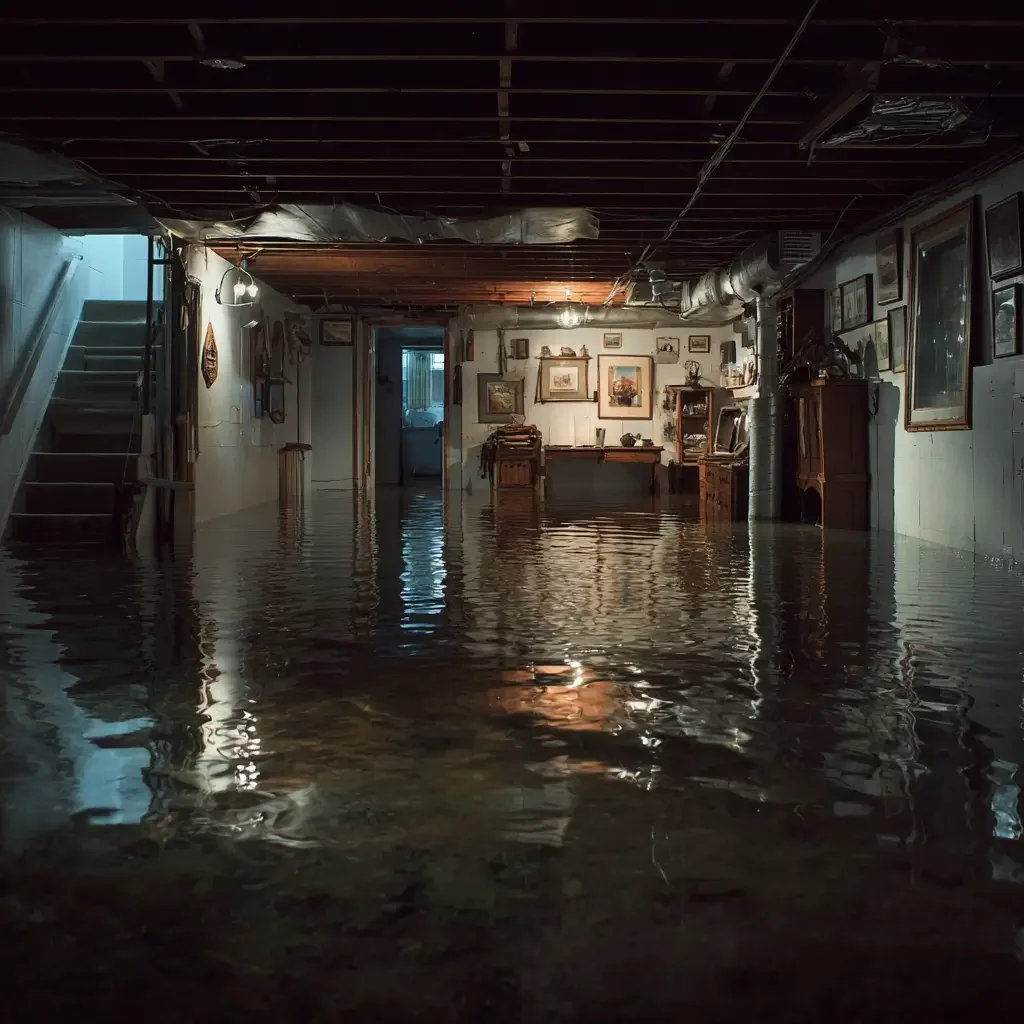
You're standing in two inches of water. The carpet is soaked. The drywall is wicking moisture up the wall.
Your first call is probably your insurance company.
Before you make that call, stop and identify where the water is coming from. That single detail — the source — determines whether your insurance covers the damage, partially covers it, or denies the claim entirely.
The Cause Determines Everything
Every basement flooding claim comes down to one question: where did the water originate?
I spent over a decade in enterprise risk management before becoming a licensed public adjuster. What I've seen in hundreds of water damage claim files is that insurers use the source classification to control the outcome. If they can classify your water damage as an excluded peril — flood, groundwater, maintenance neglect — the claim dies before it starts.
The distinction matters because a burst supply line and a rainstorm can produce identical damage. Same water on the same floor. But one is a covered peril and the other isn't.
Shoreline Public Adjusters helps policyholders in Minnesota, Wisconsin, and Florida prove what actually caused the damage — and fight the classification when the insurer gets it wrong.
⚠️ What Insurers Won't Tell You: When multiple water sources contribute to basement flooding — a sump pump failure during heavy rain, for example — the insurer will classify the damage under the excluded peril, not the covered one. A public adjuster's job is to separate the damage by cause and recover what the policy actually owes.
Water Sources Your Homeowner's Policy Covers
Standard HO-3 homeowner's policies cover sudden and accidental water damage from internal sources. These are the most common covered causes of basement flooding:
Burst or frozen pipes. A supply line that ruptures or a pipe that freezes and cracks during a Minnesota winter is a covered peril. The key word is "sudden" — the failure has to be a discrete event, not a slow leak that developed over months.
Appliance failures. A washing machine supply hose that blows, a water heater that ruptures, or a dishwasher that overflows — all covered as sudden and accidental.
Plumbing system failures. A toilet overflow, a failed shut-off valve, or a supply line connection that gives way. Covered if the failure is sudden and you didn't know about a pre-existing problem.
Accidental overflow. A bathtub or sink left running that floods the floor below. Covered under most policies as accidental discharge.
The coverage includes the water itself and the resulting damage — drywall, flooring, baseboards, insulation, contents, and mold remediation if the water was not cleaned up promptly.
Water Sources Your Policy Does NOT Cover
This is where most basement flooding claims get denied. Standard homeowner's policies exclude these water sources:
Surface water and groundwater. Rain that pools against your foundation and seeps through cracks, rising water tables, snowmelt runoff, and overland flooding are all excluded. If the water came from outside and entered at or below ground level, your HO-3 policy won't cover it.
Sewer and drain backup (without endorsement). If water backs up through your floor drain, toilet, or sewer line, it's excluded from standard coverage. This is one of the most common causes of basement flooding in the Midwest — and one of the most commonly uninsured.
Gradual seepage and maintenance failures. Water that's been leaking slowly through foundation cracks, a chronically damp basement, or moisture intrusion from poor grading or gutter drainage. Insurers classify these as maintenance issues, not insurable events.
Flood. The federal definition of flood — rising water from any external source — is specifically excluded from homeowner's policies. Only a separate NFIP flood policy covers flood damage, and even then, basement coverage is limited to specific items like furnaces, water heaters, and cleanup costs.
📋 Key Distinction: The word "flood" in insurance doesn't mean any water on the floor. It means rising water from an external source. A burst pipe that floods your basement is not a "flood" under your policy — it's a covered water damage event. Insurers sometimes use the word loosely to deny claims that should be covered. Don't accept that framing.
The Sewer Backup Endorsement Most Homeowners Don't Have
Sewer and drain backup is one of the top causes of basement flooding in Minnesota and Wisconsin. Aging municipal sewer systems, heavy spring rains, and tree root infiltration all contribute to backup events.
The fix is a sewer backup endorsement — a rider on your homeowner's policy that specifically covers water that enters through drains, toilets, or sewer lines. It's inexpensive (typically $40–$75 per year) and covers a gap that affects thousands of Midwest homeowners every spring.
If you don't have this endorsement and your basement floods from a drain backup, the claim is denied. Period.
If you do have it, the endorsement typically has its own sublimit — often $5,000 to $25,000 — which is separate from your main dwelling coverage. Know what your sublimit is before you need it.
Check your declarations page for "sewer backup," "water backup," or "sump pump overflow" language. If it's not there, call your agent before the next storm.
What the Insurer Gets Wrong on Basement Water Claims
Even when the cause is clearly covered, insurers routinely underpay basement water damage claims. Here's how.
1. They scope only what's visible. The adjuster sees wet carpet and damaged drywall in the room where the water entered. But water travels. It wicks behind walls, spreads under flooring, and saturates insulation in adjacent rooms. If the adjuster didn't pull baseboards or use a moisture meter on surrounding walls, the scope is incomplete.
2. They skip contents. Furniture, stored items, electronics, personal property in a finished basement — these are covered under your contents coverage (Coverage C). Many adjusters focus only on the structure and never ask what was damaged or destroyed.
3. They deny mold remediation. If water sits for more than 48 hours, mold protocols are necessary. Insurers either deny the mold claim entirely or argue that it's a "maintenance" issue. Under Minn. Stat. § 72A.201, the insurer is required to investigate promptly and settle based on the actual condition of the property. If they delayed the investigation and mold developed during the delay, the mold is their problem.
4. They misclassify the source. This is the most damaging tactic. A sump pump mechanical failure during a rainstorm becomes "surface water flooding." A sudden pipe failure becomes "gradual seepage from deferred maintenance." The insurer reclassifies the peril to move it from covered to excluded — and the homeowner doesn't have the documentation to challenge it.
A licensed public adjuster documents the actual water source, tests moisture levels in every affected area, and builds the scope the insurer should have written in the first place.
How a Woodbury Homeowner Turned a Denial Into a $27,500 Settlement
A homeowner in Woodbury, Minnesota came home from work to find three inches of water in their finished basement. The washing machine's braided steel supply line had failed — a clean, sudden break with water spraying until someone shut the main valve off.
The insurer accepted the cause as a covered peril but scoped the damage at $8,200: water extraction, carpet removal and replacement in the laundry room, and drywall repair on two walls.
We inspected and found that water had spread far beyond the laundry room. Moisture readings showed saturation behind walls in the adjacent family room, the storage room, and the hallway. The subfloor under the laminate flooring had swelled.
Baseboards in three rooms were destroyed. Stored contents — furniture, clothing, holiday decorations, electronics — totaled over $6,000 in documented losses.
The insurer had also denied mold remediation. Our inspection, conducted 72 hours after the loss, showed early mold indicators on the back side of drywall in two rooms. The claim required antimicrobial treatment and controlled drying under IICRC S520 standards.
After submitting a corrected scope with Xactimate pricing, contents inventory, and moisture documentation, the claim settled at $27,500 — more than three times the insurer's original estimate.
The homeowner paid nothing upfront. Shoreline Public Adjusters works on contingency.
Is your basement underwater right now — or dealing with a claim that doesn't match the damage? A free consultation with Shoreline takes 15 minutes and costs you nothing. Contact Us
Mistakes That Kill Basement Flooding Claims
1. Cleaning up before documenting Your first instinct is to start mopping. But every photo you don't take is evidence you can't use. Document the water level, the source, the spread pattern, and every damaged item before you touch anything. What to do instead: Take photos and video from every angle first. Then start mitigation.
2. Telling the insurer "my basement flooded" The word "flood" has a specific legal meaning in insurance — rising water from an external source. If your basement has water from a burst pipe, it's water damage, not a flood. Using the wrong word can trigger an automatic denial. What to do instead: Describe the source specifically. "A supply line failed" or "water backed up through the floor drain."
3. Not checking for a sewer backup endorsement before filing If drain backup caused the flooding and you don't have the endorsement, the claim will be denied. Know your coverage before you file so you can plan accordingly. What to do instead: Read your declarations page. Look for "sewer backup," "water backup," or "sump discharge" language.
4. Accepting a scope that only covers one room Water doesn't stay in one room. If the adjuster didn't test moisture in adjacent spaces, the scope is wrong. What to do instead: Ask for moisture meter readings on every wall within 20 feet of the water source. If the adjuster didn't do it, a public adjuster in Minnesota will.
Frequently Asked Questions About Basement Flooding and Insurance
Does homeowner's insurance cover basement flooding?
It depends on the cause. Sudden internal sources like burst pipes and appliance failures are covered. External sources like rain, groundwater, sewer backup (without an endorsement), and gradual seepage are not.
The water source — not the amount of damage — determines coverage.
Will insurance pay for a flooded basement from heavy rain?
No. Standard homeowner's policies exclude surface water, groundwater, and flooding from external sources. You need a separate flood insurance policy through the NFIP, and even then, basement coverage is limited to specific items and cleanup.
What is a sewer backup endorsement and do I need one?
A sewer backup endorsement covers water that enters through drains, toilets, or sewer lines — a common cause of basement flooding in the Midwest. It typically costs $40–$75 per year and has its own sublimit. If you have a basement, you need this endorsement.
How much does it cost to fix a flooded basement?
Minor flooding with quick cleanup runs $1,500 to $3,000. Moderate damage with drywall and flooring replacement costs $3,000 to $10,000. Severe flooding requiring full remediation, mold treatment, and contents replacement can exceed $15,000.
A public adjuster ensures every cost is documented and included in the claim.
What should I do immediately when my basement floods?
Identify the water source and stop it if possible. Document everything with photos and video before cleanup. Avoid using the word "flood" when you call the insurer — describe the specific cause.
Start water extraction to prevent mold growth, but don't make permanent repairs until the claim is documented.
If you're dealing with basement water damage — whether the claim was denied, underpaid, or you're not sure what your policy covers — that's where we start. Shoreline Public Adjusters works exclusively for policyholders, and we don't collect a fee unless you do.
Water damage claims have tight timelines. Mold can develop within 48 hours. Contact us for a free consultation.
You may also find these helpful:
- Water Damage vs. Flood Insurance Claims: Know the Difference
- What to Do When Your Insurance Denies a Water Damage Claim
- Does HOA Insurance Cover Water Damage?
Shoreline Public Adjusters, LLC is licensed in Florida (FL G199012), Minnesota (MN 40962416), and Wisconsin (WI 21156868).
Shoreline Public Adjusters, LLCEmail: hello@teamshoreline.com
Phone: 954-546-1899
Fax: 239-778-9889