What Kind of Insurance Do You Need for a Condo in Florida? A Claims-Side Guide

By: Shoreline Public Adjusters
Updated: March 2026 · 10 min read
In This Post:
- What Florida Law Requires for Condo Insurance
- Your Association's Master Policy: What It Covers and What It Doesn't
- The HO6 Policy: What Every Florida Condo Owner Needs
- Coverage A: How Much Dwelling Coverage for a Florida Condo
- Flood Insurance: The Gap Most Florida Condo Owners Miss
- What Happens When You File a Florida Condo Insurance Claim
- Real Outcome: Naples Condo Owner After a Pipe Burst
- Common Condo Insurance Mistakes Florida Owners Make
- Frequently Asked Questions About Florida Condo Insurance
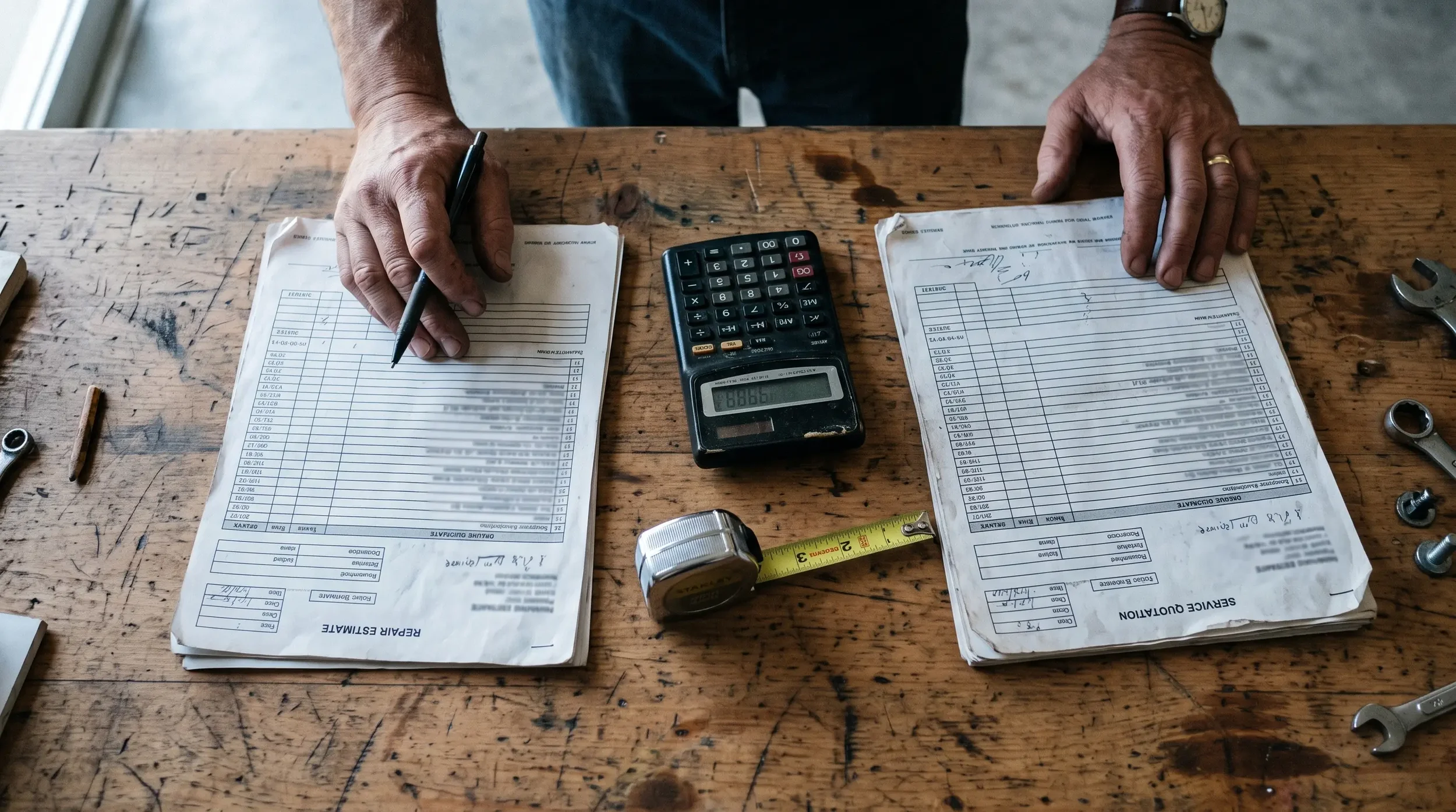
The insurer's estimate was $8,400. The actual repair cost was $47,000. The difference wasn't a dispute about damage — it was a condo owner in Naples who didn't understand where her association's master policy ended and where her HO6 policy began.
Every article on page one of Google about condo insurance in Florida will tell you what an HO6 policy is. None of them will tell you what happens when you file a claim on one — or why Florida condo owners lose more money to coverage gaps and insurer underpayment than to the damage itself.
What Florida Law Requires for Condo Insurance
I spent over a decade in enterprise risk management before becoming a licensed public adjuster in Florida. What I see consistently on Florida condo claims is that owners buy what their insurer recommends — and that recommendation is designed around premium efficiency, not claim adequacy.
Here's what Florida law actually requires. Under Fla. Stat. § 718.111(11), the condo association must maintain property insurance on the common elements, the association property, and — depending on the master policy type — portions of the individual units. The association must also carry commercial general liability with minimum limits.
For individual unit owners, Florida law does not mandate HO6 coverage by statute. But your association's declaration of condominium almost certainly requires it, and any mortgage lender will require it as a condition of the loan. The practical reality: every Florida condo owner needs an HO6 policy.
📋 Florida Law: Under Fla. Stat. § 718.111(11), condo associations must carry property insurance on common elements and maintain minimum loss assessment coverage of $2,000 per unit owner with a maximum deductible of $250. As of 2024, HB 913 requires associations to obtain appraisals of insured property at least every 36 months. Source: Florida Legislature
Your Association's Master Policy: What It Covers and What It Doesn't
The master policy is the single most important variable in determining what insurance you need for your Florida condo. Every coverage decision flows from it. Most Florida condo owners have never read it.
There are three types of master policies, and the type your association carries determines how much of your unit interior you're responsible for insuring.
Bare walls-in is the most common master policy type in Florida. It covers the building structure — exterior walls, roof, common hallways, elevators, pool areas — and nothing inside your unit. From the drywall inward, everything is your responsibility: flooring, cabinets, countertops, fixtures, appliances, plumbing fixtures, electrical fixtures, and every improvement you've ever made.
Single entity covers the building structure plus original interior finishes as built by the developer. Your HO6 only needs to cover improvements and upgrades beyond builder-grade. If you've renovated, the upgrade differential is your exposure.
All-in covers the building, original finishes, and unit owner improvements. Your interior exposure is minimal — but you still need personal property, liability, and loss assessment coverage.
We've written a detailed breakdown of what condo association insurance policies cover and where the coverage boundaries fall under each type. If you haven't read your master policy, start there.
⚠️ What Insurers Won't Tell You: Under Florida law, your association must provide you with a certificate of insurance within 30 days of your written request. If you don't know your master policy type, you don't know what insurance you need — and your insurer isn't required to find out for you before selling you a policy.
The HO6 Policy: What Every Florida Condo Owner Needs
An HO6 policy is the standard insurance policy for condo unit owners. It covers what the master policy doesn't — your interior, your belongings, your liability, and several supplemental coverages that most owners don't examine until a claim.
Here's what an HO6 includes and what you should actually carry in Florida:
| Coverage | What It Pays For | Default Limit | Recommended (FL) |
|---|---|---|---|
| A — Dwelling | Interior rebuild (drywall in) | $15,000–$25,000 | $80,000–$150,000 (bare walls-in) |
| B — Personal Property | Furniture, electronics, clothing | $20,000–$30,000 | $50,000–$100,000 |
| C — Liability | Injury/damage to others in your unit | $100,000 | $300,000–$500,000 |
| D — Loss of Use | Living expenses if unit is uninhabitable | 20% of A | Sufficient for 6–12 months |
| E — Loss Assessment | Your share of association shortfalls | $1,000 | $25,000–$50,000 |
| F — Medical Payments | Guest injury, no-fault basis | $1,000 | $5,000 |
The gap between default limits and recommended limits is where Florida condo owners lose the most money on claims. An insurer selling a policy with $20,000 in Coverage A to a unit owner under a bare walls-in master policy is selling a coverage gap — and they know it.
Coverage A: How Much Dwelling Coverage for a Florida Condo
Dwelling coverage is where the money is lost or saved on every Florida condo claim. The rule of thumb for condo insurance that most articles cite — 20% of your unit's market value — has no connection to what it costs to rebuild your interior.
Under a bare walls-in master policy, your Coverage A must be enough to rebuild your entire unit interior from the studs inward. In Florida's current construction market, that means:
$65–$120 per square foot for interior rebuild, depending on the county and finish quality. A 1,200 sq. ft. unit in Naples with mid-grade finishes runs approximately $85/sq ft — putting the Coverage A minimum at $102,000 before upgrades.
A 1,500 sq. ft. unit in Tampa with upgraded kitchen and bathrooms could require $130,000–$160,000 in Coverage A.
If the insurer sold you a policy with $20,000 in Coverage A, the first $80,000+ of your next claim is coming out of your pocket.
After renovations, update your policy. If you replaced laminate with hardwood, installed quartz countertops, or upgraded your bathrooms, your Coverage A needs to reflect replacement cost of those improvements — not the originals. Without documentation, the insurer pays for builder-grade materials on the claim.
Flood Insurance: The Gap Most Florida Condo Owners Miss
Your HO6 policy does not cover flood damage. Neither does your association's master policy for your unit interior. Flood requires a separate policy — either through the National Flood Insurance Program (NFIP) or a private flood insurer.
In Florida, this matters more than almost any other state. Over 35% of NFIP flood claims nationally come from Florida. Storm surge, heavy rainfall flooding, and rising water tables affect condo buildings at every elevation.
If your condo is in a FEMA-designated flood zone (A or V zones), your mortgage lender requires flood insurance. But even in X zones (minimal flood risk), flood events happen. The 2022 Hurricane Ian flooding damaged thousands of properties outside designated flood zones.
Association flood coverage does not replace unit owner flood coverage. The association's flood policy covers common elements and potentially the building structure. Your unit interior — flooring, drywall, cabinets, personal property — requires your own flood policy.
Flood insurance through NFIP covers up to $250,000 in building property and $100,000 in contents for residential condo units. Private flood insurers may offer higher limits.
The cost in Florida ranges from $500–$3,000+ annually depending on zone, elevation, and building construction. You can check your property's flood zone designation through FEMA's flood map service.
What Happens When You File a Florida Condo Insurance Claim
This is the section no insurance website, law firm, or aggregator writes — because they've never sat across from an insurer's adjuster on a Florida condo claim.
Here's what actually happens when you file a claim on your HO6 in Florida.
The insurer sends their adjuster. That adjuster works for the insurer. Their job is to document the damage within the scope the insurer considers covered and generate an estimate that reflects the insurer's cost assumptions — not yours. On condo claims, the scope issue is critical because the adjuster must determine what falls under your HO6 and what falls under the master policy.
The scope fight. The most common dispute on Florida condo claims isn't the dollar amount — it's scope. The insurer's adjuster will try to push damage categories to the master policy side, and the association's insurer will push them back to your HO6 side. If you're not actively managing both claims simultaneously, you get caught in the middle with neither insurer paying for the disputed items.
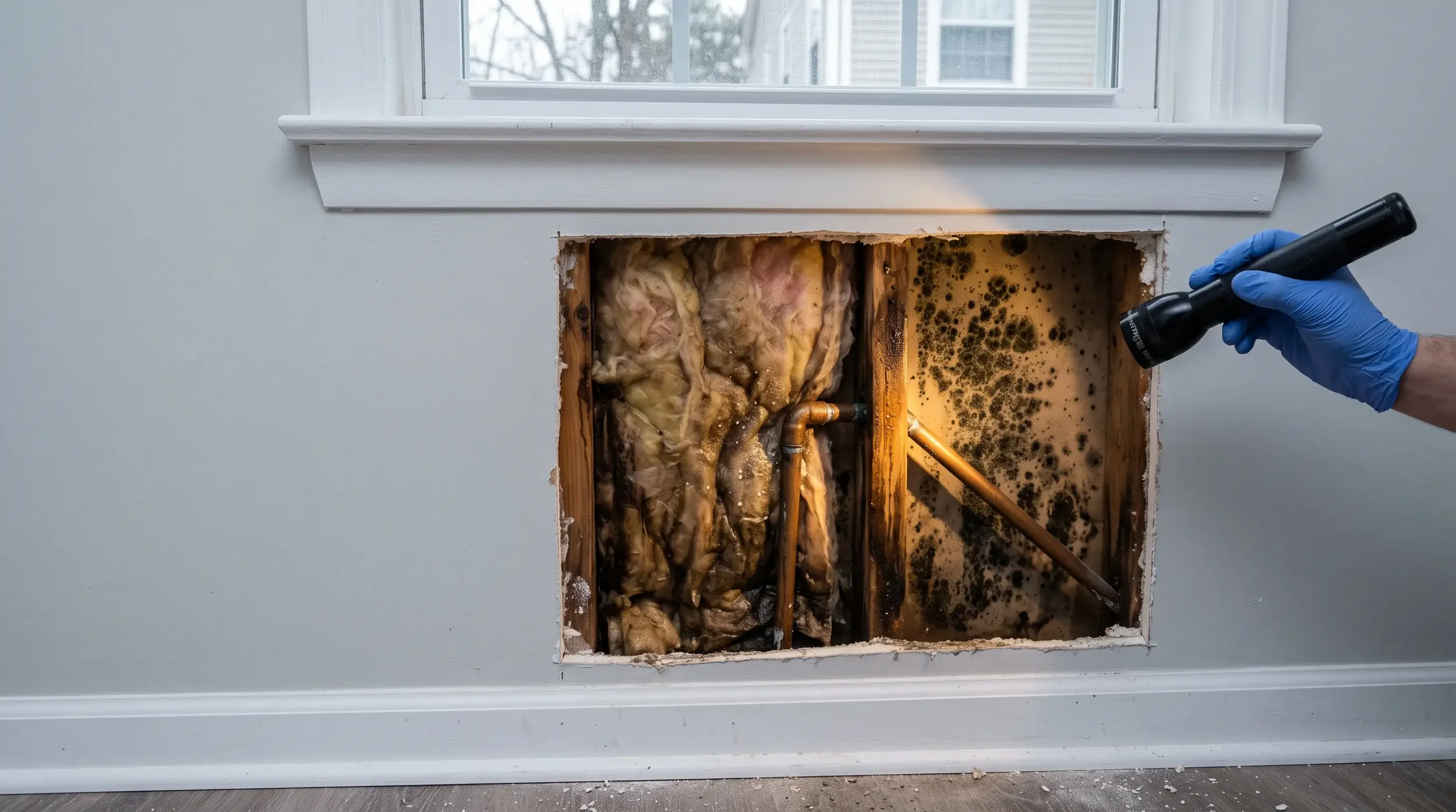
What gets missed. On water damage claims — the most common condo claim type — insurers routinely underscope by omitting: moisture behind walls that isn't visible, subfloor damage beneath surface flooring, mold remediation that develops after the initial event, code upgrade costs required by current Florida building code, and HVAC cleaning when water enters the air handling system. When the water came from another unit or a common element, whether the HOA is responsible for the water damage depends on the cause as much as the damage.
Depreciation on ACV policies. If your HO6 is actual cash value rather than replacement cost, the insurer deducts depreciation from every item. A 10-year-old kitchen that costs $35,000 to replace may net you $12,000 after depreciation. Always carry replacement cost coverage.
Real Outcome: Naples Condo Owner After a Pipe Burst
A condo owner in a 36-unit building near downtown Naples called Shoreline Public Adjusters after a second-floor supply line failed and flooded her first-floor unit. Water saturated 600 sq. ft. of engineered hardwood, damaged the kitchen island base cabinets, and wicked up the drywall on two walls.
Her HO6 insurer sent an adjuster who scoped the visible flooring and one wall of drywall. The estimate: $8,400. After the deductible, the payment was $6,900.
Shoreline documented the full damage with moisture mapping behind both walls, identified subfloor delamination that required full replacement, scoped cabinet replacement for the island and the adjacent pantry (which the insurer's adjuster classified as "cosmetic"), and added code-required upgrades including impact-resistant drywall and updated electrical outlets in the wet zones.
Our Xactimate estimate: $47,000. The insurer initially pushed $18,000 of the scope to the master policy, claiming the pipe was a common element. We coordinated with the association's insurer and demonstrated the pipe was within the unit boundary — making the full interior damage an HO6 claim.
Final HO6 settlement: $41,200. The remaining $5,800 came from the master policy for the portion of drywall damage attributable to the common-area wall cavity.
Total recovery: $47,000. Initial offer: $8,400.
If your Florida condo claim came back lower than expected — or your insurer is pushing damage to the master policy, a free consultation with Shoreline Public Adjusters takes 15 minutes. We handle both HO6 and master policy claims at the same time. Contact Us
Common Condo Insurance Mistakes Florida Owners Make
1. Carrying the insurer's default Coverage A limit Default limits of $15,000–$25,000 don't rebuild anything under a bare walls-in master policy. Your Coverage A should reflect your unit's actual interior rebuild cost — typically $80,000–$150,000 for a standard Florida condo. What to do instead: Calculate Coverage A from interior square footage × rebuild cost per square foot, plus upgrade replacement costs.
2. Skipping flood insurance outside a flood zone X-zone designation means minimal risk, not zero risk. Hurricane Ian flooded thousands of X-zone properties. A separate flood policy is the only coverage for rising water damage. What to do instead: Get a flood insurance quote regardless of zone designation. NFIP and private options both exist.
3. Not filing both claims simultaneously When damage crosses the boundary between your unit and a common element — which it does on virtually every water, wind, or fire claim — you need to file against your HO6 and the master policy at the same time. Filing one and waiting creates gaps and delays that benefit the insurer. What to do instead: File both claims on the same day. If you don't know how, a public adjuster handles both simultaneously.
4. Ignoring loss assessment coverage The $1,000 default covers almost nothing after a hurricane. Association deductibles of $200,000–$500,000 get split across all unit owners. A single assessment can exceed $10,000 per unit. What to do instead: Increase to $25,000–$50,000 minimum. The premium increase is typically $20–$50/year.
5. Assuming the association handles everything after a storm After a hurricane, the association files a master policy claim for common elements and the building envelope. Your unit interior — even if the damage was caused by a roof breach or exterior wall failure — is your HO6 claim. The association's adjuster is not looking at your unit. What to do instead: File your HO6 claim independently, document your interior damage separately, and don't wait for the association's claim to resolve.
Frequently Asked Questions About Florida Condo Insurance
What kind of insurance do you need for a condo in Florida?
Every Florida condo owner needs an HO6 policy covering dwelling (Coverage A), personal property, liability, loss of use, and loss assessment. You also need a separate flood insurance policy. Your association's master policy covers the building structure and common areas — not your unit interior under a bare walls-in policy.
Is condo insurance required by law in Florida?
Florida state law does not require individual unit owners to carry HO6 insurance. However, your association's declaration of condominium almost certainly requires it, and any mortgage lender mandates it as a loan condition. In practice, every Florida condo owner needs an HO6 policy.
How much does condo insurance cost in Florida?
HO6 premiums in Florida range from $1,000–$4,000+ annually depending on location, coverage limits, deductible, building age, and proximity to the coast. Hurricane-zone condos in South Florida and the Gulf Coast pay the highest premiums. Flood insurance adds $500–$3,000+ annually.
What's the difference between the master policy and my HO6?
The master policy insures the building structure, common areas, and — depending on type — portions of unit interiors. Your HO6 insures what the master policy doesn't: your interior finishes, personal property, liability, and loss assessment exposure. Under bare walls-in (most common in Florida), everything from the drywall inward is your HO6.
Does my condo association's insurance cover hurricane damage to my unit?
The association's master policy covers hurricane damage to the building structure and common elements. Damage to your unit interior — flooring, cabinets, personal property, appliances — is covered by your HO6 policy, even if the hurricane breached the building envelope. You must file your own claim separately.
What does HB 913 change for Florida condo insurance?
HB 913 (effective 2024) requires Florida condo associations to obtain property appraisals at least every 36 months, maintain adequate reserves for structural integrity, and carry minimum insurance coverage. For unit owners, the key impact is that associations must now maintain at least $2,000 per unit in loss assessment coverage with a maximum $250 deductible.
Florida condo insurance doesn't have to be confusing — but it does have to be right. If your coverage limits were set by your insurer's default recommendation, there's a good chance you're underinsured. Shoreline Public Adjusters offers free policy reviews for Florida condo owners, and we don't collect a fee unless we recover money on your claim. Insurance claims have deadlines — in Florida, generally three years from the date of loss. Contact Us
You may also find these helpful:
- What Is an HO6 Insurance Policy? Coverage, Gaps, and Claims
- What Is the Rule of Thumb for Condo Insurance?
- HOA Insurance Claim Support
Shoreline Public Adjusters, LLC is licensed in Florida (FL G199012), Minnesota (MN 40962416), and Wisconsin (WI 21156868).
Shoreline Public Adjusters, LLC
780 Fifth Avenue South
Suite #200
Naples, FL 34102
Email: hello@teamshoreline.com
Phone: 954-546-1899
Fax: 239-778-9889