
Wind & Tornado Damage Public Adjuster
Licensed Tornado, Derecho & Straight-Line Wind Damage Claim Help Across Florida, Minnesota & Wisconsin
✓ Licensed in FL, MN & WI
✓ Tornado, Derecho & Microburst Specialty
✓ No Fee Unless We Recover
Fill Out the Form Below to Get a Free Wind Damage Claim Review:
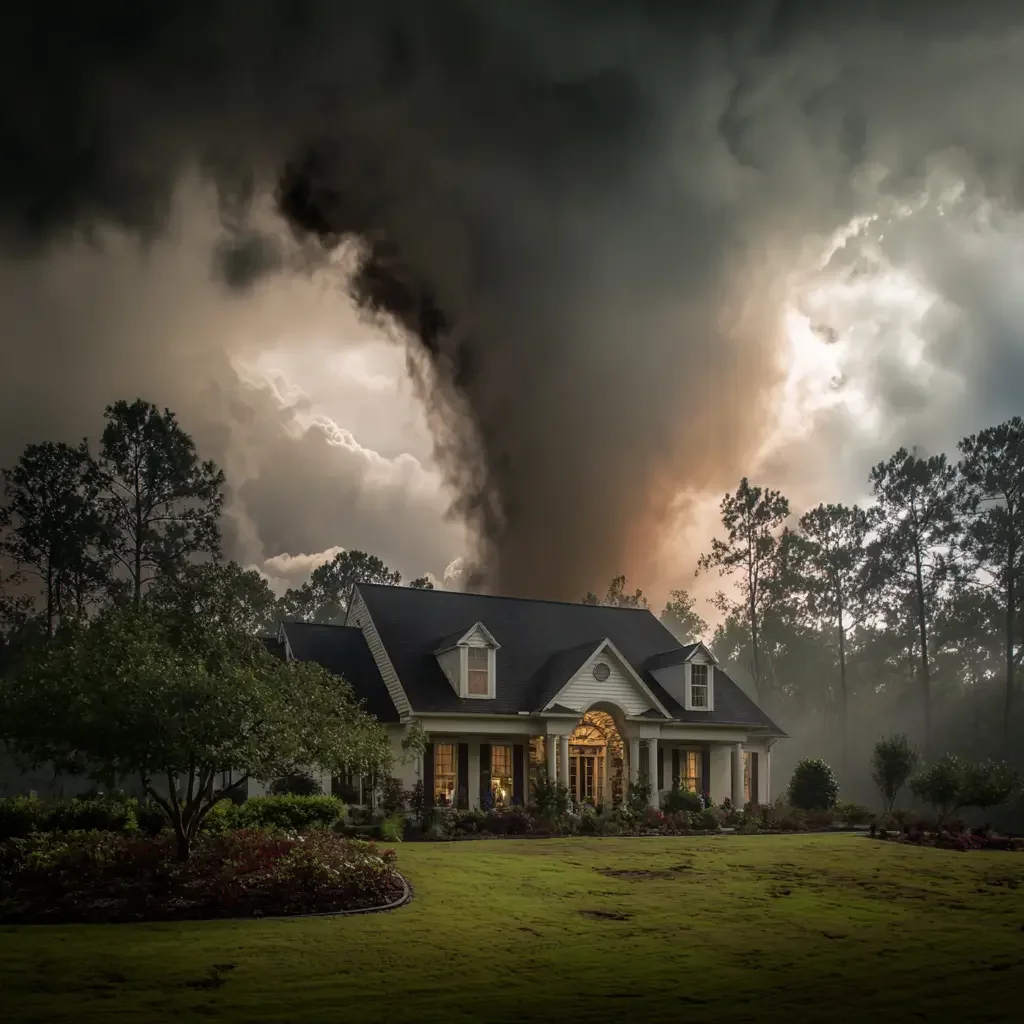
Wind and tornado claims combine roof failure, siding loss, debris impact damage, downed trees, and interior water from wind-driven rain — all triggered in minutes and all needing proper documentation before mitigation closes the evidence window. We have worked the April 2026 EF-3 tornado outbreak in MN and WI, the August 2020 Iowa-Wisconsin-Illinois derecho, and Florida hurricane wind claims through every major storm event. We work on contingency — you owe nothing unless we recover money on your claim.







As Seen On:










Get Your Free Wind & Tornado Claim Review

Areas We Serve for Wind & Tornado Damage Claims
Wind and tornado claim patterns differ substantially across our three states — Minnesota and Wisconsin sit in the upper-Midwest tornado corridor with peak season April through September, while Florida sees hurricane wind plus seasonal tropical-spawn tornado activity. We handle wind and tornado claims throughout every county we are licensed in.
Minnesota — Tornado Alley North
License #40962416 · April 2026 EF-3 zone
Twin Cities Metro
Minneapolis, St. Paul, Bloomington, Plymouth, Maple Grove, Minnetonka, Brooklyn Park
Wisconsin — Severe Storm Corridor
License #21156868 · 14-tornado April 2026 record
Madison Region
Western Wisconsin (Buffalo / EF-3 Zone)
Florida — Hurricane Wind & Spawn Tornado
License #G199012
Southwest Florida
Southeast & Gold Coast
Panhandle & Tallahassee (Dixie Alley spawn)
Central Florida
Recent Major Wind Events We've Worked
April 2026 EF-3 tornado outbreak across Minnesota and Wisconsin — Wisconsin recorded 14 confirmed tornadoes (one short of state record) including an EF-3 near Cream in Buffalo County hitting 140 mph. August 2020 Iowa-Wisconsin-Illinois derecho with sustained Cat 1-equivalent winds across hundreds of miles. May 2024 Tallahassee EF-2 tornado outbreak. Hurricane Ian (2022), Milton (2024), Helene (2024), Michael (2018) wind components. We have direct in-field experience working claims through each of these events.
Types of Wind & Tornado Damage We Handle
Wind damage takes many forms — sustained tornado destruction, straight-line wind from severe thunderstorms and derechos, microbursts, hurricane wind, and the secondary water and tree-impact damage that almost always accompanies major wind events. The cards below cover the wind damage categories we file most often.
EF-Scale Tornado Damage
EF-1 through EF-5 tornadoes produce concentrated path damage with very different signatures depending on EF rating — and carriers commonly underestimate the rebuild scope on partial-damage homes near the edge of the path.
EF-2 and stronger tornadoes (April 2026 outbreak in MN/WI included multiple EF-2 events plus an EF-3 in Buffalo County WI) produce direct structural damage to homes in the path. Properties at the edge face partial roof damage, blown-off siding, broken windows, and projectile impact damage that carriers commonly classify as cosmetic. We document directional damage signatures, pull NWS tornado track data, and pursue full repair scope including code-required upgrades.
Straight-Line Wind & Derecho Damage
Severe thunderstorm and derecho events produce sustained straight-line winds rivaling Cat 1-2 hurricane wind speeds across hundreds of miles.
The August 2020 Iowa-Wisconsin-Illinois derecho produced sustained Cat 1-equivalent winds across the upper Midwest, damaging hundreds of thousands of structures. These events are filed as wind/storm damage rather than hurricane (different deductible structure, different carrier handling) but the underlying damage patterns rival hurricane events. We document the wind speed at the property's location with NWS data and apply the deductible the policy actually owes.
Microburst & Downburst Damage
Microbursts produce localized concentrated wind damage that carrier adjusters arriving days later sometimes mistake for tornado tracks or pre-existing wear.
A microburst is a sudden downdraft from a severe thunderstorm cell producing winds of 60-100+ mph in a small area. The damage pattern — radial outward debris fields, uniformly damaged trees, similar-direction roof damage — is distinct from tornado damage but can look similar to ground-level inspection. We pull NWS storm data, document the radial damage pattern, and prove the wind event caused the loss when carriers default to wear-and-tear classifications.
Hurricane Wind
Florida hurricane wind triggers percentage-based hurricane deductibles and the wind-vs-flood coverage split — covered in detail on our hurricane damage page.
Hurricane wind damage in Florida is governed by hurricane deductibles (2-5% of dwelling coverage) that only trigger on a National Hurricane Center–classified hurricane. Tropical storms and severe weather events that never reached hurricane status apply the standard wind deductible instead. Our hurricane damage service covers this in detail including hurricane deductible verification and wind-vs-flood allocation.
Roof System Failure & Shingle Loss
Wind damage to residential and commercial roofing systems — the largest single component of most wind claims and the most aggressively contested by carriers.
Sustained winds and gusts strip shingles, lift roof systems, fail underlayment, and damage decking. Carriers commonly limit roof claims to spot repair when full replacement is the actual obligation — particularly when Florida Building Code 25% replacement rule applies on FL claims. We document directional damage patterns, pull engineering inspections, and pursue full replacement scope including code-mandated upgrades.
Siding, Soffit & Exterior Damage
Wind events strip vinyl and Hardie siding, lift soffits, blow off gutters, damage fascia, and destroy exterior trim — all routinely underpaid as cosmetic.
Exterior damage adds up significantly across an entire structure. Vinyl siding, fiber cement, brick face, soffit panels, fascia boards, gutters, downspouts, and exterior trim all get damaged in significant wind events. Carriers commonly limit recovery to visible damage on individual components when the actual obligation includes full sections that match in color and texture. We document the damage scope and pursue full section replacement where matching is impossible.
Window, Door & Garage Door Damage
Wind pressure and projectile impact damage windows, sliding doors, and garage doors — and the resulting envelope failures drive interior water damage.
Window failure in major wind events is typically caused by either wind pressure exceeding the rating or by projectile impact (debris, branches, gravel). Garage doors are particularly vulnerable to wind pressure failure — a failed garage door commonly leads to interior pressurization and roof failure. We document the failure mode and pursue full replacement scope including code-required impact-rated upgrades on Florida coastal properties.
Tree-Strike & Debris Impact Damage
Downed trees and wind-driven debris create concentrated structural damage that carrier adjusters routinely miss the chain of consequence on.
A tree falling on a roof creates direct structural damage, but the damage chain extends well beyond the impact point — lifted roof system damage propagates outward, water enters through the breach, drywall and insulation become saturated, and contents below are damaged. We document the full damage chain from a single tree event and force the carrier to address the connected loss rather than treating each component as a separate claim.
Wind-Driven Rain & Secondary Water
Rain entering through wind-damaged openings is wind-driven rain — covered as wind damage. Water damage handling is built into our wind claim process.
When wind opens the building envelope, rain entering through the wind-damaged opening is wind-driven rain (not flood). Carriers commonly reclassify this water as flood damage to push the loss off the wind policy. We document the entry point chronologically and pursue full coverage under the wind policy. Our water damage service covers the full multi-peril coordination.
HVAC Condenser & Exterior Equipment Damage
HVAC condensers, pool pumps, well pumps, and exterior electrical equipment sustain debris-impact damage in wind events that carriers commonly write off as wear.
Wind-driven debris dents HVAC condenser fins, damages pool pump motors, breaks well pump enclosures, and impacts exterior electrical infrastructure. Carriers commonly classify this damage as gradual wear rather than wind-caused. We document the impact patterns, pull weather data, and pursue full replacement scope.
Properties We Handle Wind Claims For
Wind events affect every property class. The cards below cover the property types we represent most often on wind and tornado claims.
Single-Family Homes
The largest single category — wind damage to roofs, siding, windows, garage doors, and exterior structures plus interior water from wind-driven rain.
Standard HO-3 policies cover wind damage with a wind deductible (flat dollar in most MN/WI policies, percentage-based hurricane deductible in FL). We document the full damage scope including hidden roof system damage, secondary water, and tree-impact damage.
Condominium Buildings
Master policy wind claims with significant deductibles in seven-figure range plus individual unit owner HO-6 coordination.
Condo master policies cover building structure wind damage. Individual HO-6 policies cover unit interior damage and contents. Our HOA & Condo claim service covers master policy side. We also represent unit owners on HO-6 claims.
Multifamily & Apartment Buildings
Multi-unit wind damage triggers building-side claims plus tenant displacement and lost rents during reconstruction.
A wind event affecting a multifamily building can render multiple units uninhabitable simultaneously. Master commercial policies cover structure plus lost rents. We coordinate the building owner's claim with tenant displacement.
Commercial & Office Buildings
Commercial wind claims combine structural damage with business interruption, signage destruction, and tenant displacement.
Commercial wind damage to roofing systems, exterior cladding, signage, and HVAC infrastructure adds up significantly. Our commercial claim service covers business interruption, lost rents, and ordinance-or-law for code-mandated upgrades.
Mobile Homes & Manufactured Housing
Higher wind vulnerability and different policy forms — mobile home parks often see widespread damage requiring full replacement after major wind events.
Mobile home and manufactured housing policies use specific coverage forms with their own deductibles, sub-limits, and replacement cost rules. After major wind events, these properties often require full replacement rather than spot repair. Carriers commonly underpay by applying actual cash value rather than replacement cost.
Farms, Agricultural & Rural Properties
Farm and rural property wind claims involve barns, outbuildings, equipment storage, and grain bins — each with its own coverage analysis.
Wisconsin and Minnesota rural and agricultural properties carry farm-specific policies covering main residence, barns, machine sheds, grain bins, fencing, and stored equipment. Each structure has different coverage and deductible structures. We coordinate the multi-structure claim across the policy and pursue full recovery.
Manufacturing & Warehouse Facilities
Industrial wind damage involves roof failure on large-footprint buildings, equipment damage, and downtime translating to lost production.
Manufacturing and warehouse facilities face wind damage to flat-roof systems, exterior cladding, dock equipment, and stored product. Business interruption begins immediately. We coordinate with industrial estimators and the right specialty contractors.
Restaurants & Retail
Wind damage to retail and restaurant locations combines roof failure, signage destruction, exterior cladding loss, and lost business income.
Retail strip malls, restaurants, and standalone commercial locations face widespread damage in significant wind events. We document inventory at full replacement value and calculate BI using the right baseline period.
Schools, Religious & Civic Properties
Specialty institutional properties face wind damage with regulatory rebuild requirements and accelerated reopening pressure.
Schools, churches, and civic facilities have specialty coverage forms and accelerated reopening pressure. We coordinate with the institution's governance structure and pursue full code-required rebuild scope.
Code Upgrades & The Real Roof Replacement Scope
Wind claims are decided largely on two questions: how much of the roof system actually needs to be replaced (rather than spot-repaired), and how much of the rebuild has to comply with current building code (rather than like-kind-and-quality replacement). Both questions are governed by specific rules carriers consistently underapply. This section explains how each works and how we challenge underpayment.
The Roof Replacement Scope Reality
Carriers default to spot repair when full replacement is the actual obligation. Three tests determine which is right:
Florida 25% Replacement Rule
Florida Building Code requires full roof replacement when wind damage affects 25% or more of the roof — even if spot repair is technically feasible. The rule applies on every Florida wind claim. Carriers commonly resist this rule on older roofs by arguing pre-existing wear. We document the wind damage signature pattern proving the storm caused the loss regardless of roof age, and pursue full replacement under the 25% rule.
Matching Material Availability
If the original roofing material is no longer available (discontinued color, pattern, or product), full replacement is required to maintain visual consistency under most policy "matching" provisions. Carriers commonly try to substitute "similar" materials when matching is the actual obligation. We pull manufacturer discontinuation records and pursue full section replacement when matching is impossible.
Functional Damage Threshold
When wind damage shortens the functional life of the roof system — fastener pull-through, lifted edges, decking damage, underlayment failure — full replacement is the actual policy obligation rather than spot repair. We document functional damage with engineering inspections and pursue full replacement scope.
Code-Mandated Upgrades During Wind Reconstruction
Most homeowners and commercial property policies include ordinance-or-law coverage that pays for code-required upgrades. The applicable code requirements vary by state and event:
Hurricane Strap & Tie-Down Requirements (FL)
Florida hurricane reconstruction routinely requires hurricane straps and structural tie-downs not present on older homes. Roof replacement triggers these upgrades. Ordinance-or-law coverage pays the increased cost.
Impact-Rated Window Upgrades (FL Coastal)
Florida coastal high-wind zones require impact-rated windows on new construction and significant reconstruction. Ordinance-or-law coverage pays the upgrade cost when window replacement is required by the wind damage scope.
Modern Underlayment & Decking Requirements
Current Florida and many MN/WI building codes require synthetic underlayment, ice-and-water shield, and current decking thickness standards on roof replacements. Older roofs being replaced after wind damage must comply with the current code.
Energy Code Reconstruction Standards
Reconstruction triggers energy code compliance — insulation R-values, HVAC efficiency standards, water heater minimums, and window U-factors. Ordinance-or-law coverage pays for the increased cost when these upgrades are mandated.
ADA & Accessibility Upgrades (Commercial)
Commercial reconstruction may trigger ADA accessibility upgrades — accessible entrances, restroom requirements, parking lot striping. Ordinance-or-law coverage on commercial policies addresses the increased cost.
Hardened Roof Cover Requirements
Florida coastal counties increasingly require hardened roof cover materials (sealed underlayment, secondary water resistance, enhanced fastening) on reconstruction. These add meaningful cost beyond like-kind-and-quality replacement.
Why This Often Doubles the Recovery
A simple wind damage claim that the carrier scopes as a $15,000 spot repair frequently has a $30,000-$50,000 actual policy obligation when the roof system meets the 25% rule (FL), the matching material requirement, or the functional damage threshold — plus the ordinance-or-law upgrade scope. Without a public adjuster pushing the full scope, claims close at the carrier's preferred narrow estimate. We document the actual scope, pull engineering reports where helpful, and pursue full replacement plus code upgrades on every wind claim where the policy supports it.
Why Wind & Tornado Claims Need a Public Adjuster
Wind claims look procedurally simple — file with the carrier, get an estimate, accept the offer, rebuild. But the gap between a represented and unrepresented wind claim is among the largest in property insurance because of three factors: roof replacement scope, code-upgrade obligations, and the multi-peril coordination wind events almost always trigger.
Roof Replacement vs Spot Repair
The single biggest dispute on most wind claims — carriers default to spot repair when full replacement is the actual obligation under the 25% rule, matching, or functional damage tests.
A $15,000 spot repair becomes a $30,000-$50,000 full replacement when the policy actually owes the larger scope. Without a public adjuster pushing the obligation, claims close at spot-repair levels.
Ordinance-or-Law Code Upgrades
Reconstruction triggers code-required upgrades — hurricane straps, impact-rated windows, modern underlayment, energy code compliance.
Carriers commonly limit reconstruction to like-kind-and-quality and resist the upgrade scope. Ordinance-or-law coverage exists in most policies for exactly this purpose. We identify the applicable upgrades and pursue the coverage.
Wind-Driven Rain Reclassification
Carriers reclassify wind-driven water as flood damage to push the claim onto smaller flood limits or off coverage entirely.
Rain entering through wind-damaged openings is wind-driven rain — covered as wind. We document the entry point chronologically and prove the wind opening preceded the water entry.
Tree-Strike Damage Chain
A single downed tree creates a damage chain extending well beyond the impact point — carrier adjusters routinely miss the connected loss.
Tree strike damages roof structure, opens the envelope, allows water in, saturates drywall and insulation, damages contents below. We document the full chain rather than letting the carrier treat each component as separate.
Statutory Deadline Pressure
Florida's 1-year filing deadline (627.70132) and 18-month supplemental window are tight — and missed deadlines forfeit recovery.
Hidden wind damage discovered during reconstruction frequently becomes a supplemental claim, but only within the policy's supplemental window. We track every deadline and file proactively.
Multi-Peril Coordination
Wind brings water (wind-driven rain), mold (post-event saturation), and sometimes fire (downed power lines, electrical failures) — all needing coordinated handling.
We file as a single integrated claim with cross-coordination to water, mold, and fire components. Each handled correctly under the right policy.
Our Wind & Tornado Damage Claim Process
Wind claims need fast post-event documentation, multi-peril coordination, and statutory deadline tracking from day one. Our 7-step process is built for the speed and complexity wind events demand.
Free Post-Event Inspection and Coverage Review
We inspect the property in person, review your full policy, and give you a candid assessment of what we believe the claim is worth before any engagement.
No fee for the initial inspection. We identify the wind event, document visible damage, note suspected hidden damage areas, and review your policy for wind deductible structure, ordinance-or-law coverage, and ALE/BI provisions.
On-Roof Inspection and Damage Documentation
Wind damage cannot be properly assessed from ground level — we conduct on-roof inspections, document damage with photography, and engage engineering inspections where helpful.
Carrier-side adjusters routinely scope wind claims from ground level, missing functional damage to fasteners, underlayment, and decking. We get on the roof, document the damage signature pattern, and pull NWS wind speed data for the property's location to support the claim.
Event Classification and Deductible Verification
We pull the official storm classification (NWS tornado data, NHC hurricane data, derecho event records) and confirm the correct deductible category applies.
Florida hurricane deductible only triggers on a National Hurricane Center–classified hurricane. MN/WI tornado and derecho events apply standard wind deductibles. We pull the official classification and challenge improper applications.
Multi-Peril Damage Mapping
Wind events bring water, mold, and sometimes fire alongside the structural damage — we map each peril and file as a single integrated claim.
Wind-driven rain through wind-damaged openings → wind policy. Mold from post-event saturation → wind policy with mold sub-limit. Post-event electrical fire → fire peril. We coordinate all components rather than letting the carrier fragment the claim.
Estimate Construction with Code-Upgrade Scope
Our estimates include the full repair scope plus any ordinance-or-law upgrade obligations the policy actually owes.
Roof replacement under the 25% rule, hurricane straps, impact-rated windows, modern underlayment, and energy code compliance all become part of the estimate where applicable. We use local pricing rather than national averages.
Filing, Negotiation, and Carrier Pressure
We file the claim and represent you in every interaction. Where carriers slow-walk, we apply pressure through statutory escalation.
Florida Civil Remedy Notices under 624.155, Minnesota Department of Commerce complaints under 72A.201, Wisconsin OCI complaints — each state has its own escalation framework and we use the right one.
Settlement, Supplementals, and Recoverable Depreciation
Initial settlement is rarely the final dollar — supplementals as repairs progress and recoverable depreciation upon proof of repair both continue past the first check.
Wind claims frequently develop supplementals as contractors uncover hidden roof, structural, and water damage. We file supplementals within statutory windows and ensure recoverable depreciation is collected after repairs are complete.
State-Specific Wind & Tornado Claim Considerations
Wind claim handling differs across our three states based on the dominant wind events and statutory frameworks. Click each state for details.
Minnesota sits in the upper-Midwest tornado corridor with peak season April through September:
- Minnesota Statute 72A.201 — Unfair Claims Practices framework supporting policyholder leverage on slow-walked claims.
- Public adjuster fee cap — 10% of the entire claim settlement.
- April 2026 EF-3 outbreak — Multiple EF-2 and EF-3 tornadoes across MN/WI in April 2026 produced widespread damage. We have direct in-field experience working claims through this event.
- Wind/storm deductibles are typically flat-dollar amounts in Minnesota — no percentage-based hurricane deductible applies.
- Twin Cities and Greater Minnesota both face concentrated tornado and severe storm activity. Rural property and agricultural building damage adds farm-policy specific considerations.
- Spring straight-line wind events often produce damage rivaling tornado events with broader spatial footprint and similar repair complexity.
Wisconsin recorded 14 confirmed tornadoes in April 2026 alone (one short of state record), including an EF-3 near Cream in Buffalo County hitting 140 mph:
- Wisconsin OCI regulates claim handling and provides a consumer complaint process.
- Wisconsin Statute 631.81 requires insurers to act in good faith and pay claims within reasonable timeframes.
- April 2026 record-near outbreak — 14-tornado event including EF-3 near Cream WI. We worked claims through this event.
- August 2020 Iowa-Wisconsin-Illinois derecho — Cat 1-equivalent sustained winds across hundreds of miles, hundreds of thousands of damaged structures.
- Wind/storm deductibles are typically flat-dollar amounts in Wisconsin.
- Manufacturing and dairy facility wind exposures — large-footprint commercial properties face wind damage to flat-roof systems and exterior cladding.
- Rural and Northwoods properties face additional tree-strike exposure due to dense forest cover in north and central Wisconsin.
Florida wind claims are dominated by hurricane wind, with seasonal tropical-spawn tornado activity adding a separate category:
- Florida Statute 627.70131, 627.70132, 626.854, 624.155 — full claim handling, deadline, fee cap, and bad faith framework.
- Hurricane deductibles on FL policies are percentage-based (2-5% of dwelling) and only trigger on a National Hurricane Center–classified hurricane.
- Hurricane wind coverage is detailed on our hurricane damage page, including the wind-vs-flood split and 25% roof replacement rule.
- Tropical spawn tornadoes — hurricanes and tropical storms spawn tornadoes hundreds of miles from the eye. Tornado damage may apply a different deductible than hurricane wind depending on policy interpretation.
- Florida Building Code 25% replacement rule — full roof replacement required when wind damage affects 25%+ of the roof.
- Tallahassee EF-2 May 2024 outbreak — direct experience working FL Panhandle tornado claims.
Property owners with operations across multiple states get wind, tornado, and derecho claims handled under a single engagement. Florida hurricane wind alongside MN/WI tornado and derecho claims under one team that understands all three regulatory frameworks.
Why Choose Shoreline for Wind & Tornado Claims
Wind claims reward technical depth — on-roof inspection, code-upgrade fluency, multi-peril coordination, and storm-event experience. Here's what we do differently.
On-Roof Inspection & Engineering Documentation
Carrier-side adjusters routinely scope wind claims from ground level, missing functional damage to fasteners, underlayment, and decking that drives the actual repair scope. We get on the roof on every meaningful wind claim, document the damage signature pattern with high-resolution photography, and pull engineering inspections where helpful. The data forces carriers to recognize the actual scope rather than the ground-level estimate they would otherwise write.
Multi-State Wind Event Experience
Direct in-field experience working: April 2026 EF-3 tornado outbreak (MN/WI), August 2020 Iowa-Wisconsin-Illinois derecho, May 2024 Tallahassee EF-2 outbreak, Hurricane Ian/Milton/Helene/Michael/Sally wind components. Pattern recognition from working hundreds of wind claims across all three states becomes leverage on every new event.
Code-Upgrade & Ordinance-or-Law Specialty
Reconstruction triggers code-required upgrades. Most policies include ordinance-or-law coverage that pays the increased cost. Carriers commonly limit reconstruction to like-kind-and-quality and resist the upgrade scope. We identify applicable upgrades — hurricane straps, impact-rated windows, modern underlayment, energy code, ADA — and pursue the coverage.
Multi-Peril Coordination as Default
Wind brings water, mold, and sometimes fire. We file as a single integrated claim with cross-coordination to water, mold, and fire.
Licensed Across Three States
Florida (#G199012), Minnesota (#40962416), and Wisconsin (#21156868). Multi-state portfolio coordination under one engagement letter.
Contingency-Only Fee Structure
No retainers, no hourly billing, no fee at all if the claim produces zero recovery. Florida: 10% during state-of-emergency claims, 20% otherwise (F.S. 626.854). Minnesota: no statutory cap; written contract with full fee disclosure and 72-hour cancellation right (MN Stat. 72B.135). Wisconsin: 10% on catastrophic disaster claims (Wis. Stat. § 629.05(6)); no cap on standard claims, with clear written fee disclosure required.
Featured in National Media
Shoreline has been featured in Forbes, Realtor.com, Investopedia, Insurance.com, and MarketScale. Memberships in NAPIA and FAPIA.
Wind & Tornado Damage Frequently Asked Questions
Common questions from policyholders across Florida, Minnesota, and Wisconsin about wind and tornado damage insurance claims.
Yes. Standard homeowners (HO-3) policies cover wind and tornado damage as a named peril, including structural damage, roof loss, debris impact, broken windows, and interior water damage from wind-driven rain entering through wind-damaged openings. Wind/storm deductibles vary by state — Minnesota and Wisconsin policies typically use flat-dollar deductibles, while Florida policies use percentage-based hurricane deductibles for storms officially classified as hurricanes by the National Hurricane Center.
Yes, in most cases. Three tests determine whether full replacement is the actual policy obligation rather than spot repair. First, Florida's 25% replacement rule requires full replacement when wind damage affects 25% or more of the roof. Second, if the original roofing material is no longer available, full replacement is required to maintain visual consistency under most "matching" provisions. Third, when functional damage shortens the useful life of the roof system (fastener pull-through, lifted edges, decking damage, underlayment failure), full replacement is the obligation. We document the damage signature and pursue full replacement scope where any of these tests apply.
Ordinance-or-law (also called Building Code Coverage or Increased Cost of Construction) pays for the increased cost of rebuilding to current code rather than to like-kind-and-quality replacement. Wind reconstruction routinely triggers code-mandated upgrades — hurricane straps, impact-rated windows on Florida coastal properties, modern underlayment, energy code compliance, ADA upgrades for commercial properties. Most homeowners and commercial policies include some ordinance-or-law coverage. We identify applicable upgrades and pursue the coverage on every wind claim.
Yes. When wind opens the building envelope (lifted shingles, broken windows, blown-off siding, lifted soffits), rain entering through those wind-damaged openings is wind-driven rain — covered as wind damage under the homeowners or commercial property policy. Carriers commonly reclassify this water as flood damage to push the loss off the wind policy. We document the entry point chronologically — proving the wind opening preceded the water entry — and pursue full coverage under the wind policy.
Both are covered as wind damage under standard homeowners and commercial property policies. The classification matters less for coverage than for damage pattern documentation. Tornado damage typically shows directional debris fields aligned with the tornado track. Straight-line wind damage shows uniform-direction debris and damage. Microbursts produce radial outward debris from a localized downdraft. We document the actual pattern with NWS storm data, but the underlying coverage is the same regardless of classification.
This is one of the most common wind claim disputes, particularly on older roofs. The covered analysis is whether a wind event was the proximate cause of loss — pre-existing condition is only relevant if the carrier can prove the damage would have occurred regardless of the wind event. We document directional damage patterns, lifted edges aligned with wind direction, fastener pull-through patterns, and decking/underlayment damage that prove wind caused the loss. We also pull weather data showing wind speeds at the property's location.
Yes — when the tree fell due to a covered wind event. Standard homeowners policies cover tree-strike damage to the structure plus the cost of removing the tree from the insured property (typically subject to a debris removal sub-limit). The damage chain extends beyond the impact point — lifted roof system, water entry through the breach, drywall and contents damage. We document the full chain rather than letting the carrier treat each component separately.
Yes, on any meaningful wind claim. Ground-level inspection misses functional damage to fasteners, underlayment, decking, and shingle attachment that drives the actual repair scope. Many carriers default to drone inspection or ground-level visual assessment, which captures only obvious surface damage. We conduct on-roof inspections on every meaningful wind claim and document damage that ground-level assessment misses.
For losses on or after December 2022, Florida Statute 627.70132 requires initial or reopened wind claims to be filed within one year of the date of loss, with supplemental claims allowed within 18 months. Hidden damage discovered during reconstruction frequently becomes a supplemental claim within the 18-month window. Missing the deadline forfeits your right to recover. Minnesota and Wisconsin claim deadlines are governed by policy provisions and require notice "as soon as practicable" with formal proof of loss within typical 60-90 day windows.
Yes. A derecho is a widespread sustained-wind event meeting specific NWS classification criteria. Derecho damage is filed as wind/storm damage under standard homeowners and commercial property policies — same coverage as tornado damage. The wind/storm deductible applies (flat dollar in MN/WI, percentage hurricane deductible in FL only when the storm reaches hurricane status). We worked the August 2020 Iowa-Wisconsin-Illinois derecho extensively.
Yes. We routinely take on wind claims that have been denied or substantially underpaid. The denial typically relies on pre-existing wear arguments, spot-repair scope when full replacement is the obligation, or underapplication of ordinance-or-law upgrades. We review the denial letter, the policy provisions, and the claim file, then identify whether the position is reversible through documentation and pressure. Where the dispute is about value, we invoke the appraisal clause. Where coverage litigation is required, our claim file becomes the evidence base for an insurance attorney.
Straightforward wind claims with strong documentation can settle in 60-120 days. More complex losses — multi-peril coordination, contested replacement-vs-repair scope, or major event backlogs (post-derecho or post-hurricane) — often run 4-8 months. Florida's 60-day pay-or-deny window (90 during emergency) sets the floor for initial response. Documentation quality on the front end is the single biggest factor in compressing the timeline.
Florida caps public adjuster fees at 10% during the twelve months following a Governor-declared state of emergency and 20% otherwise (F.S. 626.854). Minnesota does not impose a statutory percentage cap, but requires a written contract with full fee disclosure and a 72-hour cancellation right (MN Stat. 72B.135). Wisconsin caps fees at 10% for catastrophic disaster claims (Wis. Stat. § 629.05(6)); standard claims have no statutory cap but require clear written fee disclosure. Our exact percentage is fixed in writing in the engagement letter before any work begins. There is no upfront fee and no fee at all if the claim produces zero recovery.
As early as possible — ideally before mitigation contractors begin removing damaged materials. Once damaged materials are removed, the documentation window narrows. We prefer to inspect the property before any work begins so we can document the contamination zone and coordinate mitigation contractors who will preserve evidence. If mitigation has already started, we still take the engagement — but earlier engagement consistently produces larger recoveries.