
Hail Damage Public Adjuster
Licensed Hail Damage Claim Help Across Minnesota, Wisconsin & Florida
✓ Licensed in FL, MN & WI
✓ On-Roof Inspection & Functional Damage Specialty
✓ No Fee Unless We Recover
Fill Out the Form Below to Get a Free Hail Damage Claim Review:
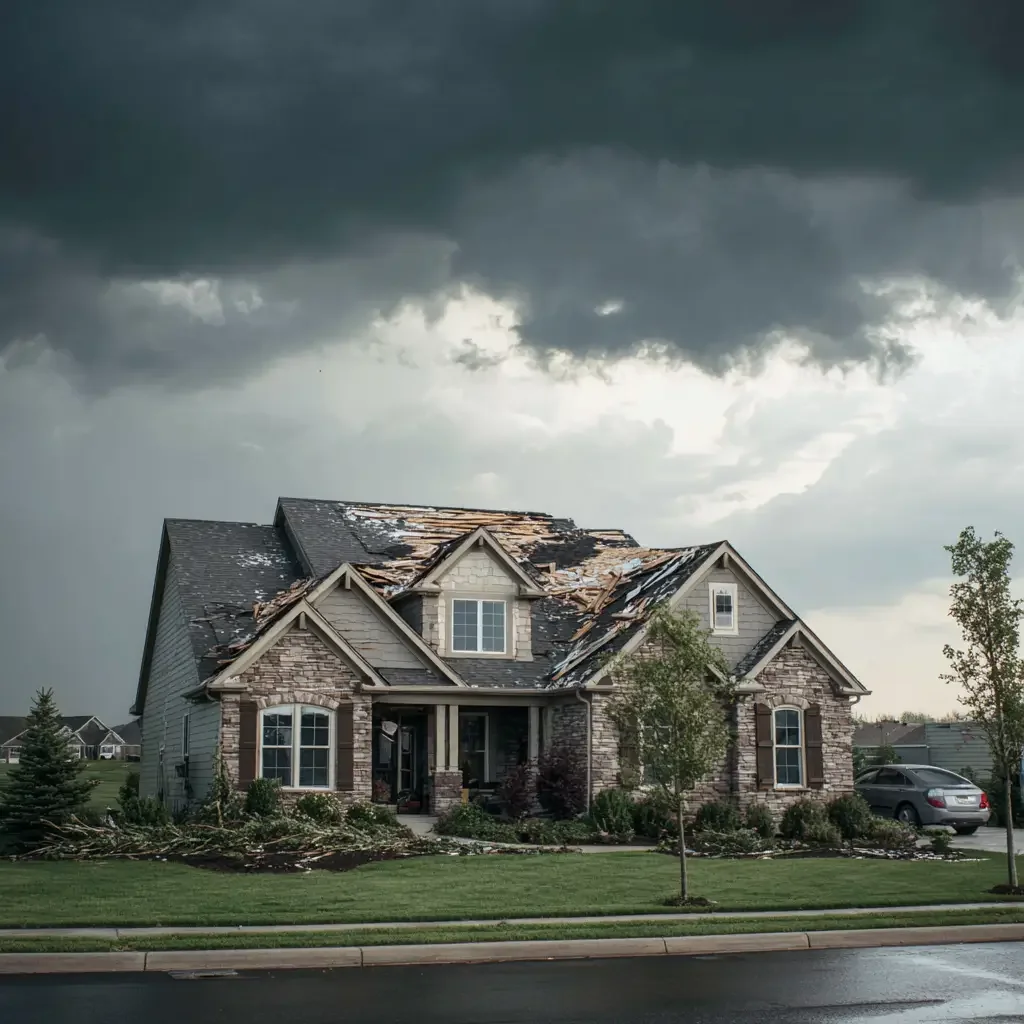
Hail damage is the most consistently underpaid claim category in residential property insurance. Carriers default to ground-level visual inspection that misses functional damage to fasteners, granular loss across the roof field, and impact damage on HVAC condensers, siding, and gutters. The April 2026 baseball-sized hail outbreak across MN/WI produced thousands of claims that need on-roof documentation to recover what the policy actually owes. We work hail claims on contingency — you owe nothing unless we recover money on your claim.








As Seen On:











Get Your Free Hail Claim Review



Areas We Serve for Hail Damage Claims
Hail patterns differ substantially by region — Minnesota and Wisconsin sit in a high-frequency hail corridor with peak season May through August, while Florida sees concentrated hail in the Panhandle's Dixie Alley region. We handle hail claims throughout every county we are licensed in.
Minnesota — Hail Corridor
License #40962416 · April 2026 baseball-sized hail event
Twin Cities Metro
Minneapolis, St. Paul, Bloomington, Plymouth, Maple Grove, Minnetonka, Brooklyn Park
Wisconsin — Hail Belt
License #21156868 · Peak hail frequency in upper Midwest
Madison Region
Western Wisconsin
Florida — Dixie Alley
License #G199012 · Panhandle hail concentration
Florida Panhandle (Dixie Alley)
Pensacola, Destin, Fort Walton Beach, Panama City, Tallahassee
Central Florida
South Florida
Hail Frequency by Region
Eastern and central Wisconsin and the Twin Cities metro sit in one of the highest-frequency hail corridors in the United States, with multiple meaningful hail events per season. The April 2026 baseball-sized hail outbreak across MN/WI produced widespread roof, siding, HVAC, and vehicle damage. Florida's Panhandle region sits within the secondary Dixie Alley hail belt with peak activity March through May. We document each event with NWS hail probe data and pursue full repair scope rather than the cosmetic-only estimates carriers default to.
Types of Hail Damage We Handle
Hail damages multiple components across a property — roof systems, HVAC condensers, siding, gutters, windows, and exterior structures all sustain impact damage in significant hail events. The cards below cover the hail damage categories we file most often.
Asphalt Shingle Roof Damage
The most common hail-damaged component. Granular loss, exposed asphalt mat, fastener damage, and decking impact all reduce roof system life. On a commercial building, a commercial roof damage claim also turns on coinsurance and cosmetic damage endorsements.
Hail strikes asphalt shingles produce visible bruise marks (impact craters), granular loss exposing the underlying asphalt mat, and shingle dislodgement. Carriers commonly classify granular loss as cosmetic when the actual functional life of the roof system has been shortened. We document hail strikes on the actual roof surface with macro photography, pull NWS hail probe data, and submit full replacement estimates.
Metal & Standing-Seam Roof Damage
Metal roofing dents from hail impact and may have compromised paint coating, sealant, and panel attachment — all functional damage carriers underpay.
Metal roof hail damage produces dents that range from visible cosmetic to structural panel deformation. Carriers commonly classify all metal roof hail damage as cosmetic when severe denting actually compromises water-shedding capability and accelerates corrosion. We document the dent pattern, pull manufacturer warranty terms, and pursue replacement when functional damage applies.
Tile & Slate Roof Damage
Concrete and clay tile roofs sustain crack and fracture damage from significant hail. Slate roofs face similar exposure.
Florida tile and slate roofs need careful documentation because cracks may not be visible from the ground but compromise water-shedding under future weather events. We conduct on-roof inspection with each tile evaluated individually and pursue tile-by-tile replacement where the damage warrants.
HVAC Condenser Fin Damage
HVAC condenser units sit exposed to hail and sustain significant fin damage that reduces system efficiency and accelerates compressor failure.
Hail damages the aluminum cooling fins on outdoor HVAC condensers, reducing airflow and cooling efficiency. Carriers commonly limit recovery to fin combing (straightening damaged fins) when the actual obligation may be coil replacement or full unit replacement on severely damaged systems. We document the fin damage extent and pursue the right repair scope.
Siding & Exterior Cladding Damage
Vinyl siding cracks under hail impact, fiber cement chips, aluminum siding dents — and discontinued color-matching often forces full section replacement.
Vinyl siding cracking from hail impact compromises water resistance and weather sealing. Discontinued colors and patterns commonly force full elevation or full home replacement under matching provisions. We pull manufacturer availability records and pursue replacement scope rather than spot patches.
Gutter & Downspout Damage
Aluminum gutters dent and bend under hail impact. Damaged gutters fail to channel water correctly, leading to foundation and basement issues.
Hail damage to gutters and downspouts often appears cosmetic but compromises water management at the roof edge. Carriers commonly limit recovery to dent removal or repainting when full replacement is the policy obligation. We document the damage and pursue replacement where functional capacity is compromised.
Window & Skylight Damage
Hail breaks windows, cracks skylights, and damages window screens — each with its own coverage analysis under the policy.
Window glass breakage from hail is straightforward damage. Cracked skylights compromise weather sealing. Damaged window screens are routinely written off as cosmetic when full replacement is appropriate. We document each component and pursue full replacement scope.
Solar Panel & Roof-Mounted Equipment
Solar panels, satellite dishes, attic vents, and roof-mounted equipment all face hail impact damage that affects function and warranty status.
Cracked solar panel covers reduce energy output and void manufacturer warranties. Damaged attic vents allow water and animal intrusion. We document the damage to roof-mounted equipment and pursue replacement scope where warranty terms or functional capacity are compromised.
Exterior Equipment & Outdoor Furniture
Pool pumps, well pumps, exterior light fixtures, and outdoor furniture all sustain hail impact damage that adds up across a meaningful loss.
Carriers often miss the secondary equipment damage when scoping a hail claim. Pool pump motors, well pump enclosures, exterior light fixtures, and outdoor furniture all contribute to the actual policy obligation. We document the full secondary damage scope.
Properties We Handle Hail Claims For
Hail damage affects every property class. The cards below cover the property types we represent most often on hail claims.
Single-Family Homes
The largest category — hail damage to roofs, siding, HVAC, gutters, and windows on residential properties. Multi-component documentation is the difference between underpaid and full recovery.
Standard HO-3 policies cover hail damage as a named peril with the standard wind/storm deductible (flat dollar in MN/WI, percentage in FL only on hurricane-classified events). We document hail strikes on the actual roof surface and across exterior components.
Condo & HOA Buildings
Master policy hail claims involve large roof system replacement on multi-building communities — meaningful dollar exposure on every event.
Condo and HOA master policies cover building structure hail damage. Carriers commonly limit recovery to spot repair when full roof replacement is the obligation across multiple buildings. Our HOA & Condo claim service covers master policy details.
Multifamily & Apartment Buildings
Multi-unit hail damage triggers building-side claims for roof, siding, and HVAC plus tenant displacement if interior damage occurs.
Multifamily hail damage typically affects the roof system and exterior cladding across the entire structure. Master commercial policies cover the structure plus any lost rents during repairs.
Commercial & Office Buildings
Commercial hail claims involve flat-roof and modified-bitumen systems with their own scoping considerations plus rooftop HVAC.
Commercial flat-roof hail damage is harder to detect from the ground than residential pitched-roof damage. We conduct on-roof inspection and document hail bruising and granular loss across the membrane. Our commercial claim service covers business interruption and code-upgrade scope.
Agricultural & Rural Properties
Farm property hail claims involve barn roofs, machine sheds, grain bins, fencing, and stored equipment — each with farm policy considerations.
Wisconsin and Minnesota agricultural policies cover the main residence, outbuildings, equipment, and stored crop. Hail events damage roofing across multiple farm structures simultaneously. We coordinate the multi-structure claim across the farm policy.
Manufacturing & Warehouse Facilities
Industrial hail claims involve large-footprint flat roofs and rooftop HVAC equipment exposed to direct hail impact.
Manufacturing and warehouse facilities have substantial flat-roof exposure to hail. Rooftop HVAC equipment, exhaust fans, and skylights add additional damage components. We document the full scope including equipment damage.
Auto Dealerships & Vehicle Lots
Auto dealerships sustain significant inventory damage from hail — vehicle dents and broken glass across the entire inventory.
Auto dealerships and vehicle lots typically carry inventory coverage that responds to hail damage on stored vehicles. The claim scope includes diminished value alongside repair costs. Our auto loss and diminished value service handles individual vehicle claims, while commercial inventory policies cover dealer-side losses.
Hotels, Restaurants & Retail
Commercial hail damage at hospitality and retail locations affects roof systems, HVAC, signage, and exterior equipment.
Hospitality and retail hail claims combine roof and exterior damage with potential business interruption if repairs disrupt operations. We document the full scope and coordinate BI calculations where applicable.
Schools & Civic Facilities
Specialty institutional hail claims involve large-footprint flat-roof systems and accelerated reopening timelines for school districts.
Schools, churches, and civic facilities have specialty coverage forms and accelerated reopening pressure. We coordinate with the institution's governance structure and pursue full code-required rebuild scope.
Cosmetic vs Functional Damage — The Central Hail Claim Dispute
Every hail claim turns on a single question: is the damage cosmetic (excluded or limited) or functional (covered for full repair or replacement). The line between the two is where carriers underpay or deny most hail claims. This section explains what each means, where the boundary actually falls, and how we challenge improper cosmetic classifications.
Why "Cosmetic" Doesn't Mean What Carriers Claim
Carrier-side adjusters routinely classify hail damage as cosmetic when the actual functional impact warrants full coverage. Three tests determine which is right:
Functional Life Reduction
Granular loss on asphalt shingles exposes the underlying asphalt mat to UV degradation, accelerating roof aging. The loss may not be visually dramatic, but the functional life of the roof system has been shortened. This is functional damage — covered for full replacement under most policies — even when carriers classify it as cosmetic.
Water-Shedding Compromise
Cracked tiles, dented metal panels, and damaged shingles compromise the roof's water-shedding capability. Damage that lets water under the surface — even if the surface still appears intact from below — is functional damage. We document with thermal imaging and moisture mapping where applicable.
Manufacturer Warranty Voiding
Hail damage that voids a manufacturer warranty (common on metal roof panels, solar panels, and tile roof systems) is functional damage regardless of whether the component still works. The lost warranty value is itself a covered loss component.
Where Carriers Underpay Hail Claims
The most common carrier tactics on hail claims:
Ground-Level Inspection Only
Carrier adjusters routinely scope hail claims from ground level or via drone, missing functional damage that requires on-roof inspection with macro photography to document.
Counting Hail Strikes by Test Square
Carriers commonly count hail strikes only in a single 10x10 test square and extrapolate to dispute the loss. We document hail strikes across the full roof field with gridded impact mapping that proves the damage is widespread rather than localized.
Cosmetic Damage Endorsements & Exclusions
Some policies — particularly in MN/WI hail-belt markets — include cosmetic damage exclusions or endorsements that limit coverage on metal roofing or specific components. We pull the actual policy provisions and challenge improper applications of these exclusions.
Pre-Existing Wear Arguments
Carriers sometimes argue that granular loss reflects wear and tear rather than hail damage. The covered analysis is whether a hail event was the proximate cause — which we document with NWS hail probe data and damage signature patterns.
Spot Repair Instead of Full Replacement
Discontinued shingle colors, patterns, and product lines commonly force full elevation or full roof replacement under matching provisions. Carriers commonly resist matching by substituting "similar" products.
Skipping Secondary Components
HVAC condenser fin damage, gutter damage, exterior fixture damage, and outdoor equipment damage routinely get overlooked when the carrier focuses solely on the roof. We document the full secondary scope.
Why On-Roof Inspection With Gridded Impact Mapping Wins These Claims
The single most effective tool for documenting hail damage is on-roof inspection with macro photography of individual hail strikes across a gridded mapping of the entire roof field. The data is objective, reproducible, and harder for carriers to dismiss than ground-level visual assessment. We coordinate this documentation on every meaningful hail claim, pull NWS hail probe data showing the size and frequency of hailstones at the property's location, and submit replacement-scope estimates rather than spot-repair scope. The combination of on-roof documentation, NWS data, and matching-provision analysis is what turns a $5,000 cosmetic-classification claim into the $25,000-$40,000 actual policy obligation a hail-damaged residential roof typically carries.
Why Hail Claims Need a Public Adjuster
Hail is the most consistently underpaid claim category in residential property insurance — and the gap between a represented and unrepresented hail claim is among the largest because of three factors: cosmetic-vs-functional disputes, multi-component damage scope, and the on-roof documentation requirement that carrier-side adjusters routinely skip.
Cosmetic-vs-Functional Is Where Carriers Underpay
Carriers default to cosmetic classification when functional life reduction, water-shedding compromise, and warranty-voiding all warrant full coverage.
The functional damage threshold is broader than carriers commonly apply. Granular loss reduces functional life. Water-shedding compromise from cracked components is functional. Warranty-voiding damage is functional. We document each and pursue full replacement scope.
On-Roof Inspection Is Mandatory
Ground-level inspection misses functional damage. We get on the roof on every meaningful hail claim and document with macro photography.
Carrier adjusters routinely scope hail claims from ground level or via drone, missing the actual hail strike pattern across the roof field. We document every hail strike in a gridded impact mapping with high-resolution photography that forces the carrier to recognize the actual damage scope.
NWS Hail Probe Data Integration
National Weather Service hail probe data documents hailstone size and frequency at the property's location, supporting the claim with objective evidence.
Carriers commonly argue insufficient hail or insufficient hail size. NWS hail probe and storm spotter data document the actual conditions at the property's location. We pull this data on every hail claim to support the loss event.
Multi-Component Scope
Hail damage extends beyond the roof — HVAC condensers, siding, gutters, windows, solar panels, exterior equipment all contribute to the claim.
Carriers commonly focus on the roof and underpay or skip secondary components. We document every damaged component across the property and pursue full coverage scope.
Matching Material Provisions
Discontinued shingle colors and patterns force full elevation or full roof replacement under most policy matching provisions.
Carriers commonly resist matching provisions by substituting "similar" materials. We pull manufacturer discontinuation records and pursue full section replacement when matching is impossible.
Statutory Deadline Pressure
Florida's 1-year filing deadline and most policy notice provisions are tighter than policyholders realize. Hidden hail damage discovered later requires supplemental filing within the window.
Hail damage often appears minor on initial inspection but produces full functional impact over months as granular loss accelerates UV degradation. We track every deadline and file supplementals proactively as the actual damage scope becomes clear.
Our Hail Damage Claim Process
Hail claims need on-roof documentation, NWS data integration, and gridded impact mapping from day one. Our process is built around the technical documentation required to challenge cosmetic-classification denials.
Free On-Roof Inspection
We get on the roof on every meaningful hail claim. Ground-level inspection misses functional damage carriers will exploit.
No fee for the initial inspection. We safely access the roof, document hail strikes across the full roof field, identify damaged components, and assess HVAC, siding, gutters, and exterior fixtures.
Gridded Impact Mapping with Macro Photography
We document hail strikes in a gridded impact mapping with high-resolution macro photography of individual strike sites.
Carriers commonly count hail strikes only in a single 10x10 test square. We document the full roof field with a gridded mapping that proves the damage is widespread and consistent with the hail event size and direction.
NWS Hail Probe Data Pull
We pull National Weather Service hail probe data documenting hailstone size and frequency at the property's location.
NWS data is objective and harder for carriers to dismiss than visual observation. We integrate the data into the claim package supporting the loss event classification and damage scope.
Multi-Component Damage Scope
We document every damaged component across the property — roof, HVAC, siding, gutters, windows, solar panels, exterior equipment.
Carriers commonly focus on the roof and underpay or skip secondary components. We pursue full coverage scope across all damaged components.
Cosmetic-vs-Functional Analysis & Matching Provisions
We evaluate every component against the functional damage threshold and pursue replacement scope where matching provisions apply.
Discontinued shingle colors force full section replacement. Functional life reduction warrants full replacement even when damage looks cosmetic. We document each test and pursue the right scope.
Filing, Negotiation, and Carrier Pressure
We file the claim and represent you in every interaction — challenging cosmetic classifications and applying statutory pressure where carriers slow-walk.
Florida Civil Remedy Notices, Minnesota Department of Commerce complaints, Wisconsin OCI complaints — each state's escalation framework applies depending on the loss location.
Settlement, Appraisal, and Supplementals
Most hail claims settle through direct negotiation. Where they don't, we invoke the appraisal clause for value disputes.
Hail claims frequently develop supplementals as additional damage emerges over time. We file supplementals within statutory windows and ensure recoverable depreciation is collected after repairs.
State-Specific Hail Claim Considerations
Hail patterns and statutory frameworks differ across our three states. Click each state for details.
Minnesota's Twin Cities metro and surrounding regions sit in a high-frequency hail corridor:
- April 2026 baseball-sized hail outbreak — Widespread MN/WI hail event producing thousands of roof, siding, HVAC, and vehicle claims. Direct in-field experience working this event.
- Minnesota Statute 72A.201 — Unfair Claims Practices framework supports policyholder leverage on slow-walked hail claims.
- Public adjuster fee cap — 10% of the entire claim settlement.
- Cosmetic damage endorsements are increasingly common on MN policies — particularly for metal roofing. We pull policy provisions and challenge improper applications.
- Twin Cities and Greater Minnesota both face concentrated hail activity May through August.
Wisconsin sits in the highest-frequency hail belt in the upper Midwest:
- Wisconsin OCI regulates claim handling and provides a consumer complaint process.
- Wisconsin Statute 631.81 requires insurers to act in good faith.
- Eastern and central Wisconsin see peak hail frequency, with multiple meaningful events per season — Milwaukee, Madison, Green Bay, Appleton, and the Fox Valley all face concentrated exposure.
- Cosmetic damage exclusions on metal roofing are common in Wisconsin policies — we pull provisions and challenge improper applications.
- Manufacturing and dairy facility hail exposure — large-footprint flat roofs face significant hail damage with rooftop HVAC adding additional damage components.
Florida's hail exposure is concentrated in the Panhandle's Dixie Alley region with secondary activity statewide:
- Florida Statute 627.70131, 627.70132, 626.854, 624.155 — full claim handling, deadline, fee cap, and bad faith framework.
- Florida Building Code 25% replacement rule applies to roof claims when 25%+ of the roof is damaged — full replacement required even when spot repair is technically feasible.
- Panhandle hail concentration — Pensacola, Tallahassee, and the Florida Panhandle sit within Dixie Alley with peak hail activity March through May.
- Tile and metal roof hail damage is common on Florida properties — careful documentation of cracked tiles and dented metal panels is essential.
- Hurricane vs hail damage allocation — when hail is part of a broader hurricane event, the hurricane deductible may apply rather than the standard wind/storm deductible. We allocate the damage by event correctly.
Property owners with operations across multiple states get hail claims handled under a single engagement letter. Florida hail alongside MN/WI hail-corridor claims under one team that understands all three frameworks.
Why Choose Shoreline for Hail Damage Claims
Hail claims reward technical depth — on-roof inspection, gridded impact mapping, NWS data integration, and cosmetic-vs-functional analysis. Here's what we do differently.
On-Roof Inspection With Gridded Impact Mapping
The single biggest difference between an underpaid hail claim and a fully recovered one is technical documentation of the actual hail strike pattern across the roof field. Carriers commonly scope from ground level or via drone, missing functional damage and underestimating strike density. We get on the roof on every meaningful hail claim, document strikes in a gridded mapping with macro photography, and pull NWS hail probe data showing the size and frequency of hailstones at the property's location. The data forces carriers to recognize the actual scope rather than the cosmetic-only estimates they default to.
MN/WI Hail Corridor Experience
April 2026 baseball-sized hail outbreak (MN/WI), peak-frequency Wisconsin hail belt experience, Twin Cities metro multi-event seasons. Pattern recognition from working hundreds of hail claims becomes leverage on every new event.
Cosmetic-vs-Functional Specialty
The central dispute on every hail claim. We document functional life reduction, water-shedding compromise, and warranty-voiding damage to defeat improper cosmetic classifications.
Multi-Component Scope
Roof, HVAC, siding, gutters, windows, solar panels, exterior equipment — every damaged component. Carriers commonly focus on the roof and underpay the rest. We document the full scope.
Licensed Across Three States
Florida (#G199012), Minnesota (#40962416), and Wisconsin (#21156868). Multi-state portfolio coordination under one engagement letter.
Contingency-Only Fee Structure
No retainers, no hourly billing, no fee at all if the claim produces zero recovery. Florida: 10% during state-of-emergency claims, 20% otherwise (F.S. 626.854). Minnesota: no statutory cap; written contract with full fee disclosure and 72-hour cancellation right (MN Stat. 72B.135). Wisconsin: 10% on catastrophic disaster claims (Wis. Stat. § 629.05(6)); no cap on standard claims, with clear written fee disclosure required.
Featured in National Media
Shoreline has been featured in Forbes, Realtor.com, Investopedia, Insurance.com, and MarketScale. Memberships in NAPIA and FAPIA.
Hail Damage Frequently Asked Questions
Common questions from policyholders across Minnesota, Wisconsin, and Florida about hail damage insurance claims.
Yes. Standard homeowners (HO-3) policies cover hail damage as a named peril, including damage to the roof system, siding, HVAC condenser, gutters, windows, and exterior equipment. The standard wind/storm deductible applies (flat dollar in MN/WI, percentage hurricane deductible in FL only on storms officially classified as hurricanes). Some policies — particularly in MN/WI hail-belt markets — include cosmetic damage exclusions or endorsements that limit coverage on metal roofing or specific components.
The cosmetic-vs-functional classification is the most contested coverage analysis on every hail claim. Three tests determine which is right: functional life reduction (granular loss accelerates UV degradation), water-shedding compromise (cracked components let water under the surface), and warranty voiding (hail damage that voids manufacturer warranty is functional regardless of appearance). We document each test and challenge improper cosmetic classifications.
Three tests determine whether full replacement is the policy obligation. First, Florida's 25% replacement rule requires full replacement when hail damage affects 25%+ of the roof. Second, if the original shingle color is no longer available, full replacement is required to maintain matching under most policy provisions. Third, when functional damage shortens the useful life of the roof system (granular loss across the field, fastener pull-through, decking damage), full replacement is the obligation.
On-roof inspection is essential on any meaningful hail claim. Ground-level inspection misses functional damage to fasteners, granular loss patterns across the field, and impact damage on roof-mounted equipment. Many carriers default to ground-level visual or drone inspection that captures only obvious surface damage. We conduct on-roof inspection on every meaningful hail claim and document damage that ground-level assessment misses.
Counting hail strikes only in a single 10x10 test square and extrapolating across the roof is a common carrier tactic to dispute the loss when the strike density varies across the field. We document hail strikes across the full roof field with gridded impact mapping that proves the damage is widespread rather than localized to a single area.
Yes. HVAC condenser fin damage is functional damage under standard property policies — dented fins reduce airflow, cooling efficiency, and accelerate compressor wear. Carriers commonly limit recovery to fin combing (straightening damaged fins) when the actual obligation may be coil replacement or full unit replacement on severely damaged systems. We document the fin damage extent and pursue the right repair scope.
Yes. Vinyl siding cracks compromise water resistance and weather sealing — that's functional damage under most policies. Carriers commonly classify it as cosmetic to limit recovery to spot patches. We document the damage and pursue replacement scope. If the original siding color or pattern is discontinued, full elevation replacement is typically required under matching provisions.
Florida requires hail damage claims to be filed within one year of the date of loss under FL Statute 627.70132, with supplemental claims allowed within 18 months. Minnesota and Wisconsin claim deadlines are governed by policy provisions and require notice "as soon as practicable" with formal proof of loss within typical 60-90 day windows. Hidden hail damage discovered later (granular loss accelerating over months) can become a supplemental claim within the policy's window.
Not necessarily. Cosmetic damage exclusions and endorsements typically apply only to specific components (most commonly metal roofing) and only to truly cosmetic damage. Functional damage — even on a component covered by a cosmetic exclusion — is typically still covered. We pull the actual policy provisions, identify the functional damage, and challenge improper applications of the exclusion.
Yes. We routinely take on hail claims that have been denied or substantially underpaid. The denial typically relies on cosmetic classification, insufficient hail strike count, or pre-existing wear arguments. We review the denial letter, conduct on-roof re-inspection with gridded impact mapping, pull NWS hail probe data, and challenge the denial with documentation. Where appraisal can resolve a value dispute, we invoke it. Where coverage litigation is required, our claim file becomes the evidence base.
Often, yes. Most homeowners policies include matching provisions requiring visual consistency on repairs. Discontinued shingle colors, patterns, and product lines commonly force full elevation or full roof replacement when matching is impossible. We pull manufacturer discontinuation records and pursue full section replacement under the matching provision.
Straightforward hail claims with strong on-roof documentation can settle in 60-120 days. More complex losses — contested cosmetic-vs-functional classification, multi-component scope disputes, or major event backlogs — often run 4-8 months. The biggest factor in compressing the timeline is documentation quality on the front end.
Florida caps public adjuster fees at 10% during the twelve months following a Governor-declared state of emergency and 20% otherwise (F.S. 626.854). Minnesota does not impose a statutory percentage cap, but requires a written contract with full fee disclosure and a 72-hour cancellation right (MN Stat. 72B.135). Wisconsin caps fees at 10% for catastrophic disaster claims (Wis. Stat. § 629.05(6)); standard claims have no statutory cap but require clear written fee disclosure. Our exact percentage is fixed in writing in the engagement letter before any work begins. There is no upfront fee and no fee at all if the claim produces zero recovery.
As early as possible — ideally before mitigation contractors begin removing damaged materials. Once damaged shingles are removed, the documentation window narrows. We prefer to inspect the property in its post-event condition with on-roof inspection so we can document the gridded impact mapping. Earlier engagement consistently produces larger recoveries.