By: Shoreline Public Adjusters
Updated: April 2026 · 8 min read
In This Post:
- What Happened: The April 2026 Storm Outbreak
- April 13–14: Southern Minnesota and Western Wisconsin
- April 17–18: The Major Tornado Outbreak
- Governor Evers Declares State of Emergency
- What Insurance Covers After Tornado and Hail Damage
- The Percentage Deductible Problem Most Homeowners Don't Know About
- What Insurers Do After a Major Storm Event — and Why It Costs You Money
- Common Mistakes Homeowners Make After Storm Damage
- Frequently Asked Questions About April 2026 Storm Damage Claims
- What to Do Right Now If Your Property Was Damaged
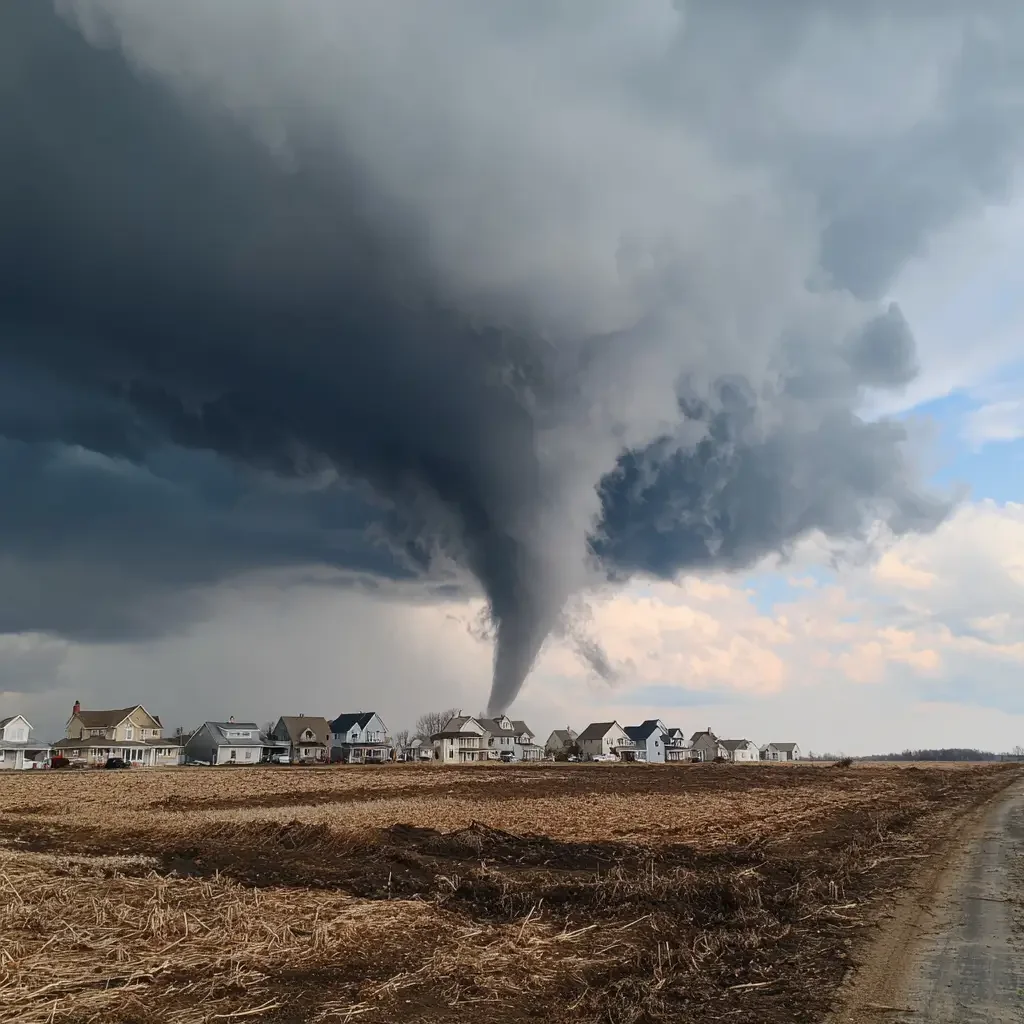
Seventy-five homes damaged in Ringle. An EF2 tornado cutting through Rochester. Baseball-sized hail pounding southern Minnesota. And that was just two weeks in April.
The April 2026 storm outbreak across Minnesota and Wisconsin wasn't a single event — it was a series of escalating hits that left hundreds of properties with damage ranging from shattered siding to collapsed walls. If your home or business took a hit, the decisions you make in the next 7 to 14 days will determine whether your insurance claim covers the actual cost of repair — or whether you absorb thousands out of pocket.
What Happened: The April 2026 Storm Outbreak
Two major rounds of severe weather struck Minnesota and Wisconsin within five days of each other. Both produced tornadoes and large hail across wide geographic areas, and both generated the kind of scattered, hard-to-see damage that insurers routinely underpay.
April 13–14: Southern Minnesota and Western Wisconsin
The first wave hit southern Minnesota on April 13. Four confirmed tornadoes touched down across south-central Minnesota — near Truman, Amboy, Elmore, and northwest Freeborn County. Three were rated EF-1 with winds up to 90 mph, according to the National Weather Service Twin Cities office.
The hail was massive. Lake Crystal recorded stones measuring 3.5 inches in diameter. Rice County saw 3-inch hail.
Faribault and Cannon Falls reported egg and golf-ball-sized stones that damaged roofs, siding, vehicles, and HVAC condensers across multiple counties.
By April 14, the system pushed into Wisconsin. Softball-sized hail fell near Madison. Tornadoes touched down near Sussex in Waukesha County, East Troy in Walworth County, Endeavor in Marquette County, and south of Beaver Dam.
An EF-3 tornado in Union Center destroyed a home.
April 17–18: The Major Tornado Outbreak
Five days later, a second — and far more destructive — outbreak hit both states.
In southeast Minnesota, five tornadoes touched down in the Rochester area. The most damaging was an EF-2 with 130 mph winds that tracked through the Marion Road area south of Rochester for 14 minutes. The Olmsted County Sheriff's Office reported roughly 30 homes damaged in Marion alone, a dozen with significant structural damage, and another 20 homes damaged in Stewartville.
In Wisconsin, the damage was even worse. An EF-3 tornado packed 145 mph winds and tore a 13.5-mile path through Kronenwetter, Weston, and Ringle in Marathon County. Seventy-five homes were damaged.
At least three had complete roof removal with failure of all exterior walls and several interior walls. The Marathon County Sheriff said publicly that he had never seen that level of destruction in the county.
That same day, Wisconsin recorded 14 confirmed tornadoes — one short of the state record. An EF-3 near Cream in Buffalo County hit 140 mph.
An EF-1 with 110 mph winds went through Blair. Three more EF-1 tornadoes struck in Trempealeau County.
⚠️ What Insurers Won't Tell You: After a major storm event, insurance companies deploy catastrophe (CAT) teams — temporary adjusters brought in from out of state to process claims fast. These adjusters are often unfamiliar with local building codes, regional pricing, and the full scope of wind and hail damage patterns in the Upper Midwest. Speed is their priority, not accuracy.
Governor Evers Declares State of Emergency
On April 15, Wisconsin Governor Tony Evers declared a state of emergency following the first round of storms. ReadyWisconsin coordinated damage assessments across affected counties. Marathon County Emergency Management assessed nearly 150 damaged residences, with recovery estimated to cost millions.
The emergency declaration matters for your claim. It creates an official government record that severe weather occurred on specific dates in specific counties — documentation your insurer cannot dispute when you file.
What Insurance Covers After Tornado and Hail Damage
Standard homeowner's policies (HO-3) cover wind and hail damage as named perils. That includes roof damage, siding, windows, gutters, fencing, detached structures like garages and sheds, and interior damage caused by wind-driven rain entering through a breach in the building envelope.
Here's where it gets complicated. Your policy likely covers the damage, but the insurer's estimate of what that damage costs to repair is where most homeowners lose money.
After a regional storm event, insurers process hundreds or thousands of claims simultaneously. The incentive structure favors fast, low estimates — not thorough ones.
The most commonly missed items on wind and tornado damage claims after storms like these include interior water damage from roof breaches, damage to HVAC systems and condensers from hail impact, full siding replacement when matching is impossible, code-required upgrades triggered by the scope of repair, and contents damage from debris or water intrusion.
The Percentage Deductible Problem Most Homeowners Don't Know About
Minnesota and Wisconsin carriers have been shifting policyholders from flat-dollar deductibles to percentage-based wind and hail deductibles. If you haven't read your declarations page recently, this will surprise you.
A 2% hail deductible on a $400,000 home means $8,000 out of pocket before coverage kicks in. On a $600,000 home, that's $12,000.
📋 Minnesota Law: Minn. Stat. § 72A.201 requires insurers to handle claims fairly and promptly — including providing a written explanation of how they calculated your deductible and how it was applied. If your insurer applied a percentage deductible without clearly disclosing it in your policy, that's a compliance issue.
This is exactly why the insurer's first estimate matters so much. If the adjuster scopes your roof damage at $9,000 and your percentage deductible is $8,000, the insurer writes you a check for $1,000. But if a licensed public adjuster in Minnesota or Wisconsin documents the full scope — roof, siding, gutters, screens, HVAC condenser, interior water damage, code upgrades — and the actual replacement cost is $26,000, the math changes entirely.
The deductible stays the same. The payout doesn't.
What Insurers Do After a Major Storm Event — and Why It Costs You Money
I've worked storm claims across the Midwest for over a decade. The pattern after a large-scale event like April 2026 is predictable.
First, the insurer deploys CAT teams. These are contract adjusters, often paid per-claim, who inspect properties quickly and move on. They aren't local.
They don't know that Marathon County building codes changed after the last tornado cycle, or that Rochester's housing stock in the Marion Road corridor includes older construction with specific vulnerabilities.
Second, the insurer's adjuster writes a scope based on what's visible from the ground or a quick ladder inspection. They miss the back elevation of the roof. They don't test all four siding elevations for hail damage.
They skip the HVAC condenser. They note "cosmetic only" on damage that affects the functional lifespan of the material.
Third, they apply depreciation aggressively. On a 15-year-old roof with a 30-year shingle, they'll depreciate 50% — even when the damage requires full replacement and the shingle is still within its expected life. If you have an actual cash value (ACV) policy rather than replacement cost value (RCV), that depreciation is permanent.
This is what Shoreline Public Adjusters exists to counter. We document the full scope of damage using the same software the insurer uses — Xactimate — and present a claim package that accounts for everything their adjuster missed or undervalued.
Was your property hit by the April 2026 storms? If your insurer's estimate seems low — or you haven't filed yet and want to make sure the damage is documented correctly from the start — a free consultation with Shoreline takes 15 minutes and costs you nothing. Contact Us
Common Mistakes Homeowners Make After Storm Damage
1. Waiting too long to document the damage Every day that passes between the storm and your documentation weakens your claim. Rain washes away hail evidence. Temporary fixes obscure the original damage.
Document everything with photos and video before you touch anything.
2. Accepting the first estimate without question The insurer's initial offer is a starting point, not a final answer. After a major hail event, the gap between the insurer's first estimate and the actual cost of repair is often 40% to 60%.
3. Hiring a roofer who "handles the insurance" for you Contractors have a financial interest in getting the job — not in maximizing your claim. A public adjuster works exclusively for you, not for the contractor and not for the insurer.
4. Using the word "cosmetic" in any communication with your insurer If you describe damage as cosmetic, the insurer will use your own language against you. Let a professional determine whether damage is functional or cosmetic — the distinction can mean the difference between a repair patch and a full replacement.
5. Not reading your deductible before filing Know your percentage deductible before you file. If you're surprised by the number, call your agent and ask for a written explanation of how it's calculated.
Under Wis. Stat. § 628.46, Wisconsin insurers must provide clear disclosure of policy terms, including deductible structure.
Frequently Asked Questions About April 2026 Storm Damage Claims
How long do I have to file an insurance claim after the April 2026 storms?
In Minnesota, most property policies allow filing within six years of the date of loss, but report damage as soon as possible. In Wisconsin, the timeframe varies by policy but Wis. Stat. § 631.83 governs. Delays give insurers grounds to dispute causation.
Does my insurance cover tornado damage to my home?
Yes. Standard HO-3 homeowner's policies cover wind and tornado damage as named perils, including structural damage, roof loss, debris impact, and interior damage from wind-driven rain.
The dispute is rarely about coverage — it's about the insurer's valuation of the damage.
What if my insurer says my hail damage is only cosmetic?
Cosmetic-only exclusions have become common in both Minnesota and Wisconsin policies. If your insurer denies based on a cosmetic damage exclusion, a public adjuster can document functional impact — reduced lifespan, compromised weather resistance, code violations — that reclassifies the damage.
Should I file a claim for hail damage if my deductible is high?
Get a professional damage assessment first. Many homeowners assume the damage won't exceed their deductible because the insurer's quick inspection only found roof damage. A full inspection that includes siding, gutters, screens, downspouts, HVAC, and window trim often reveals damage well above the deductible threshold.
Can I still file a claim if I already started repairs?
Yes, but it's harder to prove the full scope. If you've started repairs, stop making permanent changes and document what you've already done. A public adjuster can still work with partial documentation, but the strongest claims are filed before repairs begin.
What to Do Right Now If Your Property Was Damaged
If your home or business was hit by the April 2026 storms in Minnesota or Wisconsin, here's what matters right now. These storms have real deadlines attached to them, and the longer you wait, the harder it becomes to prove the full extent of what happened to your property.
Shoreline Public Adjusters is licensed in both Minnesota and Wisconsin. We work exclusively for policyholders — never for insurance companies — and we don't collect a fee unless your claim pays. If the storms hit your property, we'll tell you within 15 minutes whether it's worth filing.
Contact us for a free consultation | Minnesota services | Wisconsin services
You may also find these helpful:
- What to Do If Your Insurance Denied Your Roof Claim
- Denied Hail Damage Claim? Here's How to Get a Fair Payout
- Filing Business Insurance Claims for Tornado Damage in Wisconsin
Shoreline Public Adjusters, LLC is licensed in Florida (FL G199012), Minnesota (MN 40962416), and Wisconsin (WI 21156868).
Shoreline Public Adjusters, LLCEmail: hello@teamshoreline.com
Phone: 954-546-1899
Fax: 239-778-9889