Do You Need a Public Adjuster in Milwaukee? A Local Claims Guide

By: Shoreline Public Adjusters
Updated: March 2026 · 9 min read
In This Post:
- What a Public Adjuster Actually Does (and Doesn't Do)
- Milwaukee's Claim Landscape: Why It's Getting Harder
- When a Public Adjuster Is Worth It
- Wisconsin Claim Rules That Protect You
- What the Insurer's Adjuster Misses in Milwaukee
- A Real Milwaukee Claim: August 2025 Flood, $4,200 to $38,000
- Common Mistakes Milwaukee Homeowners Make on Insurance Claims
- Frequently Asked Questions About Public Adjusters in Milwaukee
- How Shoreline Works in Milwaukee
A homeowner in West Allis filed a claim after the August 2025 floods. The insurer sent an adjuster who spent 40 minutes in the house, photographed the waterline in the basement, and wrote an estimate for $4,200 — enough to cover drywall replacement in one room and a dehumidifier rental.
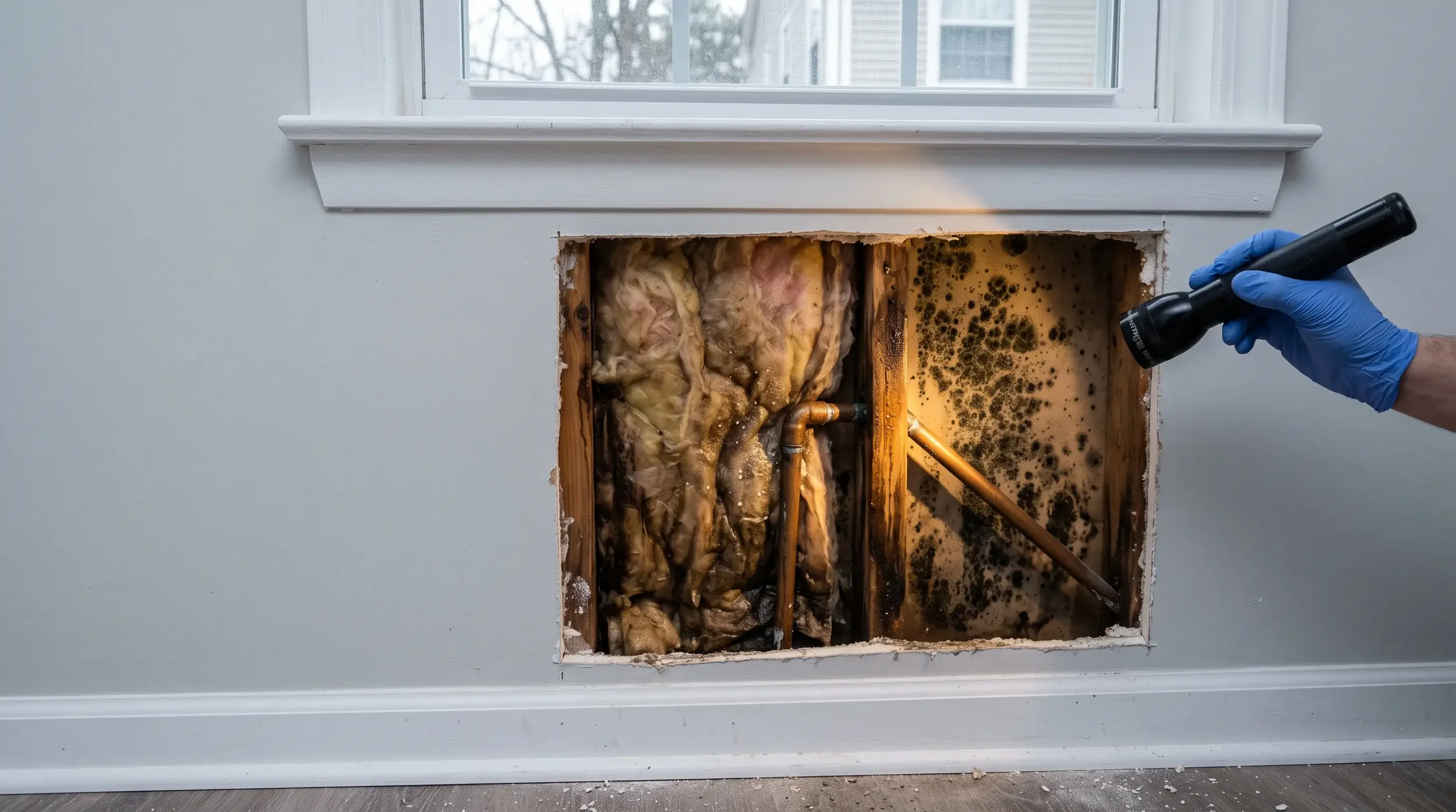
What the estimate didn't include: the electrical panel that had been submerged, the furnace and water heater that were destroyed, the mold growing behind the finished walls within two weeks, and the foundation crack that had opened under hydrostatic pressure during the flood. The actual cost to restore the home was over $38,000.
That gap is why public adjusters exist. Not because every claim needs one — but because the claims that do need one are exactly the claims where homeowners lose the most money.
What a Public Adjuster Actually Does (and Doesn't Do)
A public adjuster in Milwaukee is a licensed insurance professional who works exclusively for you — the policyholder — not the insurance company. We read your policy, inspect your property, document every line item of damage, build a professional estimate, and negotiate directly with the insurer on your behalf.
What we don't do: we don't repair your home, we don't practice law, and we don't file lawsuits. If your claim escalates beyond negotiation and appraisal, you need an attorney. But in our experience, most underpaid claims never get to that point. They get resolved when someone who knows how to read the policy and build the estimate sits across the table from the insurer's adjuster.
Under Wisconsin law (Chapter 629), public adjusters must be licensed by the Office of the Commissioner of Insurance, use an OCI-approved contract, and give you a 5-business-day rescission period to cancel without penalty. Our compensation is contingency-based — we don't collect a fee unless we recover additional money for you.
📊 By the Numbers: According to the Florida OPPAGA study (the largest study of public adjuster outcomes), policyholders who used a public adjuster received settlements averaging 574% higher than those who handled claims alone. While Florida-specific, the underlying dynamic — information asymmetry between insurers and policyholders — applies in every state. Source: Florida Office of Program Policy Analysis
Milwaukee's Claim Landscape: Why It's Getting Harder
Milwaukee homeowners are dealing with more frequent severe weather, rising repair costs, and an insurance market that's tightening claim payouts across the board. The numbers from the past two years tell the story.
August 2025 floods. On August 9–10, 2025, southeastern Wisconsin experienced record-setting rainfall. Milwaukee County declared a state of emergency. FEMA issued a major disaster declaration covering Milwaukee, Washington, and Waukesha counties. Of nearly 4,000 homes surveyed, 4% were destroyed and 50% sustained major damage. By October, FEMA had distributed nearly $92 million in individual assistance — a signal of how severely the private insurance response fell short.
Hail seasons. Wisconsin saw multiple significant hail events in 2024 and 2025, including softball-sized hail in Eau Claire County and the Milwaukee NWS office issuing its first-ever "destructive" severe thunderstorm warning in April 2025. Hail claims are the most common property damage claim type in southeastern Wisconsin — and one of the most consistently underpaid.
Winter damage. Frozen pipes, ice dams, snow load collapses — Milwaukee's winters generate claims that insurers routinely classify as "maintenance issues" or "wear and tear" rather than covered sudden losses.
⚠️ What Insurers Won't Tell You: After the August 2025 Milwaukee floods, many homeowners discovered their standard homeowner's policy doesn't cover flood damage at all. Flood requires a separate policy through the NFIP or a private carrier. If you filed a flood claim on your homeowner's policy, the denial may be legitimate — but the damage to your home is still real, and there may be covered components (sewer backup, if endorsed) that the insurer overlooked.
When a Public Adjuster Is Worth It
Not every claim needs a public adjuster. A straightforward claim — broken window, small water leak, clear coverage — often settles fairly without intervention. Here's when a public adjuster in Milwaukee makes a material difference:
The gap is significant. If the insurer's estimate is more than $5,000 below your contractor's estimate, the gap is almost certainly not a rounding error. It's missing line items, incorrect labor rates, or excluded work.
The claim was denied. A denial doesn't mean the claim is dead. It means the insurer's adjuster found a reason to say no. A public adjuster reviews the denial letter, the policy language, and the damage — and often finds that the denial doesn't hold up against the actual evidence.
The damage is complex. Multi-system damage — roof plus interior plus HVAC plus contents — is where insurer estimates consistently fall short. The more line items involved, the more likely the scope is incomplete.
You don't have time. Running a household or business while fighting an insurance company takes dozens of hours. A public adjuster handles the documentation, communication, and negotiation so you can focus on recovery.
Business interruption is involved. If covered property damage shut down or reduced your business operations, the BI calculation requires expertise that most policyholders — and many insurer adjusters — don't have.
Wisconsin Claim Rules That Protect You
Wisconsin has specific regulations that govern how insurers handle claims. Knowing these timelines gives you leverage — and tells you when the insurer has crossed a line.
10 days to acknowledge. Under Wis. Admin. Code Ins 6.11, the insurer must acknowledge all communications related to your claim within 10 days and begin its investigation with "reasonable dispatch."
30 days to pay. Under WI § 628.46, a claim is overdue if not paid within 30 days after the insurer receives written notice of the covered loss and the amount of the loss. This is one of the tightest claim payment timelines in the country.
7.5% statutory interest on overdue claims. If the insurer misses the 30-day window, statutory interest begins accruing at 7.5% per year. This is automatic — you don't have to demand it.
📋 Wisconsin Law: Under WI § 628.46, insurance claims are overdue if not paid within 30 days of written notice. Overdue claims accrue 7.5% statutory interest. This is one of the strongest policyholder protections in the Midwest. Source: Wisconsin Legislature
Line-of-sight matching (Ins 6.76). When replacement materials don't match the existing home in quality, color, or size, the insurer is generally required to replace enough material to achieve a "reasonably uniform appearance." This matters on siding and roofing claims where the insurer wants to patch one section with a non-matching material.
OCI complaint process. If the insurer is violating claim handling rules, a complaint with the Wisconsin Office of the Commissioner of Insurance creates a regulatory record. OCI investigates insurer conduct and can take enforcement action.
What the Insurer's Adjuster Misses in Milwaukee
The insurer's adjuster isn't trying to help you. They're working for the insurance company, and their job is to document the minimum defensible scope. Here's what we consistently find missing on Milwaukee-area claims:
On hail claims: Soft metal damage to HVAC units, downspouts, and window frames. Granule loss on roofing that's below the insurer's "functional damage" threshold but above the manufacturer's warranty criteria. Matching siding and gutters that the line-of-sight rule requires.
On water and flood claims: Mold behind finished walls that hasn't manifested at the time of inspection. Subfloor damage under carpet or laminate. Electrical system damage from water exposure. Damaged insulation in wall cavities.
On fire and smoke claims: Smoke migration into HVAC ductwork and adjacent rooms. Contents damage in rooms the fire didn't reach. Code upgrades triggered by the repair scope. Temporary housing (ALE) calculations that underestimate the restoration timeline.
On winter damage: Ice dam water intrusion behind walls that's invisible until drywall is removed. Pipe burst secondary damage — the water traveled further than the visible stain suggests. Insulation damage that reduces R-value even after surfaces are dried.
Think your Milwaukee claim is short? A free consultation with Shoreline takes 15 minutes and costs you nothing. We're licensed in Wisconsin and handle claims across the entire state. Contact Us
A Real Milwaukee Claim: August 2025 Flood, $4,200 to $38,000
A homeowner in West Allis filed a claim through their homeowner's policy after the August 2025 floods. The home had sewer backup endorsement coverage — one of the only covered avenues for flood-related interior damage on a standard policy.
The insurer's adjuster inspected two weeks after the event and wrote an estimate for $4,200 — basement drywall removal and replacement in one finished room plus 48 hours of dehumidifier rental. The adjuster classified the remaining basement damage as "flood," which the standard policy excludes.
The homeowner called Shoreline Public Adjusters. We performed a full inspection with moisture meters and thermal imaging, and the sewer backup had affected the entire finished basement — not just the one room the insurer documented.
The electrical panel had been submerged and required full replacement. The furnace and water heater, both in the basement, were destroyed. Mold was already growing behind the walls in two additional rooms.
We also found that the insurer had misapplied the deductible. The sewer backup endorsement had its own $1,000 deductible, but the adjuster had applied the standard $2,500 homeowner's deductible instead.
Our documented estimate: $42,600. After negotiation — including the deductible correction — the insurer settled at $38,400. The homeowner nearly accepted $4,200 and paid for the rest out of pocket.
Common Mistakes Milwaukee Homeowners Make on Insurance Claims
1. Not knowing what their policy actually covers Most Milwaukee homeowners don't have flood insurance. Many don't have sewer backup endorsement. Some have cosmetic damage exclusions on their roof. Read your declarations page before you need it.
2. Accepting the first estimate without question The insurer's initial estimate is a starting point. In our experience with Milwaukee claims, it captures 40–60% of actual damage on complex losses. Get an independent assessment.
3. Waiting too long to document Damage evolves. Mold starts within 48–72 hours of water exposure. Ice dam damage hides behind walls for weeks. The longer you wait to document, the easier it is for the insurer to argue the damage was pre-existing.
4. Filing a claim without understanding the deductible If your deductible is $2,500 and the damage is $3,000, the payout is $500 — and you now have a claim on your record. Know the math before you file.
5. Not filing an OCI complaint when timelines are missed If the insurer blows past the 30-day payment deadline under § 628.46, document it and file a complaint. The 7.5% statutory interest is automatic, but the insurer won't volunteer it.
Frequently Asked Questions About Public Adjusters in Milwaukee
How much does a public adjuster cost in Milwaukee?
Public adjusters in Wisconsin work on contingency — you pay nothing upfront and nothing at all if no additional money is recovered. The fee is a percentage of the settlement, disclosed in the OCI-approved contract before you sign. For catastrophic events, Wisconsin caps fees at 10%.
Can a public adjuster increase my insurance payout?
In most cases involving underpaid or complex claims, yes. The OPPAGA study found policyholders using public adjusters received settlements averaging 574% higher. The increase comes from identifying missed damage, correcting insurer estimate errors, and applying policy provisions the homeowner didn't know existed.
How long do I have to file an insurance claim in Wisconsin?
Wisconsin doesn't set a single statutory deadline for filing claims. Your policy's "duties after loss" section typically requires "prompt" notice.
The statute of limitations for breach of contract under WI § 893.43 is six years, but your policy may contain a shorter "suit against us" provision. File as soon as possible — delays give insurers grounds to dispute.
Is Milwaukee flood damage covered by homeowner's insurance?
Standard homeowner's insurance does not cover flood damage in Milwaukee. Flood requires a separate NFIP or private flood policy. However, if you have a sewer backup endorsement, water that entered through your home's drain system may be covered under that provision — even during a flood event.
What should I do if my Milwaukee insurance claim is denied?
Review the denial letter carefully — it must cite a specific policy provision. Compare that provision to the actual damage and circumstances.
Many denials are based on incomplete inspections or incorrect damage classification. A public adjuster in Wisconsin can review the denial and determine whether it can be challenged through supplemental documentation, reinspection, or the appraisal process.
When should I hire a public adjuster vs. an attorney?
Hire a public adjuster when the dispute is about the amount of loss — the insurer acknowledges coverage but the payout is too low. Hire an attorney when the dispute is about coverage itself — the insurer denies that the damage is covered at all, or when bad faith conduct is involved. Many claims start with a PA and only escalate to legal if the insurer refuses to negotiate fairly.
How Shoreline Works in Milwaukee
Shoreline Public Adjusters is licensed in Wisconsin (WI 21156868) and handles claims across the entire state — from Milwaukee to Madison to Green Bay. We're not a contractor, and we're not a law firm. We're the only professional in the claims process whose job is to make sure you get paid what your policy requires.
Our process: free policy review and claim assessment, full forensic inspection with professional documentation, Xactimate-based estimate that covers every applicable line item, and direct negotiation with the carrier through settlement. We handle supplements, reinspections, and appraisals if needed.
We work on contingency. No fee unless we recover additional money. Contact Us for a free consultation — before Wisconsin's claim timelines work against you.
You may also find these helpful:
- Wisconsin Ice Dam Insurance Claims Guide
- Wisconsin Hail Damage Claim Guide
- What Do Public Adjusters Do? Do I Need One?
Shoreline Public Adjusters, LLC is licensed in Florida (FL G199012), Minnesota (MN 40962416), and Wisconsin (WI 21156868).