HOA Master Insurance Policy: What It Covers and What It Excludes

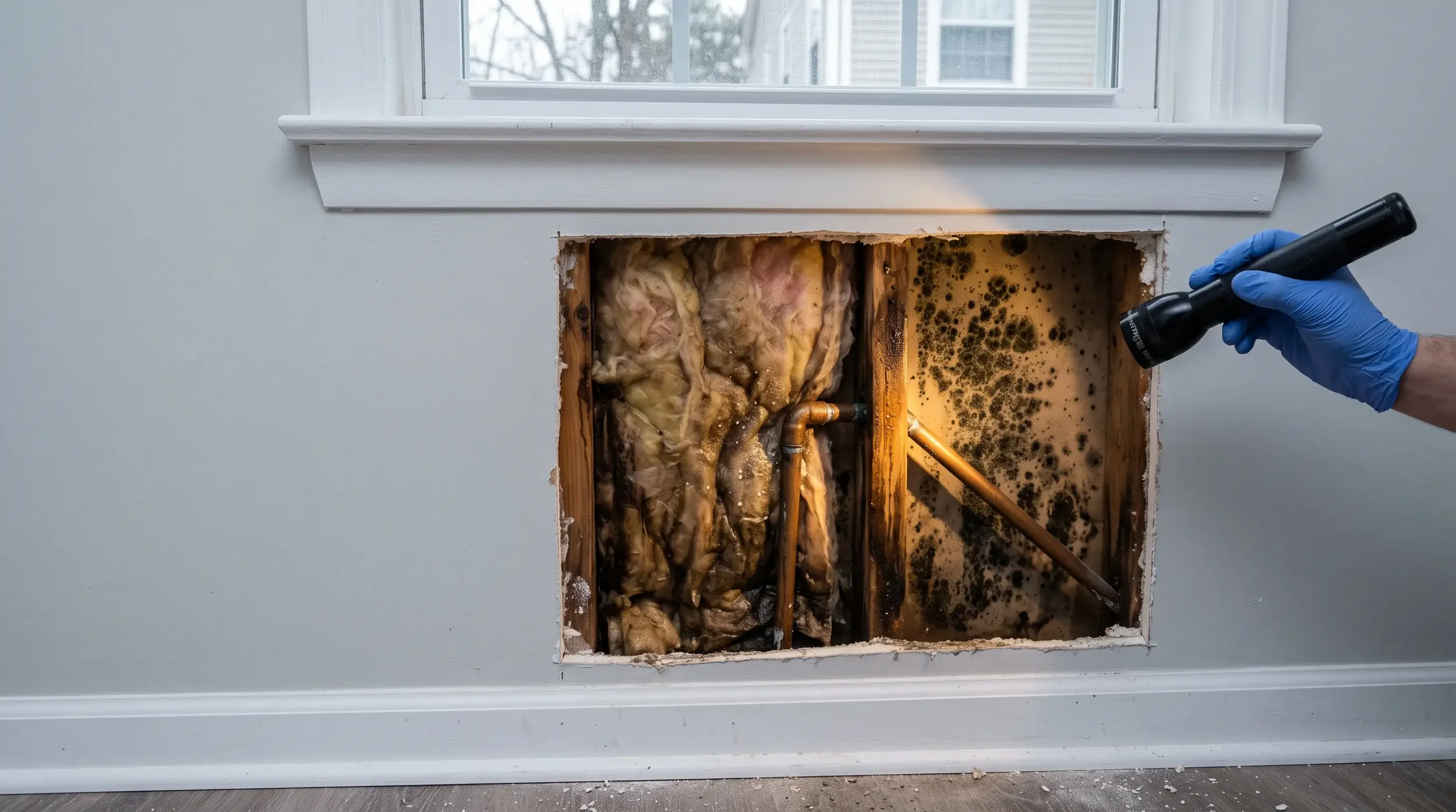
Almost every condo and HOA insurance argument comes down to one line: where the master policy stops and your policy starts. Owners find that line the hard way, standing in a unit with soaked flooring, holding a denial that says the damage falls outside the association's coverage.
The line is not a mystery. In Florida it is written into statute, and in Minnesota and Wisconsin it is set by the association's declaration and the policy form the board bought.
Either way it is knowable before a loss. This is how to find it.
Free 15-minute claim review
Dealing with an association claim that came back short, or a denial that points at the master policy? Send us the declaration page and the denial letter and we will tell you which side of the boundary your damage actually falls on.
What an HOA master insurance policy covers
The master policy insures the building and the shared property. That means the structure, roof, exterior walls, foundation, hallways, elevators, and the common elements the association holds on behalf of every owner. The association buys it, and every owner pays for it through assessments.
Florida sets a floor. Under Fla. Stat. 718.111(11)(a), every condominium association must carry adequate property insurance, and the replacement cost behind that number has to be established by an independent appraisal updated at least once every three years.
That three-year rule matters more than it sounds. An association working from a stale appraisal is underinsured against today's rebuild costs, and the shortfall lands on owners as an assessment after the loss rather than as a premium before it.
Minnesota reaches a similar place by a different route. Minn. Stat. 515B.3-113(a)(1) requires the association to maintain property insurance on the common elements for broad form causes of loss, in an amount not less than full insurable replacement cost less deductibles, measured at purchase and at every renewal.
Wisconsin is more direct still. Wis. Stat. 703.17(1) requires the association to insure the property for not less than full replacement value, written in the name of the association as trustee for each unit owner, with premiums treated as a common expense.
What the master policy specifically excludes
This is the part worth memorizing, because Florida does not leave it to the policy language. Fla. Stat. 718.111(11)(f)3. names the exclusions directly.
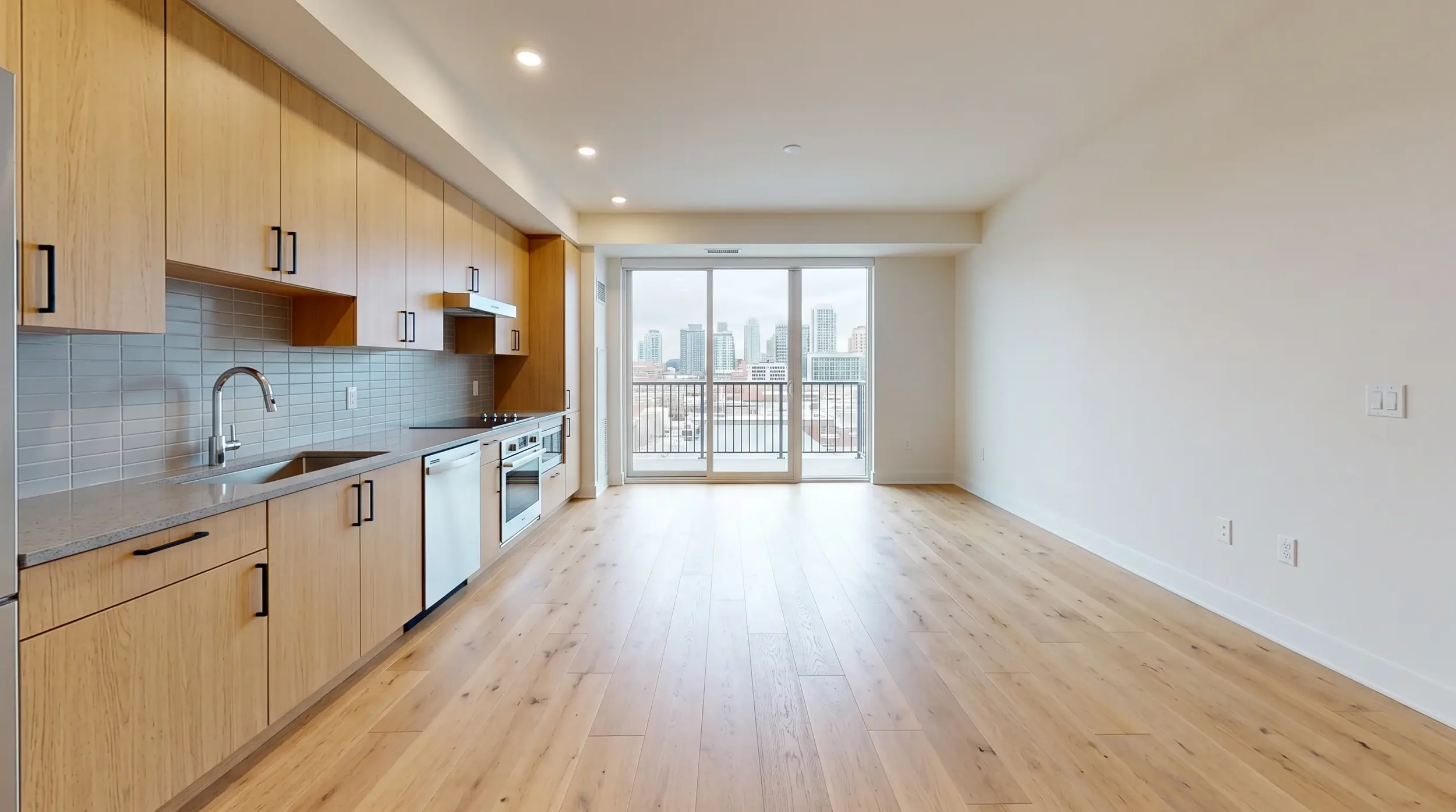
The master policy must exclude all personal property within the unit or limited common elements, and it must exclude floor, wall and ceiling coverings, electrical fixtures, appliances, water heaters, water filters, built-in cabinets and countertops, and window treatments including curtains, drapes, blinds and their hardware, where those items sit inside the unit boundaries and serve only that unit.
Read that list again with a water loss in mind. The flooring, the cabinets, the countertops, the water heater that failed in the first place. All of it is yours, statutorily, no matter how generous the association's policy looks on paper.
The flip side is written just as plainly. Fla. Stat. 718.111(11)(f)1. requires the master policy to provide primary coverage for all portions of the condominium property as originally installed, or replacement of like kind and quality in accordance with the original plans and specifications.
"As originally installed" is the phrase carriers lean on. If a prior owner upgraded the kitchen, the master policy's obligation is measured against the original specification, and the difference between builder-grade and what is actually in your unit is a gap you cover.
Bare walls, single entity and all-in: the three coverage types
Associations buy one of three forms, and the label decides how much of your unit you are responsible for insuring.
Bare walls covers the structure only, up to the unfinished surfaces. Drywall, subfloor and the framing are covered; everything applied to them is not. This form pushes the most cost onto owners.
Single entity covers the structure plus the fixtures as originally installed, at builder-grade specification. Your upgrades are still yours, but the baseline finishes are covered.
All-in, sometimes called all-inclusive, covers the unit including fixtures and improvements. It is the broadest form and the least common, and even here personal property remains the owner's.
Nothing on the outside of the building tells you which one your association bought. The only reliable source is the declaration page and the declaration of condominium read together, which is why the next two sections matter more than the definitions.
How to match your HO-6 to the master policy
Most owners buy an HO-6 unit policy from a quote, never having read the master policy it is supposed to sit on top of. That is how coverage gaps get built in on day one.
Work three numbers off the master declaration page.
Where coverage stops at the unit boundary. This tells you how much dwelling coverage your HO-6 needs to rebuild everything inside it.
The association's deductible. This sets how much loss assessment coverage you need.
The coverage form. A bare walls building demands materially more owner coverage than an all-in one.
In Florida, unit owner policies must conform to Fla. Stat. 627.714, which is worth raising with your agent by name when you are placing or renewing the policy.
The practical test is simple. If your building suffered a total interior loss tomorrow, would your dwelling limit rebuild your unit to its current condition, not its original specification? If you cannot answer that from your own declaration page, the coverage has not been matched.
How to get a copy of the master policy and the declaration page
Ask in writing, and cite the statute. It changes the response time.
In Florida, all current insurance policies of the association are official records under Fla. Stat. 718.111(12)(a)8., and the association must make its records available to a unit owner within 10 working days after the board or its designee receives a written request.
Ask for two specific documents: the complete policy and the declaration page. A certificate of insurance is not a substitute. A certificate confirms a policy exists; the declaration page shows the limits, deductibles and endorsements you actually have to plan around.
Send the request by email and by certified mail on the same day, keep the delivery receipt, and note the date the clock started. If the association misses the window, that record is what moves the conversation from a request to an obligation.
In Minnesota and Wisconsin the mechanism is the governing documents and the state common interest ownership provisions rather than a single 10-day rule, so put the request in writing to the board and the management company together, and ask for the declaration page by name.
When the association's deductible becomes your problem
Association deductibles are not small, and on wind or hurricane coverage they are frequently a percentage of insured value rather than a flat number. On a large building that arithmetic reaches six figures quickly.
The association absorbs that deductible as a common expense or assesses it across the units. Either way owners pay it, and the vehicle that protects you is loss assessment coverage on your HO-6. Our condo master policy deductible calculator sizes your likely share before you need it.
Most owners carry whatever loss assessment limit came standard, discover it after a hurricane, and find it covers a fraction of the assessment. Raising that limit is usually inexpensive relative to the exposure, and it is the single most useful thing to fix after reading the master declaration page.
What to do when the association's claim is underpaid
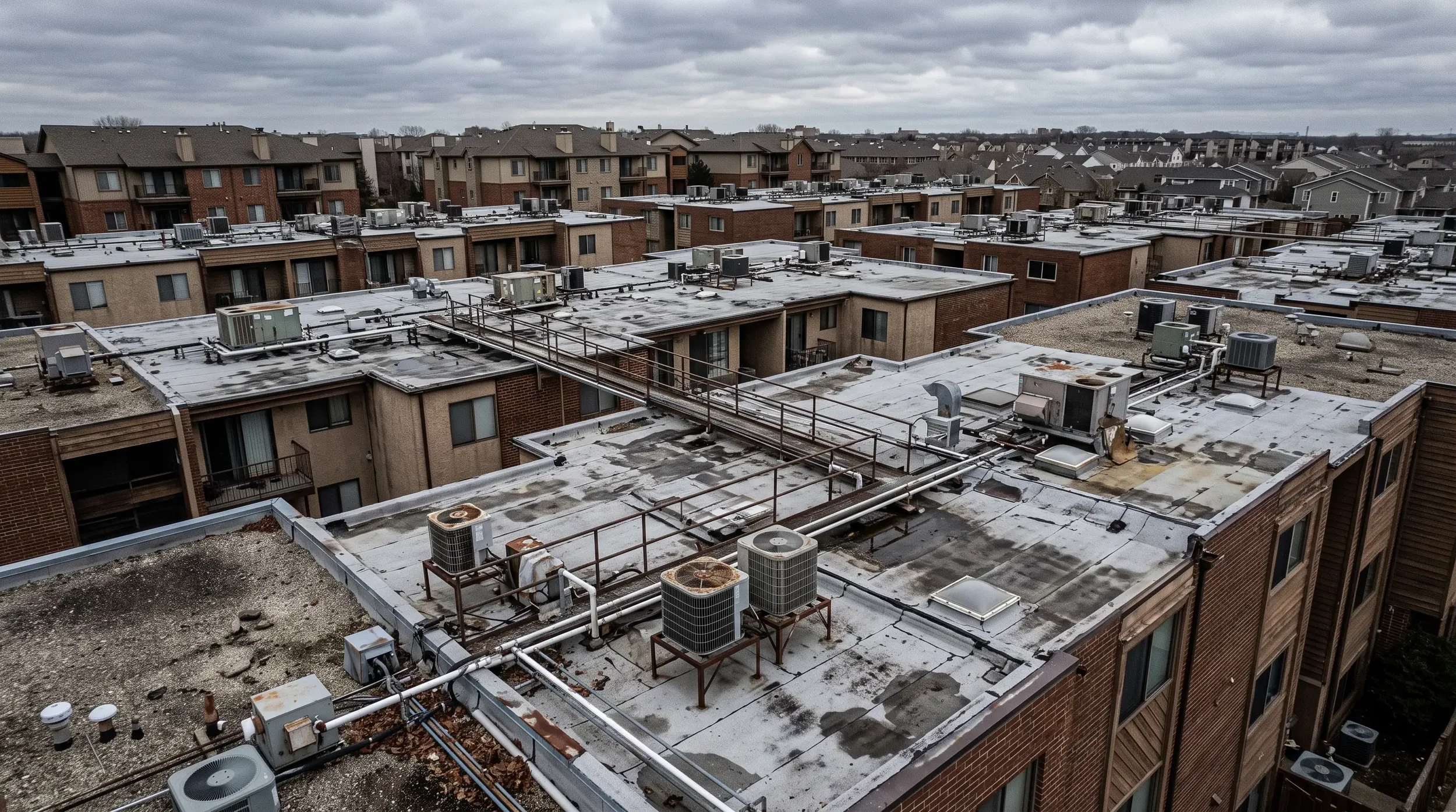
A master policy claim can be underpaid the same way any large commercial claim is: the scope is written off what was visible on the day of inspection, and the parts of the building nobody opened get left out.
On multi-building associations the pattern is consistent.
Roof damage is scoped on a sample of buildings and extrapolated across the rest.
Interior water migration is measured at the visible stain rather than at the wall cavity.
Code-required upgrades triggered by the repair are omitted because nobody asked the building department.
Owners often assume this is the board's problem alone. It is not. An underpaid master policy claim becomes an assessment, so the gap between what the carrier paid and what the repair costs is distributed to the people who live there.
Wisconsin makes the sequencing explicit: under Wis. Stat. 703.17(2), insurance proceeds are first disbursed for the repair or restoration of the damaged common elements. The money is meant to rebuild the building before it does anything else.
If the scope does not match the damage, the answer is a documented counter-scope with photographs, moisture readings and line-item pricing, not a disagreement about the total. That is the work a public adjuster does on the association's side of the file, on contingency, with the fee coming out of the recovery rather than up front and the percentage varying by state and claim type, subject to each state's statutory caps.
Frequently asked questions
What does an HOA master insurance policy cover?
The master policy covers the building itself and the shared property: the structure, roof, exterior walls, hallways, elevators, and common elements the association owns on behalf of every owner. In Florida, Fla. Stat. 718.111(11)(f) requires it to provide primary coverage for all portions of the condominium property as originally installed, or replacement of like kind and quality per the original plans. What it does not cover is the finished inside of your unit, and that boundary is where most disputes start.
What does the master policy specifically exclude?
Florida names the exclusions in statute rather than leaving them to the policy. Under Fla. Stat. 718.111(11)(f)3., the master policy must exclude all personal property inside the unit, plus floor, wall and ceiling coverings, electrical fixtures, appliances, water heaters, water filters, built-in cabinets and countertops, and window treatments, where those items sit inside the unit boundaries and serve only that unit. Those become your responsibility and your HO-6 policy's job.
How do I get a copy of the HOA master insurance policy?
Ask in writing, and cite the records statute. In Florida, all current insurance policies of the association are official records under Fla. Stat. 718.111(12)(a)8., and the association must make records available within 10 working days after receiving a written request. Ask for the full policy and the declaration page, not just a certificate of insurance, because a certificate summarizes coverage while the declaration page shows limits, deductibles and endorsements.
How do I match my condo insurance to the master policy?
Read the master policy's declaration page first, then buy your HO-6 to fill what it leaves out. Identify three numbers: where coverage stops at the unit boundary, the association's deductible, and whether the policy is bare walls, single entity or all-in. Then set your dwelling coverage to rebuild everything inside that boundary and add loss assessment coverage sized to your share of the association deductible. Buying an HO-6 without reading the master declaration page is guessing.
Who pays the HOA's deductible on a master policy claim?
Usually the owners, through a loss assessment. Association deductibles on wind and hurricane claims are often a percentage of insured value rather than a flat figure, which can run into six figures on a large building. The association absorbs it as a common expense or assesses it across the units, and your HO-6 pays your share only up to your loss assessment limit. Many owners carry a small default limit and discover the gap after the loss.
What is a master insurance declaration page?
The declaration page is the summary sheet at the front of the policy showing the named insured, the policy period, coverage limits, deductibles and the endorsements attached. It is the document that actually answers what you are covered for, which is why requesting it by name matters. A certificate of insurance is not a substitute, because it confirms a policy exists without showing the limits and deductibles you need to plan around.
Get the boundary read for you
Send us the master declaration page and your HO-6, and we will mark exactly where one stops and the other starts - start a free review.
Related reading
What a condo association policy covers - the association's side in detail.
Does HOA insurance cover water damage? - the most common boundary fight.
The rule of thumb for condo insurance - how much HO-6 coverage to carry.
Author box
Mitch Miles is a licensed public adjuster and the founder of Shoreline Public Adjusters, LLC, which represents policyholders in Minnesota, Wisconsin, Florida, North Dakota and South Dakota. Firm license numbers: FL #G199012 · MN #40962416 · WI #21156868 · ND #3004392416.