Understanding HOA Liability Claims: A Board Member's Guide to Protecting Your Association

By: Shoreline Public Adjusters
Updated: March 2026 · 11 min read
In This Post:
- What HOA Liability Claims Actually Cover
- The Five Insurance Policies Every HOA Needs
- Why HOA Liability Claims Get Denied
- What Insurers Look for in the First 48 Hours
- Common Line Items HOA Claims Undervalue
- How a Public Adjuster Handles a Denied HOA Claim
- Common Mistakes HOA Boards Make After a Loss
- Frequently Asked Questions About HOA Liability Claims
An HOA in Collier County filed a property damage claim after Hurricane Ian tore through the community's clubhouse, pool enclosure, and three shared buildings. The insurer's initial offer was $74,000. It didn't account for code upgrades on the pool structure, excluded the interior water damage from wind-driven rain, and applied depreciation to line items that should have been replacement cost under the master policy.
The association's board accepted the number because they didn't know they could push back. When we reviewed the file eight months later, the total documented loss was $312,000 — and we recovered $289,000 of it.
That gap — $74,000 to $289,000 — exists because HOA liability claims involve more moving parts than any residential claim. More coverage layers, more stakeholders, more places for money to fall through the cracks.
Insurers know that most boards don't have the claims experience to catch what's missing.
What the Author Brings to HOA Claims
I spent over a decade in enterprise risk management, advising Fortune 100 organizations on the systems that process, evaluate, and pay insurance claims. The same information asymmetry that shows up in corporate risk portfolios shows up in HOA claims — except HOA boards usually don't have a risk manager on staff.
That's the gap we fill. We work exclusively for policyholders — HOA boards, condo associations, and unit owners — and we don't collect a fee unless the association does. Every HOA claim we open gets the same forensic approach: full policy review, independent damage assessment, Xactimate scope, and line-by-line negotiation against the insurer's estimate.
What HOA Liability Claims Actually Cover
HOA liability claims fall into two broad categories, and confusing them is one of the most common mistakes boards make.
Property damage claims cover physical damage to common areas and shared structures — roofs, siding, clubhouses, pools, parking structures, elevators, and everything the master policy lists as association property. These claims are filed under the master property policy and typically involve named perils like wind, hail, fire, or water damage.
Liability claims cover the association's legal responsibility when someone is injured or their property is damaged due to the HOA's negligence. A resident slips on an icy walkway the association failed to salt. A falling tree limb in a common area damages a parked car. A child is injured at the pool because the gate latch was broken. These claims are filed under the general liability policy.
⚠️ What Insurers Won't Tell You: Many HOA claims involve both property damage AND liability exposure — but insurers will only acknowledge whichever costs them less. A storm that damages a shared roof AND causes water intrusion into individual units triggers both the master property policy and potential liability to unit owners. If the board only files one claim, they leave money on the table.
The Five Insurance Policies Every HOA Needs
Most board members know their association has insurance. Few know exactly what's in the stack or where the gaps are. Here's what a complete HOA insurance program looks like — and what each policy actually does when a claim hits.
1. Master Property Policy (HO-6 or Commercial Property) Covers physical damage to common elements and shared structures. This is where storm damage, fire, and water claims are filed. Key variables: replacement cost vs. actual cash value, wind/hail deductible (often 2–5% of insured value in coastal Florida), and whether the policy covers "all risk" or "named perils" only.
2. General Liability (CGL) Covers bodily injury and property damage claims from third parties. Typical limits are $1 million per occurrence / $2 million aggregate. This is the policy that responds when someone sues the HOA for a slip-and-fall, a negligent maintenance injury, or property damage caused by the association's operations.
3. Directors & Officers (D&O) Liability Protects board members against personal liability for management decisions. Covers allegations of breach of fiduciary duty, failure to maintain adequate insurance, mismanagement of funds, and failure to enforce governing documents. D&O does NOT cover bodily injury or property damage — that's what CGL is for.
4. Fidelity Bond / Crime Coverage Protects against theft or embezzlement by board members, property managers, or employees. Most governing documents require fidelity bond coverage, and many state statutes mandate it.
5. Umbrella / Excess Liability Extends the limits on CGL, D&O, and auto liability. Essential for large communities where a single catastrophic claim could exceed base policy limits.
📋 Florida Law: Under Fla. Stat. § 718.111(11), condominium associations MUST maintain property insurance on all common elements and association property for full insurable value, with a required appraisal at least every 36 months. Failure to maintain adequate coverage exposes board members to personal liability. Source: Florida Legislature
Why HOA Liability Claims Get Denied
HOA claims get denied at a higher rate than standard residential claims because the policies are more complex and the denial arguments are more technical. Here are the five most common reasons we see.
1. The "Maintenance vs. Damage" Defense This is the number one denial tactic on HOA property claims. The insurer argues that the damage resulted from deferred maintenance rather than a covered peril. A roof leak after a storm? The insurer says the roof was already deteriorating. Water intrusion through stucco? They call it a maintenance failure, not wind damage.
The counter: damage and maintenance issues can coexist. A 15-year-old roof can sustain new hail damage. The insurer must cover the storm damage even if the roof had pre-existing wear — they don't get to deny the entire claim because the property wasn't brand new.
We see this tactic constantly on denied roof claims.
2. Incorrect Responsible Party Determination Insurers routinely push damage costs onto individual unit owners when the master policy should be covering them, and vice versa. The governing documents and the policy's "insured property" definition determine where the line falls — not the adjuster's preference for whichever answer costs the insurer less.
3. Depreciation Manipulation HOA properties have long useful-life components: roofs, elevators, pool enclosures, parking structures, HVAC systems. Insurers apply aggressive depreciation schedules to reduce payouts on these items, sometimes depreciating labor (which several states prohibit) or using expected-life tables that don't match the actual condition of the component.
4. Scope Limitation — Common Area vs. Unit Boundary The insurer's adjuster inspects the common area damage but doesn't follow the damage path into individual units. Wind-driven rain that enters through a damaged shared roof and damages units below is a single loss event — but the insurer may try to cap the claim at the roof repair and force unit owners to file separate HO-6 claims.
5. Failure to Apply Code Upgrade Coverage Building codes change. When an HOA building is repaired after a covered loss, code upgrades are often required — new hurricane straps, updated electrical panels, ADA-compliant pathways, fire suppression additions. Most master policies include ordinance or law coverage for these upgrades, but insurers don't volunteer it. If the board doesn't ask, the insurer doesn't pay.
📋 Minnesota Law: Under the Minnesota Common Interest Ownership Act (Minn. Stat. § 515B), associations are required to maintain property and liability insurance appropriate to the size and nature of the community. The insurer must comply with Minn. Stat. § 72A.201, which prohibits unfair claims practices including failure to promptly investigate, misrepresenting policy provisions, and failing to acknowledge communications within specified timeframes. Source: Minnesota Department of Commerce
What Insurers Look for in the First 48 Hours
When an HOA files a claim, the insurer doesn't just send an adjuster. They send a strategy. Understanding what happens in those first 48 hours explains why so many HOA claims are underpaid from the start.
The maintenance file review. Before anyone sets foot on the property, the insurer pulls the association's maintenance records, board meeting minutes, and prior claim history. They're looking for any documented deferred maintenance they can use to argue the damage was pre-existing. An offhand board meeting note from two years ago saying "the pool enclosure needs attention" becomes an exhibit in the denial letter.
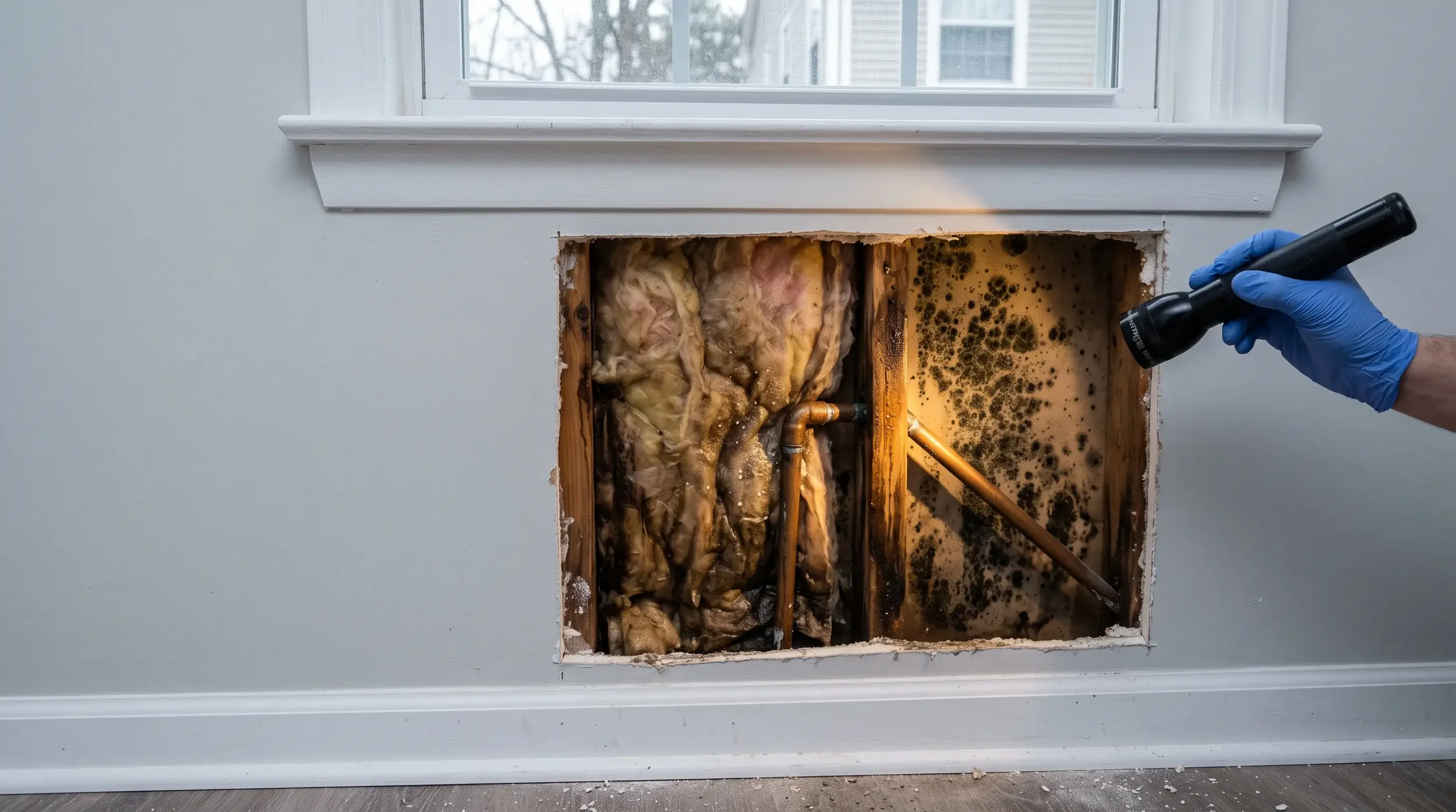
The scope-limiting inspection. The insurer's adjuster walks the common areas but doesn't always inspect the full damage path. They'll document the obvious damage — the fallen tree, the torn roof section, the flooded lobby — but miss the secondary damage: moisture behind walls, compromised insulation, mold-favorable conditions in hidden cavities, or damage that extended into individual units.
The quick-offer tactic. For smaller HOA claims, insurers sometimes issue a fast, low estimate designed to close the file before the board has time to get an independent assessment. This is one of the secret tactics insurance adjusters use on every claim type. A $12,000 offer on a claim that's actually $45,000 looks reasonable if the board has no frame of reference.
Common Line Items HOA Claims Undervalue
HOA claims involve building components and systems that residential adjusters don't always know how to scope. These are the line items that consistently get undervalued or omitted entirely — and they're part of what public adjusters do that the insurer's adjuster won't.
Pool enclosures and screen structures. In Florida, these are major-cost items after any hurricane or severe wind event. Insurers often estimate screen replacement without accounting for the aluminum frame damage underneath, or they spec materials below what's required by current wind load codes.
Elevator damage and modernization. Water intrusion into elevator pits after flooding triggers expensive electrical and mechanical repairs. The insurer's estimate may cover the pit pump-out but miss the control panel replacement, cab interior damage, or code-required modernization triggered by the repair.
Common area roofing at scale. A 40-unit condo complex might have 60,000+ square feet of roof. The insurer's adjuster takes test squares and extrapolates — but test square methodology underestimates damage when hail patterns are uneven or when different roof elevations received different wind exposure.
Interior common area finishes. Lobby renovations, hallway flooring, community room finishes — these are often high-end materials that the insurer's estimate replaces with builder-grade equivalents. The policy entitles the association to match what was there, not what's cheapest.
Code upgrades triggered by the repair. We covered this in the denial section, but it bears repeating: ordinance or law coverage is one of the most commonly missed coverage extensions on HOA claims. If the repair triggers any building code requirement that didn't exist when the building was originally constructed, the cost is covered.
Is your HOA dealing with a denied or underpaid claim? If the insurer's offer doesn't cover the actual cost of repairs — or if your claim has been denied — a free consultation with Shoreline takes 15 minutes and costs your association nothing. Contact Us
How a Public Adjuster Handles a Denied HOA Claim
When we open a denied or underpaid HOA file, we follow a specific sequence that addresses the most common reasons these claims fail.
Step 1: Full policy review. Not the declarations page — the entire policy, including endorsements, exclusions, and coverage extensions. Most boards have never read their full master policy. We look for: replacement cost vs. ACV, ordinance or law coverage, loss assessment provisions, water damage sub-limits, wind/hail deductibles, and any endorsements that expand or restrict coverage.
Step 2: Independent damage assessment. We walk every common area, every shared structure, and — with board authorization — the damage path into individual units. We use Xactimate to build a line-by-line scope that includes everything the insurer's adjuster missed. This scope becomes the basis for the supplement or appeal.
Step 3: Maintenance documentation analysis. If the insurer used the maintenance defense, we review the same records they did — and build the counter-argument. Deferred maintenance doesn't negate new storm damage. We document the difference between pre-existing wear and damage caused by the covered event.
Step 4: Line-by-line negotiation. We go through the insurer's estimate and ours, item by item. Where the insurer omitted a line item, we add it with documentation. Where they underpriced materials, we provide supplier quotes. Where they applied excessive depreciation, we challenge the useful-life assumptions.
Real Outcome: Collier County HOA After Hurricane Ian
A 32-unit condominium association in Collier County sustained damage to three shared buildings, the clubhouse, and the pool enclosure during Hurricane Ian. The master policy carrier sent an adjuster who documented roof damage to one building and estimated the total loss at $74,000.
The board approved the estimate and deposited the check. Eight months later, unit owners were still reporting water intrusion, and the association couldn't get contractors to bid $74,000 worth of work because the actual scope was far larger.
We reviewed the file and inspected all three buildings. The insurer's adjuster had scoped only the most visibly damaged building. Buildings two and three had hail damage on every elevation, wind-driven rain damage to interior common areas, and compromised window seals throughout.
The pool enclosure aluminum framing was bent beyond repair — the original estimate only covered screen replacement. Code upgrades were required on the electrical panels in all three buildings, and ordinance or law coverage was available but never triggered.
Shoreline Public Adjusters built a full Xactimate scope totaling $312,000. After negotiation, the association recovered $289,000 — nearly four times the original offer. The difference wasn't hidden damage. It was damage that was always there but never documented because the insurer's adjuster stopped looking after the first building.
Common Mistakes HOA Boards Make After a Loss
1. Accepting the first offer without independent review The insurer's estimate is a starting point, not a final answer. Boards that accept without comparison leave the most money on the table. What to do instead: Get an independent assessment before approving any repairs. Here's when to hire a public adjuster.
2. Filing under the wrong policy A single event can trigger the master property policy, general liability, and individual HO-6 policies simultaneously. Filing under only one misses covered damages. What to do instead: Have the full policy stack reviewed before filing.
3. Not preserving evidence Board members clean up damage before documenting it, or contractors start emergency repairs without photographing the original condition. What to do instead: Document everything before any cleanup or temporary repairs. Photos, video, and written descriptions of every affected area. Avoid the common claim mistakes that cost policyholders thousands.
4. Letting the insurer define the scope The insurer's adjuster inspects what they choose to inspect. If the board doesn't direct them to all damaged areas or follow up with areas they missed, those areas don't appear in the estimate. What to do instead: Walk the property with the adjuster and provide a written list of all damaged areas.
5. Missing code upgrade coverage Boards don't realize their policy includes ordinance or law coverage until someone points it out. Building code changes since original construction can add 15–25% to the repair cost — and the policy covers it. What to do instead: Ask your adjuster or PA specifically about ordinance or law coverage before accepting any estimate.
Frequently Asked Questions About HOA Liability Claims
What types of insurance does an HOA need?
Every HOA needs five core policies: master property insurance, general liability (CGL), directors and officers (D&O) liability, fidelity bond/crime coverage, and umbrella/excess liability. The master policy covers physical damage to common elements; CGL covers bodily injury and property damage claims from third parties.
Who is responsible for filing the insurance claim — the HOA board or individual unit owners?
It depends on where the damage occurred and what the governing documents say. Damage to common elements and shared structures is filed under the master policy by the board. Damage inside individual units is typically filed under the owner's HO-6 policy.
When damage crosses the boundary — like a roof leak that enters a unit — both policies may be involved.
Can an HOA board member be personally liable for an uninsured loss?
Yes. If the board fails to maintain insurance required by the governing documents or state law, individual board members can face personal liability for resulting losses. D&O insurance protects against these claims, but only if the policy is in place before the incident. In Florida, Fla. Stat. § 718.111(11) requires condominium associations to maintain specific minimum property insurance.
How long does an HOA have to file an insurance claim?
Deadlines vary by state and policy. In Florida, property claims generally must be filed within 3 years from the date of loss. In Minnesota, the statute of limitations for written contracts is 6 years under Minn. Stat. § 541.05, though individual policy provisions may be shorter.
In Wisconsin, Wis. Stat. § 631.83 governs policy limitation periods (Source: Wisconsin OCI). File promptly — delays give insurers ammunition to question the damage timeline.
Should an HOA hire a public adjuster or an attorney for a denied claim?
Start with a public adjuster. A PA's job is to negotiate a fair settlement outside of litigation — reviewing the policy, building an independent Xactimate scope, and negotiating directly with the insurer. Most denied or underpaid HOA claims are resolved at this stage without legal fees.
If the insurer refuses to negotiate in good faith, the PA can refer you to an insurance attorney. The documentation the PA built becomes the foundation of the legal case.
Does the HOA's general liability policy cover slip-and-fall injuries in common areas?
Yes — general liability (CGL) insurance covers bodily injury claims arising from common area negligence, including slip-and-fall incidents on walkways, parking lots, pool decks, and stairways. The policy typically covers defense costs and settlements up to the policy limits. The HOA must demonstrate it maintained the area in question, so regular maintenance logs and inspection records are critical.
If your HOA is dealing with a claim that doesn't add up, the gap between the insurer's offer and the actual cost of repairs is where Shoreline Public Adjusters works. We represent HOA boards and condo associations across Florida, Minnesota, and Wisconsin — and we don't collect a fee unless your association does. But insurance claims have deadlines, and waiting only gives the insurer more time to build their case. Contact Us
You may also find these helpful:
- Does HOA Insurance Cover Water Damage?
- How to Appeal a Denied Insurance Claim
- HOA Insurance Claim Support
Shoreline Public Adjusters, LLC is licensed in Florida (FL G199012), Minnesota (MN 40962416), and Wisconsin (WI 21156868).
Shoreline Public Adjusters, LLC
780 Fifth Avenue South
Suite #200
Naples, FL 34102
Email: hello@teamshoreline.com
Phone: 954-546-1899
Fax: 239-778-9889