Updated Date: March 1, 2026
Read Time: 8 min read
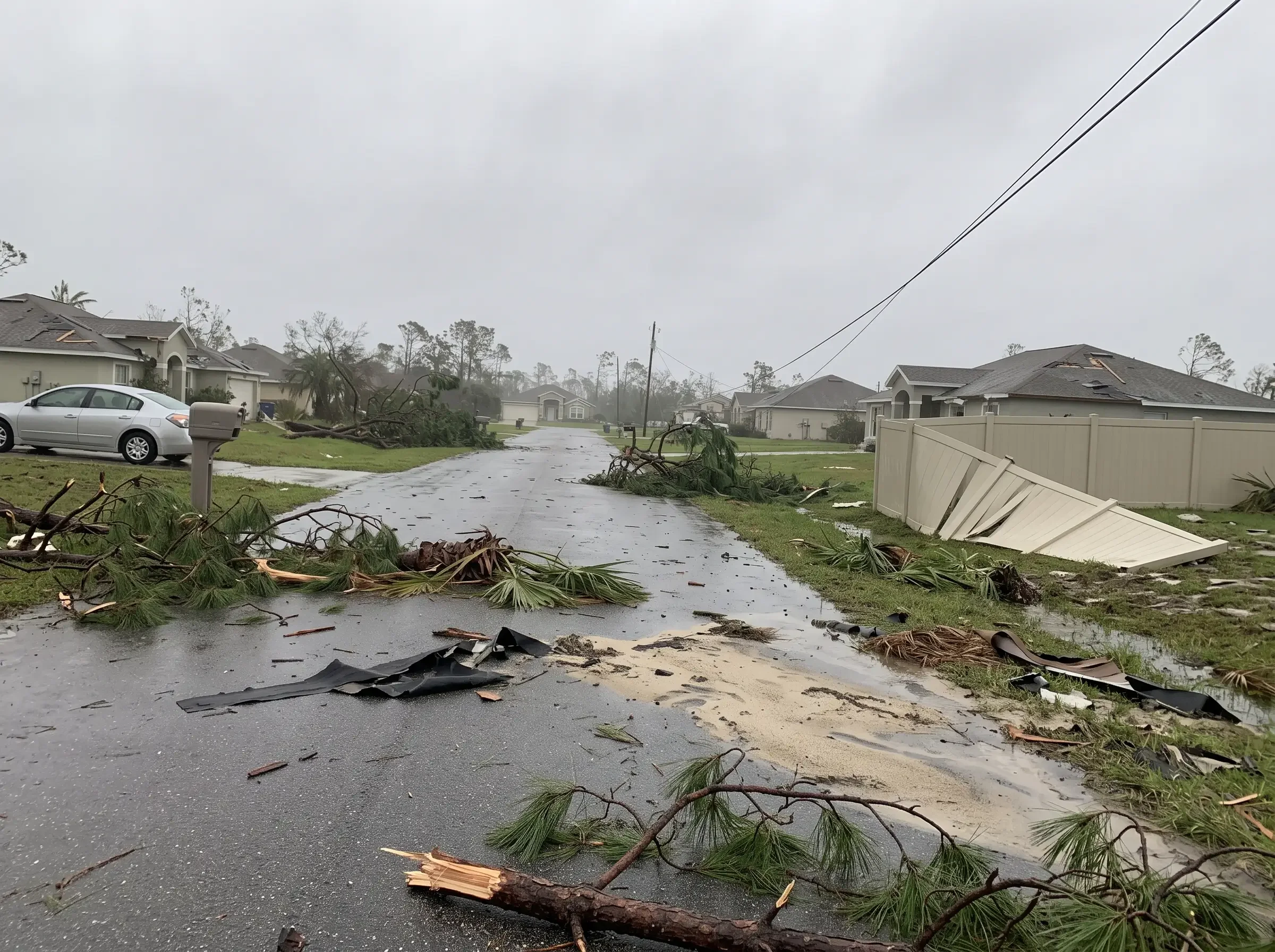
Pensacola sits at sea level along Pensacola Bay, Bayou Texar, and Bayou Chico. When heavy rain hits Escambia County, water finds its way into homes from every direction — through roofs, around foundations, up through storm drains, and across low-lying yards. After Hurricane Sally dumped over 30 inches of rain in 2020, thousands of Pensacola homeowners discovered a painful truth about their insurance coverage: water damage and flood damage are not the same thing, and your insurance company will use that distinction against you.
The Difference That Costs Homeowners Thousands
Water damage is covered under your standard homeowners (HO-3) policy. This includes water that enters your home from above or from a sudden internal event — a roof leak during a storm, a burst pipe, an overflowing washing machine, or rainwater blown through a broken window by wind.
Flood damage is NOT covered under your standard homeowners policy. Flood damage is defined as water that rises from the ground up — storm surge, overflowing rivers and bayous, rising groundwater, and surface water accumulation. Flood damage requires a separate flood policy, usually through the National Flood Insurance Program (NFIP) or a private flood carrier.
Here is where it gets complicated in Pensacola: most storms cause both at the same time. A hurricane rips off part of your roof (wind damage, covered), rain pours into your home through the opening (water damage, covered), AND storm surge pushes water in through your doors and up through the foundation (flood damage, NOT covered under standard policy).
Your insurance company is financially motivated to classify as much damage as possible as "flood" rather than "water" — because if it is flood damage, it either goes to your separate flood policy or it is not covered at all. This classification fight is one of the most common disputes in Pensacola insurance claims.
Why This Distinction Hits Pensacola Harder Than Most Cities
Pensacola has a unique geography that creates overlapping water risks. The city sits between Pensacola Bay to the south and a network of bayous, creeks, and low-lying wetlands throughout the interior. Neighborhoods like East Pensacola Heights, Cordova Park, and areas along Bayou Texar are particularly vulnerable to both storm surge and freshwater flooding.
During Hurricane Sally, the storm surge was relatively moderate — 3 to 5 feet along the bay. But the real damage came from the rain. Sally stalled over the Panhandle and dropped record rainfall that overwhelmed stormwater systems, caused Carpenter Creek and other inland waterways to overflow, and flooded homes miles from the coast. Homeowners who never considered themselves in a flood zone found standing water in their living rooms.
The insurance implications are harsh. If you did not carry flood insurance because you were not in a FEMA-designated flood zone, that rising water damage was not covered at all — regardless of how much you were paying for your homeowners policy. After Sally, thousands of Escambia County homeowners learned that over 40% of NFIP flood claims come from properties outside of high-risk flood zones.
How Insurance Companies Reclassify Your Damage
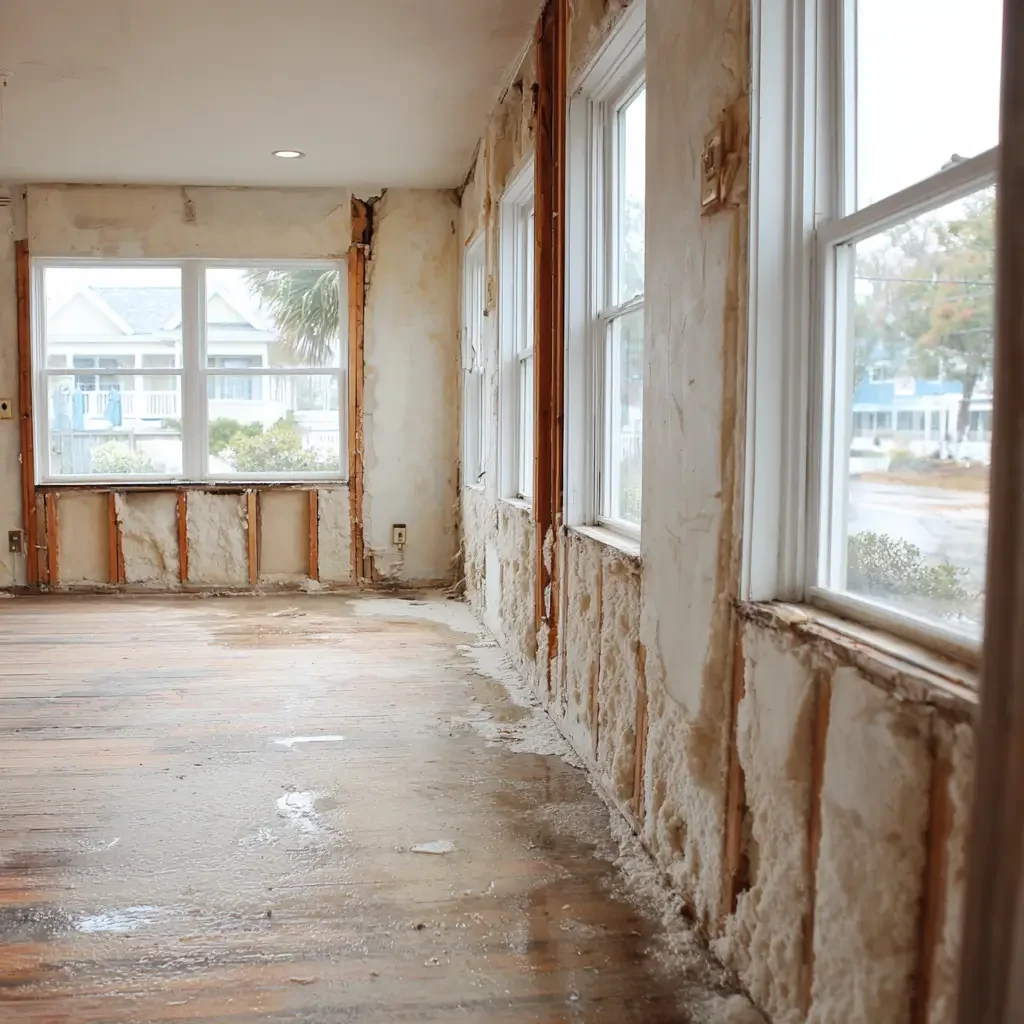
After a major storm, your carrier sends an adjuster to assess the damage. That adjuster looks for a "water line" — a visible mark on your walls showing the highest point water reached inside your home. Anything below that line, they classify as flood. Anything above it, they consider wind-driven rain or roof leak damage.
The problem with this approach:
Water lines are not always accurate. Water wicks up drywall and insulation higher than the actual flood level. A 6-inch flood can create a 12-inch water line on porous walls. If the adjuster uses the wicked line as the cutoff, they are overclassifying water damage as flood damage.
Multiple water sources mix together. In a Pensacola hurricane, your home might have water entering from a roof breach, from wind-driven rain through windows, AND from rising surface water — all at the same time, all pooling on the same floors. The insurance company wants to attribute all ground-floor damage to flooding. But much of it may have come from above.
Timing matters. If wind blew rain into your home for 6 hours before storm surge arrived, the water damage caused during those first 6 hours is covered under your homeowners policy — even if flood water arrived later. Proving the sequence of events requires detailed documentation.
The "concurrent causation" problem. When covered and non-covered causes contribute to the same damage simultaneously, Florida law gets complicated. Some policies include an anti-concurrent causation clause that lets the insurer deny the entire claim if any part of the damage was caused by a non-covered peril (like flood). This is one of the most disputed clauses in Florida property insurance and one of the strongest reasons to have a public adjuster review your policy before you file.
Common Water Damage Claims in Pensacola
Not all water damage involves storms. These are the most frequent water damage claims we see from Pensacola homeowners:
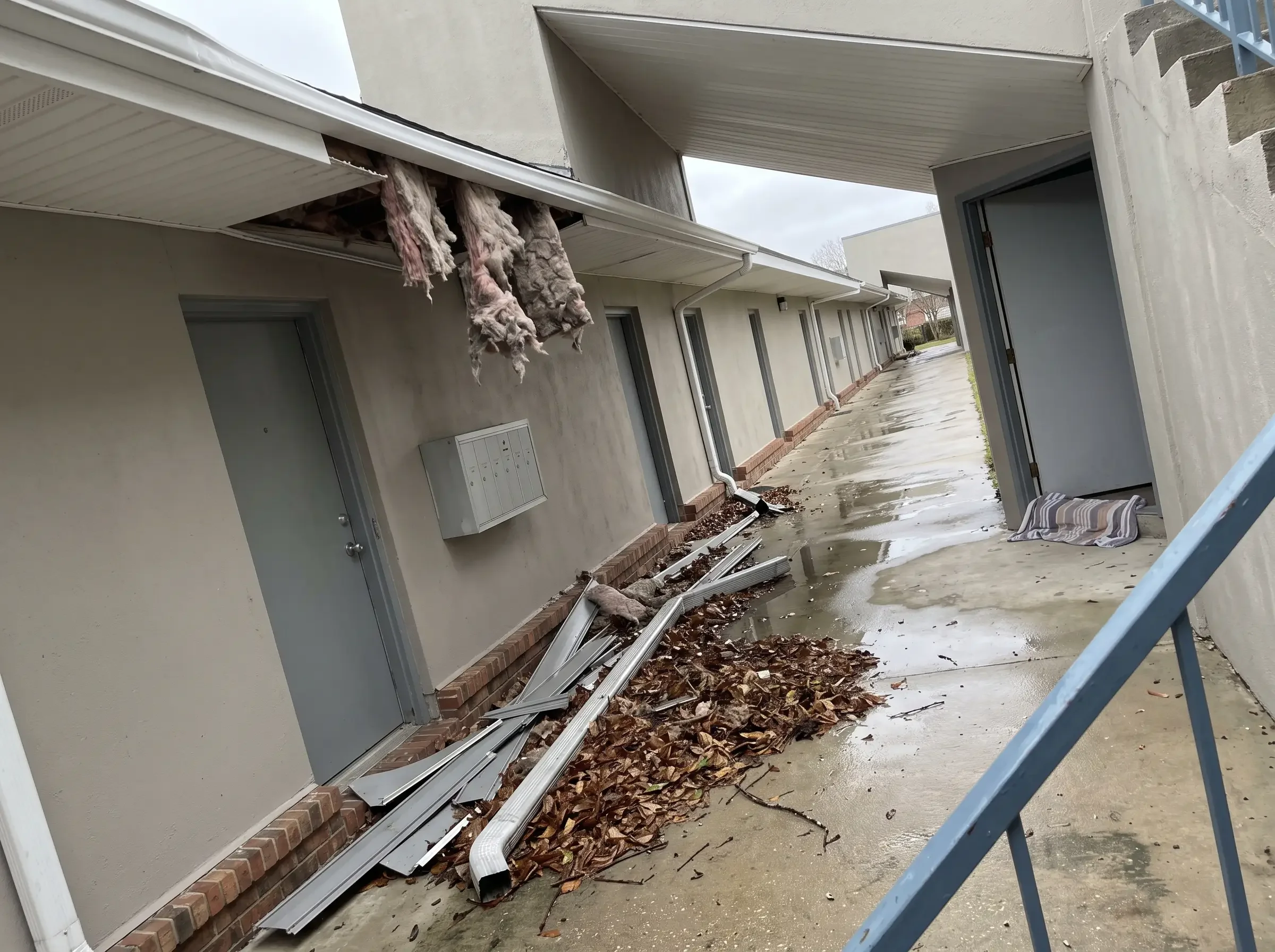
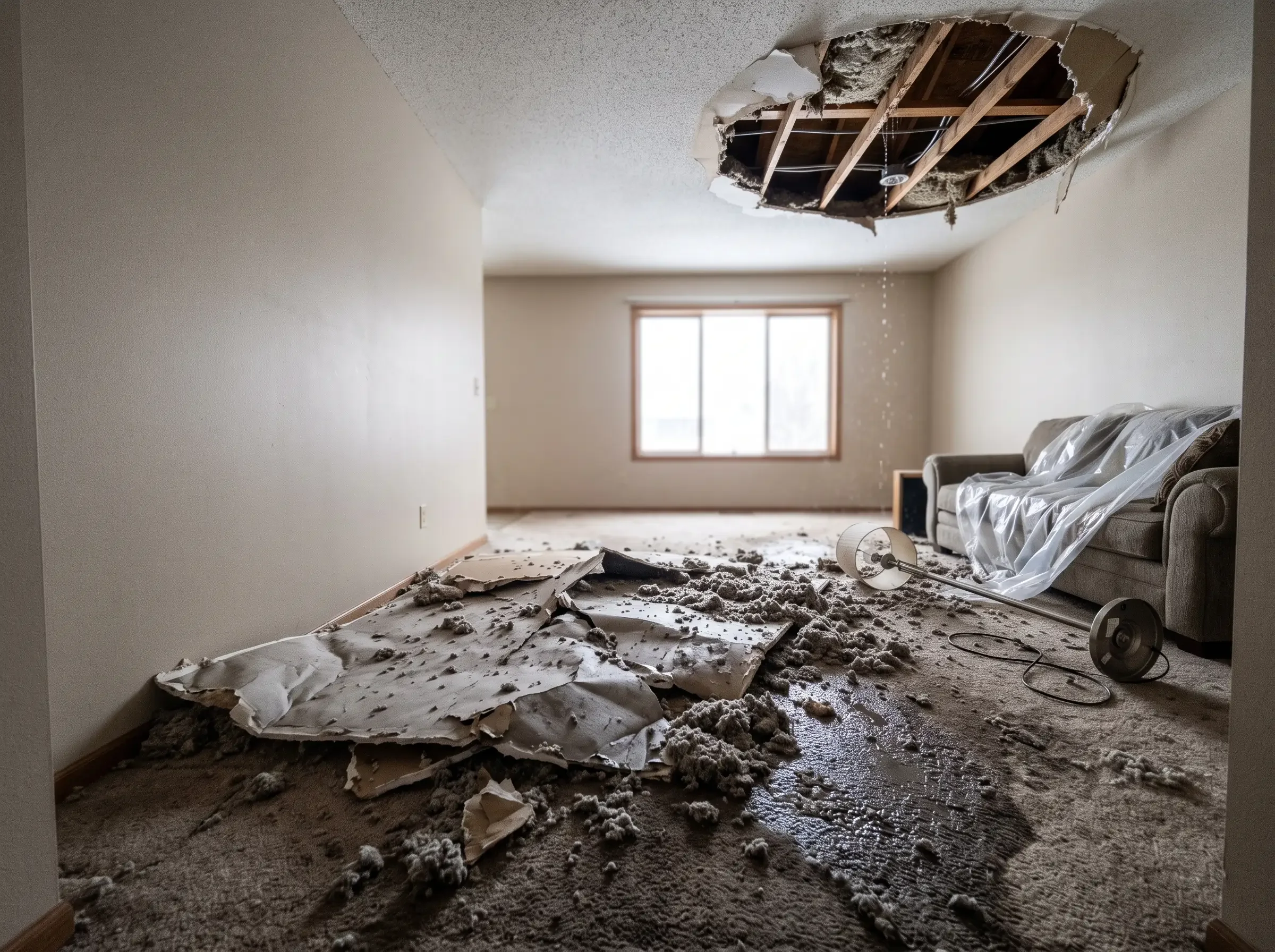
Roof leaks after storms. Even moderate thunderstorms can exploit weak points in aging roofs. Flashing around vents and chimneys, cracked boots around pipe penetrations, and lifted shingles from previous wind events all let water in. The damage often shows up days later as stains on ceilings or walls.
Burst pipes and plumbing failures. Pensacola does not freeze often, but when temperatures drop below freezing (which happens a few times each winter), exposed pipes in attics, crawl spaces, and exterior walls can burst. A single burst pipe can release hundreds of gallons before anyone notices. Your homeowners policy covers sudden pipe failures but typically excludes gradual leaks that develop over time.
AC condensation and drain line failures. Florida humidity means your AC system produces gallons of condensation daily. When the drain line clogs or the condensation pan overflows, water pours into your ceiling, walls, and floors. This is one of the most common — and most denied — water damage claims in Florida. Insurers frequently argue that a clogged drain line is a maintenance issue, not a sudden event.
Appliance failures. Washing machines, dishwashers, water heaters, and refrigerators with ice makers all connect to water lines. When those connections fail, the water runs until someone shuts it off. If the failure is sudden, it is covered. If the connection was slowly leaking and you did not maintain it, the insurer will argue negligence.
Slab leaks. Pensacola homes built on concrete slabs can develop leaks in the water lines embedded in or beneath the slab. These leaks are invisible until you notice a spike in your water bill, warm spots on the floor, or mold smell. The water damage from a slab leak can be extensive by the time you discover it. Coverage depends on whether the leak was sudden or gradual — and proving that distinction is often a fight.
Filing an NFIP Flood Claim: A Separate Process
If you carry flood insurance through the NFIP, that claim is handled completely separately from your homeowners claim. The NFIP has its own rules, deadlines, and adjusters. Here is what you need to know:
File immediately. NFIP requires you to provide a Proof of Loss within 60 days of the flood event. This is a sworn statement of the damage and the amount you are claiming. Miss this deadline and your claim can be denied entirely.
NFIP adjusters are different. The adjuster who inspects your flood damage works for the NFIP's Write Your Own (WYO) program, not your homeowners insurance company. They follow FEMA guidelines, not your carrier's internal rules. The inspection, documentation, and negotiation process is different.
NFIP payout caps are lower than you think. Standard NFIP residential policies cap building coverage at $250,000 and contents coverage at $100,000. If your home is worth more than that — and many Pensacola homes are, especially in waterfront neighborhoods — the NFIP cap may leave you significantly short. Private flood policies offer higher limits but cost more.
NFIP does not cover basements, below-grade spaces, or landscaping. If flood water damaged your finished basement, outdoor kitchen, pool equipment, or landscaping, the NFIP will not cover those items. Private flood policies sometimes do.
You can hire a public adjuster for your flood claim too. Many homeowners do not realize that a public adjuster can handle your NFIP flood claim alongside your homeowners claim. When you have both policies in play, coordinating the two claims is where most homeowners lose money — damage gets attributed to the wrong policy, or falls through the gap between them.
How to Protect Your Claim
Document the source of water, not just the damage. When you photograph water damage, also photograph where the water came from. If it entered through a hole in the roof, photograph the hole AND the water trail from the ceiling down. If it came from a burst pipe, photograph the pipe and the surrounding area. This source documentation prevents the insurer from reclassifying the cause.
Note the timing. Write down when you first noticed the water, when the storm hit, and whether water came from above (covered) before it came from below (flood). If you were home during the event, your written timeline is evidence.
Do not let the adjuster classify without challenge. If the insurance adjuster attributes your water damage to flooding and you believe it came from a covered source (roof, pipe, wind-driven rain), push back in writing. You have the right to dispute their findings. A licensed public adjuster can provide an independent assessment of the water source and damage cause.
Check your flood policy separately. If you do have flood coverage through NFIP or a private carrier, file that claim separately and simultaneously. Do not wait for your homeowners claim to resolve first. Flood policies have their own filing deadlines and documentation requirements.
Test for hidden moisture immediately. Water damage spreads behind walls, under flooring, and into insulation. Within 24-48 hours, mold can begin growing in warm, humid Pensacola conditions. A moisture meter reading taken within days of the event proves the extent of water penetration. If you wait weeks, the drying out may hide how far the water actually traveled — and your insurer will use that against you.
Mold: The Secondary Damage Insurance Companies Hate Paying For
In Pensacola's humidity, mold growth after water damage is almost guaranteed if the moisture is not addressed within 48 hours. Mold remediation costs range from a few thousand dollars for a small area to $30,000 or more for a full-home remediation.
Most Florida homeowners policies cap mold coverage at $10,000 or exclude it entirely. But here is the key: if the mold resulted from a covered water damage event (like a roof leak during a storm), the mold remediation should be part of that claim — not subject to the separate mold cap. Insurance companies routinely try to split mold off as a separate claim to apply the cap or deny it altogether.
This is exactly the kind of fight where a public adjuster earns their fee many times over. We document the chain of causation — storm caused roof damage, roof damage caused water intrusion, water intrusion caused mold — and present it as one continuous covered event.
Mold also creates health risks that add urgency to your claim. Escambia County's warm, humid climate means mold spreads fast once it starts. If your insurer is slow to respond and mold grows during the delay, that additional damage is on them — especially if they missed the 60-day claim resolution deadline under Florida law.
How Florida's 2022 Reforms Affect Water Damage Claims
The recent insurance reforms changed several rules that directly impact water damage and flood claims in Pensacola:
Faster claim resolution. Insurers now have 60 days to pay or deny, down from 90. This is better for homeowners in theory, but in practice, carriers sometimes issue fast denials rather than taking time to properly investigate. If your water damage claim is denied quickly, that does not mean it is over — it means you need to challenge the denial with better documentation.
No one-way attorney fees. Before the reforms, underpaid homeowners could sue and have the insurer cover their legal costs if they won. That is gone. For water damage claims, this means the negotiation phase — where a public adjuster operates — is more important than ever. Strong documentation and professional advocacy upfront is cheaper and more effective than litigation after the fact.
Stricter proof requirements. Courts are holding homeowners to a higher documentation standard under the new rules. Vague descriptions of damage and delayed reporting weaken your position. Get a professional inspection, document everything with photos and moisture readings, and file your claim within days of the event.
Do You Need a Public Adjuster for a Water Damage Claim?
Small, straightforward water damage claims (a single burst pipe with limited damage) can often be handled on your own. But you should strongly consider hiring a public adjuster if:
- The insurance company is classifying your water damage as flood damage
- Mold has developed as a result of the water event
- Multiple rooms or floors are affected
- The damage involves structural elements (subfloor, framing, foundation)
- Your claim has been partially denied or significantly underpaid
- You have both a homeowners and flood policy and need to coordinate two claims
- Your insurer is blaming the damage on maintenance or gradual deterioration
- The damage estimate from your insurer seems too low compared to contractor quotes
Shoreline Public Adjusters handles water damage and flood claims across Pensacola, Escambia County, Santa Rosa County, and the entire northwest Florida panhandle. We are licensed in Florida (#G199012), and our fee is contingency-based — we do not charge unless we recover money for you.
Distinguishing wind-driven water damage from flood damage is the single most consequential coverage analysis in any Pensacola storm claim, and as a Florida public adjuster licensed across all 67 counties, we've worked both sides of that line through every major storm event since Sally.
Call 954-546-1899 or request your free claim consultation to find out what your water damage claim is really worth.