Pensacola Hail Damage: What Your Insurance Company Won't Tell You
Updated Date: March 1, 2026
Read Time: 11 min read
Most Pensacola homeowners associate insurance claims with hurricanes. But hail is one of the most underreported causes of property damage in northwest Florida — and one of the easiest for insurance companies to underpay.
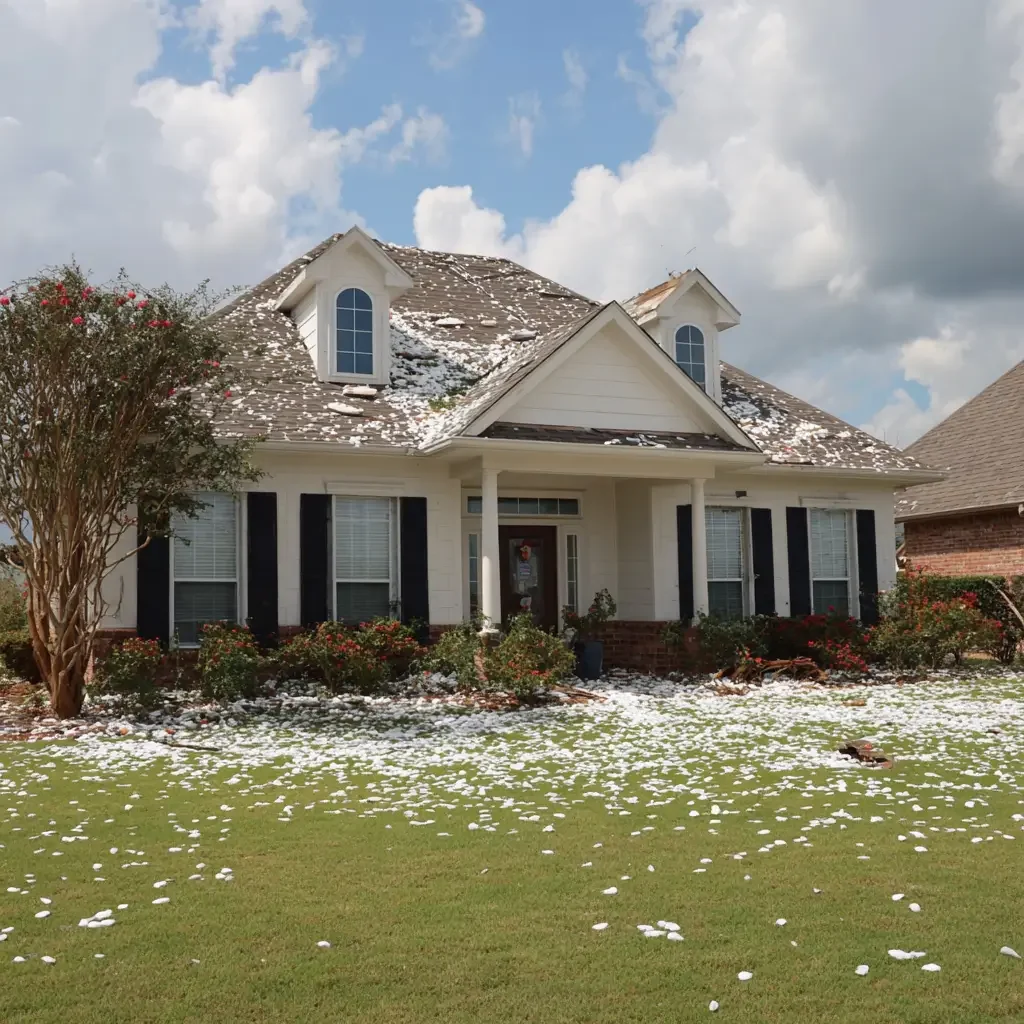
The Gulf Coast sees hail events every year, usually between March and June when severe thunderstorms roll through Escambia and Santa Rosa counties. A single storm can drop hail large enough to crack roof shingles, dent metal flashing, damage gutters, and pit the finish on outdoor AC units. The problem is that most of this damage is invisible from ground level. Homeowners never see it, never file a claim, and the damage quietly worsens until the next storm turns a small problem into a major one.
As a licensed Florida public adjuster serving every county in the state, we've watched carrier hail-damage playbooks evolve over the past decade — and the patterns in Escambia and Santa Rosa are remarkably consistent year over year.
How Common Is Hail in Pensacola?
Northwest Florida sits in what meteorologists call Dixie Alley — a region stretching from the Gulf Coast into the southeast where severe thunderstorms produce hail, tornadoes, and damaging straight-line winds. Escambia County averages multiple hail events per year. Most of these do not make the news because the hailstones are under 1.5 inches, but even quarter-sized hail (1 inch) can cause real damage to roofing materials.
The National Weather Service issues severe thunderstorm warnings when hail is expected to reach 1 inch or larger. But damage starts at smaller sizes. Half-inch hailstones — the size of a marble — can bruise asphalt shingles enough to shorten their lifespan by years. You do not need a headline-grabbing hail event to have a valid insurance claim.
Pensacola's coastal humidity also compounds hail damage. When hail knocks protective granules off asphalt shingles, it exposes the underlying mat to constant moisture and UV radiation. In a dry climate, that exposed spot might last a few years before failing. In Pensacola's wet, hot environment, degradation accelerates. A hail bruise that seems minor in March can become an active leak by August.
How Hail Damages Your Roof Without You Knowing
Hailstones do not need to be golf-ball sized to cause real damage. Even stones the size of a quarter (about 1 inch) can:
- Bruise asphalt shingles — The impact knocks loose the protective granules on the surface. This exposes the asphalt mat underneath to UV rays, which accelerates aging. A bruised shingle loses years of life expectancy.
- Crack tile and slate — Pensacola has older homes with clay and concrete tile roofs. Hail fractures tiles in ways that are not visible until water starts leaking through months later.
- Dent metal components — Flashing, vents, ridge caps, and metal roofing all show hail impact. These dents compromise the seal around roof penetrations.
- Damage soft metals — Gutters, downspouts, and aluminum soffits dent easily. This is often the first visible sign of hail on a property.
- Crack vinyl siding and window frames — High-velocity hail chips vinyl siding and can crack the seals on double-pane windows, causing them to fog over time.
The real issue is cumulative. One hail event might weaken shingles. The next event finishes them off. But your insurance company will try to attribute the failure to "wear and tear" or "age" rather than storm damage. That is why documenting each hail event matters.
How to Check Your Property After a Hail Storm
You do not need to climb on your roof. Start with what you can see from the ground and work your way through these checkpoints:
Ground-level signs: Look at your gutters and downspouts for dents. Check window screens for small tears or pockmarks. Look at any painted wood surfaces (fascia, trim, shutters) for chipped paint in a splatter pattern. Inspect your AC condenser unit for pitting on the top and sides.
Soft metal test: If your mailbox, light fixtures, or car show dents from the storm, your roof almost certainly took hits too. Hail does not discriminate — if it dented aluminum at ground level, it hit your shingles 20 feet higher where stones had even more velocity.
Attic check: After a heavy rain following a hail event, check your attic for any signs of daylight, moisture, or water staining on the decking. Active leaks that appear after a hail storm point directly to impact damage.
Gutter granule check: After a hail event, look at your gutter troughs and downspout discharge points. A fresh accumulation of black granules means hail knocked them off your shingles. Some granule loss is normal over time, but a sudden heavy deposit after a storm is a clear indicator of hail impact.
Professional inspection: A licensed public adjuster or roofing inspector can get on the roof safely and identify hail damage patterns that are impossible to see from the ground. At Shoreline, we use drone photography and infrared imaging to find damage across every square foot of your roof.
Understanding Roof Inspection Reports and Damage Density
When a professional inspects your roof for hail damage, they use a standardized method. They lay out 10-foot by 10-foot test squares in multiple areas of the roof and count the number of hail impacts within each square. This number is called the damage density, and it is what determines whether your insurer approves a repair or a full replacement.
There is no universal threshold written into Florida law, but the roofing industry and insurance companies generally follow these guidelines:
Low density (1-3 hits per test square): The insurer will likely approve spot repairs — replacing individual damaged shingles. This is the cheapest option for the carrier, but it may not fully address the damage if impacts are scattered across the entire roof.
Moderate density (4-8 hits per test square): This is the gray zone where disputes happen most often. The insurer may push for repairs while a public adjuster will argue the damage is widespread enough to justify replacement. The key factor is whether the damage affects the shingle's ability to shed water and protect the decking underneath.
High density (8+ hits per test square): At this level, most insurance companies will approve a full roof replacement. The damage is too widespread for spot repairs to be effective, and the integrity of the entire roof system is compromised.
Here is what your insurance company will not tell you: the adjuster they send may only check one or two test squares, usually on the least-damaged slope of the roof. A thorough inspection checks every slope and multiple test squares per slope. The difference between checking two squares and checking eight can be the difference between a $3,000 repair approval and a $20,000 replacement.
What Insurance Companies Do With Hail Claims
Hail claims are where insurance adjusters push back hardest. Here is what typically happens:
They blame age and wear. If your roof is more than 10 years old, the insurance adjuster will look for ways to attribute the damage to normal aging rather than hail impact. They will point to moss growth, curling edges, or general weathering as evidence that the roof was already failing. The truth is that hail damage and age-related wear look very different to a trained eye — hail leaves random impact marks with exposed asphalt, while wear follows predictable patterns along edges and valleys.
They depreciate the payout. Florida moved away from full replacement cost on some policy types after the 2022 insurance reforms. If your policy includes an Actual Cash Value (ACV) roof provision, the insurer will subtract depreciation based on your roof's age. On a 15-year-old roof, that depreciation can cut your payout by 50% or more. Check your policy declarations page — it will specify whether your roof coverage is Replacement Cost Value (RCV) or ACV.
They send their own adjuster weeks later. Hail damage is hardest to identify after time passes. Rain washes away loose granules. Debris covers impact marks. The longer the gap between the storm and the inspection, the easier it is for the carrier to downplay the damage. File your claim immediately after the storm.
They use cosmetic damage exclusions. Some Florida policies now include endorsements that exclude coverage for "cosmetic" hail damage — dents that affect appearance but do not cause an active leak. These exclusions are becoming more common, especially on newer policies. If your policy has this endorsement, the insurer may acknowledge the dents but refuse to pay because water is not currently leaking. The counterargument is that compromised shingles will leak eventually, and the damage reduces your roof's functional lifespan. A public adjuster can challenge this classification with documentation of functional damage.
Hail Damage Claim Tips for Pensacola Homeowners
File within days, not weeks. The sooner you report, the stronger your claim. Florida's claim timeline requirements start when you file, so early reporting also puts the insurer on the clock faster.
Save the hailstones. This sounds odd, but if you can photograph hailstones next to a ruler or coin for scale during the storm, that photo becomes powerful evidence of stone size. Larger stones mean higher impact force and more extensive damage.
Check your neighbors. Hail storms hit entire neighborhoods, not individual houses. If your neighbors are getting roof replacements, your property almost certainly has the same damage. This also matters because it establishes a documented hail event in your area — something your insurer cannot deny.
Pull the NOAA storm report. The National Weather Service archives hail reports by date and location. A verified report showing hail of a specific size in your zip code on a specific date is official evidence that supports your claim. Your insurer cannot argue there was no hail event when NOAA has it on record.
Do not sign anything from a door-to-door roofer. After hail events in Pensacola, roofing companies canvass neighborhoods offering "free inspections" and asking homeowners to sign an Assignment of Benefits (AOB). Be careful with these. Florida's 2022 reforms significantly restricted AOB rights. Signing away your claim rights before you understand your policy is risky. Talk to a public adjuster first.
Request a full roof replacement estimate, not just repairs. If hail damaged a significant percentage of your roof surface, Florida building code may require a full replacement rather than spot repairs — especially if more than 25% of the roof area is affected. Insurance companies prefer to approve the cheapest fix. A public adjuster will push for the full scope based on what the damage and the code actually require.
Florida's 2022 Reforms and Hail Claims
The 2022 and 2023 insurance reforms in Florida changed several rules that affect hail damage claims specifically:
Roof age deductibles and ACV endorsements. Insurers can now apply ACV (depreciated value) to roofs over a certain age. If your roof is 15 or 20 years old, this can dramatically reduce your payout. Check whether your policy was renewed after 2022 — the terms may have changed.
Shortened claim timeline. Insurers now have 60 days instead of 90 to pay or deny. This is faster for homeowners, but it also means you need strong documentation from the start. You cannot afford to wait and build your case over months.
No more one-way attorney fees. Before the reforms, homeowners could sue their insurer and have the insurer pay their legal fees if they won. That incentive is gone. The practical impact is that resolving your hail claim through solid documentation, professional estimates, and skilled negotiation — exactly what a public adjuster provides — is now more cost-effective than litigation for most homeowners.
When a Public Adjuster Makes the Difference
Hail claims are technical. The difference between a $2,000 repair approval and a $25,000 roof replacement often comes down to how the damage is documented and presented. Insurance company adjusters spend an average of 15-30 minutes on a roof. A public adjuster spends hours — photographing every impact mark, measuring the damage density per test square across every slope, and building an Xactimate estimate that meets industry standards.
Shoreline Public Adjusters handles hail damage claims across Escambia County, Santa Rosa County, and the entire Pensacola metro area. We are licensed in Florida (#G199012), we charge no upfront fees, and we do not collect a penny unless we recover money for you.
If your property took hail damage — even if it was months ago — it is not too late to file. Call 954-546-1899 or request a free inspection today.