Updated Date: March 1, 2026
Read Time: 9 min read
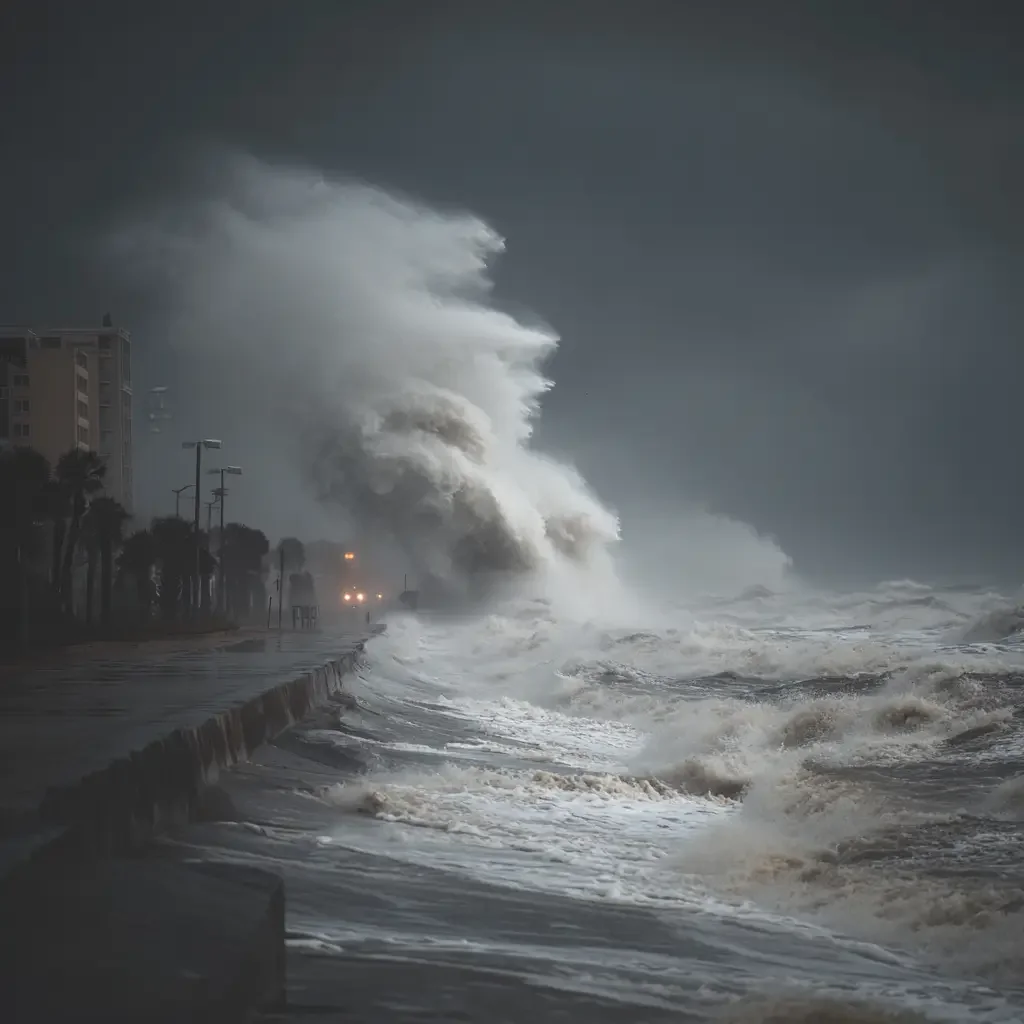
Hurricane season runs from June through November, and Escambia County sits right in the path. Pensacola has taken direct hits from Hurricane Ivan (2004), Hurricane Dennis (2005), and Hurricane Sally (2020). Each storm left behind billions in damage and thousands of homeowners fighting their insurance companies for fair payouts.
If your property took damage from a hurricane or tropical storm, the steps you take in the first few days will shape your entire claim. Here is exactly how to file a hurricane insurance claim in Escambia County — and how to avoid the mistakes that cost homeowners thousands.
Why Pensacola Hurricane Claims Are Different From the Rest of Florida
Northwest Florida faces a combination of hurricane risks that the rest of the state does not deal with in the same way. Pensacola sits on the Gulf Coast where the continental shelf is shallow, which amplifies storm surge. Hurricane Ivan pushed a storm surge of 10 to 15 feet across Pensacola Beach and into mainland neighborhoods. Hurricane Sally stalled over Escambia County for nearly 24 hours, dumping more than 30 inches of rain and causing catastrophic freshwater flooding miles inland from the coast.
This means Pensacola homeowners often face three types of damage in a single storm: wind damage to roofs and structures, rain intrusion through compromised roofing and windows, and flood damage from storm surge or rising water. Each damage type falls under different coverage rules. Wind and rain intrusion are covered under your standard homeowners policy. Flood damage requires a separate policy — usually through the National Flood Insurance Program (NFIP) or a private flood carrier. Many homeowners do not realize they have this gap until after the storm.
Escambia County also has a history of insurer instability. After Hurricane Ivan, several carriers pulled out of northwest Florida entirely. That pushed thousands of homeowners onto Citizens Property Insurance, Florida's insurer of last resort, or onto surplus lines carriers with higher deductibles and stricter terms. If you are on Citizens or a wind-only policy, the claim filing process involves extra steps that standard policyholders do not face.
Step 1: Document Everything Before You Touch Anything
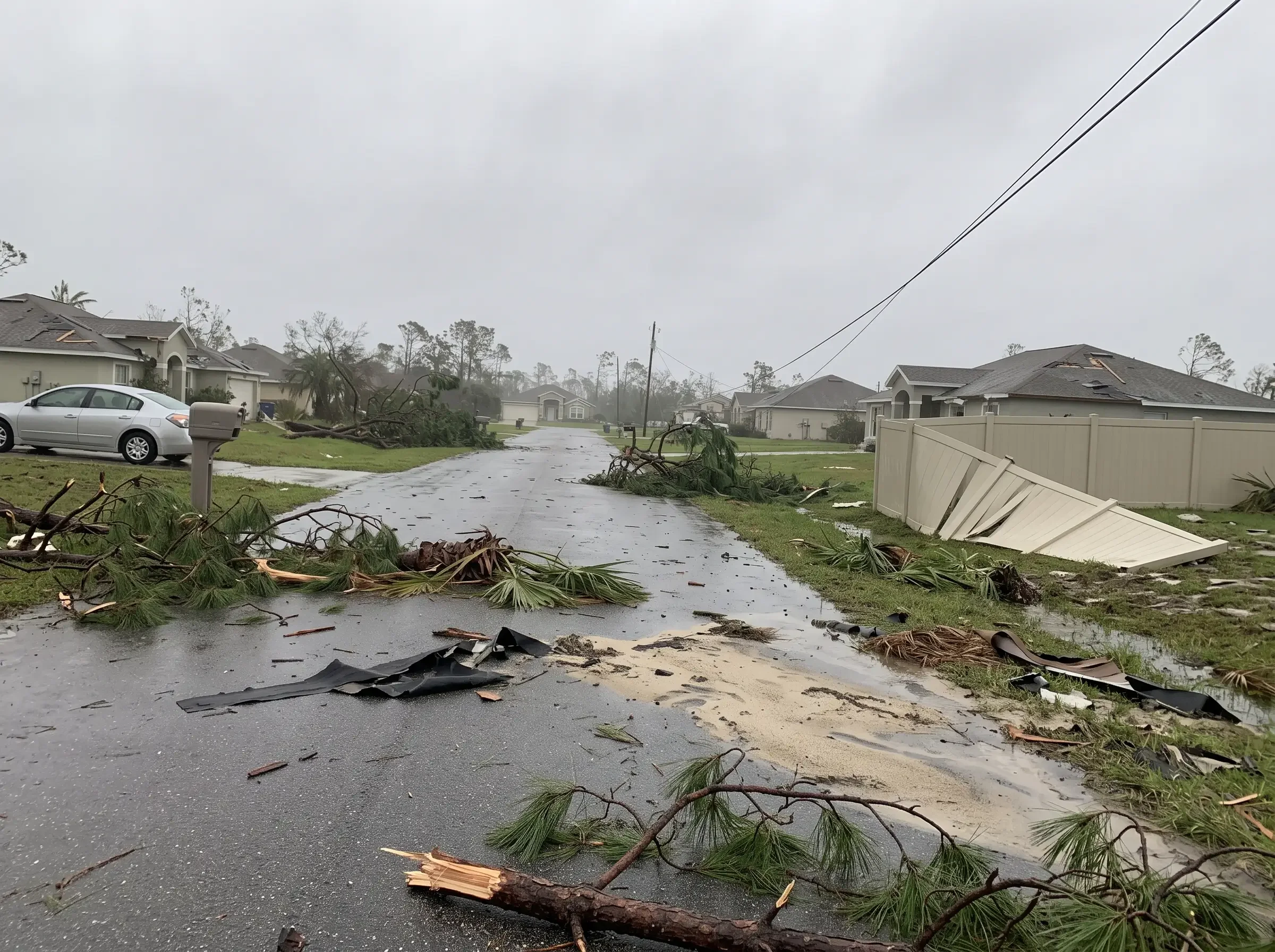
Before you start cleaning up or making temporary repairs, grab your phone and document every piece of damage you can see. Walk the full exterior and interior. Photograph roof damage from ground level, water lines on walls, broken windows, fallen trees on structures, and any debris impact marks. Take video walkthroughs of each room.
Shoot wide-angle photos that show the full scope, then get close-ups of specific damage. Include timestamps. If you have photos of your property from before the storm, save those too — they establish what the property looked like in its pre-loss condition.
This step matters because insurance adjusters sometimes show up weeks after the storm. By then, temporary repairs and cleanup may have hidden evidence of the full damage. Your photos become the primary record.
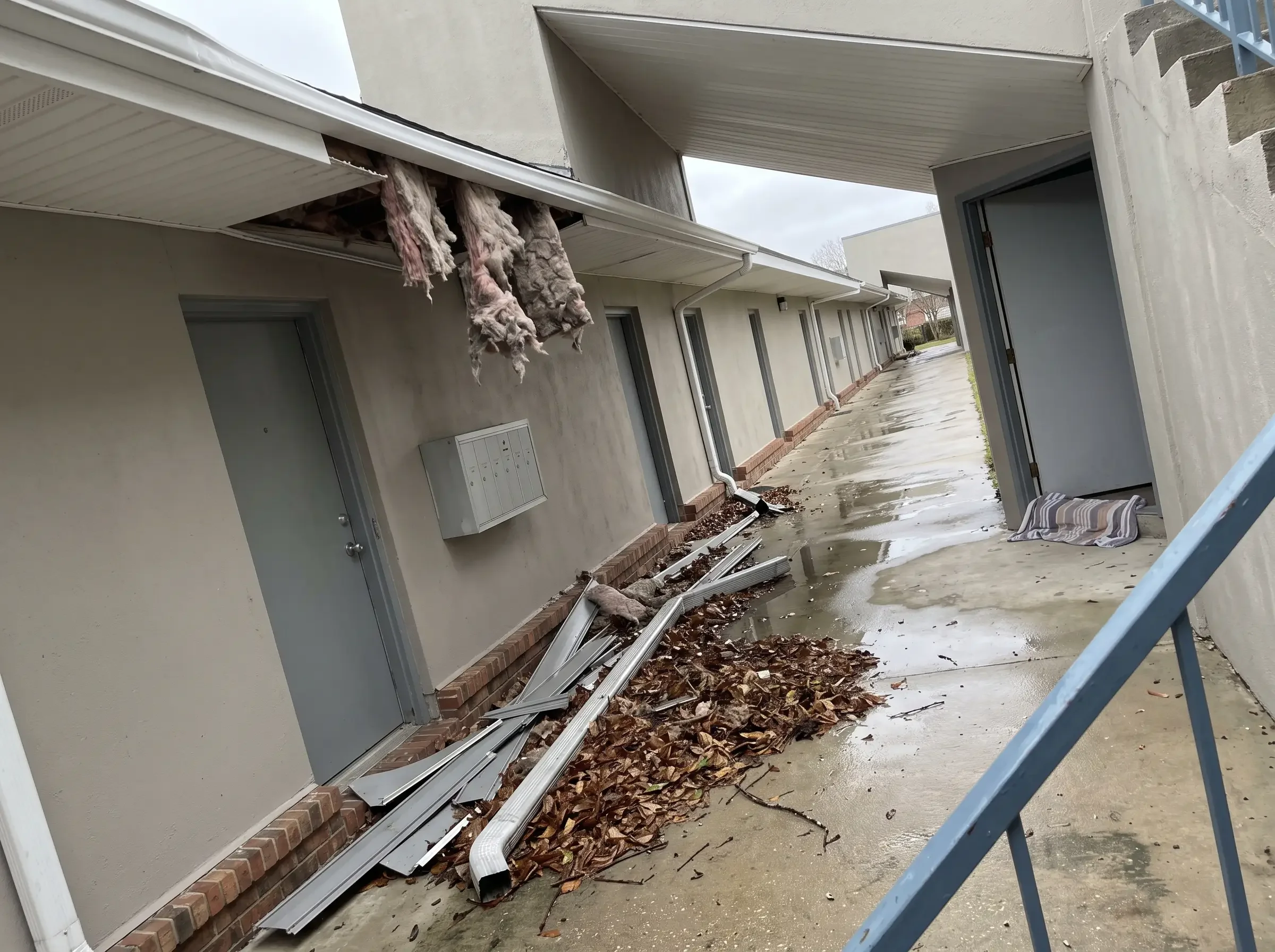
Pay special attention to these commonly missed areas: soffits and fascia boards along the roofline, fence panels and gates, pool screen enclosures, detached garages and sheds, AC condenser units, lanai ceilings, and any outdoor kitchen or patio structures. Each of these is a separate line item in your claim, and skipping them leaves money on the table.
Step 2: Make Emergency Repairs — But Only What's Necessary
Florida law allows you to make emergency repairs to prevent further damage. Tarp a leaking roof. Board up broken windows. Shut off water to a burst pipe. These are covered under your policy's "duty to mitigate" clause.
Keep every receipt. Save the damaged materials you remove — do not throw them away. Your insurer may want to inspect them. Take before and after photos of every emergency repair.
Do not start permanent repairs or hire a contractor for full restoration until your insurance company has inspected the damage and you have a written settlement. If you repair everything before the adjuster arrives, you lose leverage.
One exception: if your home is uninhabitable and you need to stay somewhere else, your policy's Additional Living Expenses (ALE) coverage pays for temporary housing, meals, and related costs. Start keeping receipts for those expenses from day one. ALE coverage has limits and time caps that vary by policy, so review yours early.
Step 3: Review Your Policy Before Filing
Most Escambia County homeowners carry a standard HO-3 policy, but hurricane coverage is not as simple as one deductible and one payout. You likely have separate provisions for:
- Wind/hurricane deductible — Usually 2% to 5% of your dwelling coverage, not a flat dollar amount. On a $300,000 home, a 2% hurricane deductible means you pay the first $6,000 out of pocket.
- Flood coverage — Standard homeowners policies do NOT cover flood damage. If storm surge or rising water caused damage, you need a separate NFIP or private flood policy. Many Pensacola homeowners learned this the hard way after Hurricane Sally.
- Named storm vs. wind deductible — Some policies use a "named storm" deductible that only applies when the National Weather Service officially names the storm. Others use a general wind deductible. The difference affects when the higher deductible kicks in.
- Ordinance or law coverage — If your home was built before current building codes, repairs may need to meet updated standards. This coverage pays the difference between repairing to the old code and rebuilding to the new one. Without it, you absorb that cost.
If you carry a separate wind-only policy through Citizens Property Insurance or a private surplus lines carrier, you may need to file two separate claims — one for wind damage and one for everything else. Each policy has its own deadlines and documentation requirements.
Need help reading your policy? Shoreline Public Adjusters offers free policy reviews for Pensacola homeowners.
Step 4: File Your Claim Immediately
Call your insurance company as soon as possible after the storm passes. Under Florida Statute §627.70131, your insurer must:
- Acknowledge your claim within 14 days
- Begin their investigation within 14 days after receiving your proof of loss
- Provide a copy of their damage estimate within 7 days after generating it
- Pay or deny your claim within 60 days
These deadlines are your leverage. Write down the date and time of every phone call, the name of every representative you speak with, and the claim number they assign. If they miss any of these deadlines, it strengthens your position — especially if you need to file a bad faith claim later.
If you have both a homeowners policy and a separate flood policy, file both claims simultaneously. Do not wait to see what one pays before filing the other. Each policy has its own clock, and delays on either side can hurt you.
Step 5: Attend the Insurance Adjuster's Inspection
Your insurance company will send their own adjuster to inspect your property. Be there when they arrive. Walk the property with them and point out every area of damage — including things that are easy to miss, like soffit damage, attic leaks, fence damage, and cracks in stucco or drywall that appeared after the storm.
The insurance company's adjuster works for them, not for you. Their job is to document what they see, but they are not motivated to find every last item. If you disagree with their assessment, you have the right to get your own estimate.
After a major hurricane, insurance companies bring in "cat adjusters" — temporary contractors hired to process the surge of claims. These adjusters may not know the Pensacola market, local building costs, or the specific construction methods used in Escambia County homes. They work fast, handle dozens of claims per week, and have strong incentives to keep estimates low. Having your own documentation and your own adjuster levels the playing field.
Step 6: Get Your Own Estimate
Do not rely solely on the insurance company's damage estimate. Get at least one independent estimate from a licensed Florida contractor. Better yet, get an estimate from a licensed public adjuster who uses Xactimate — the same software insurance companies use. This creates an apples-to-apples comparison that is much harder for the carrier to dismiss.
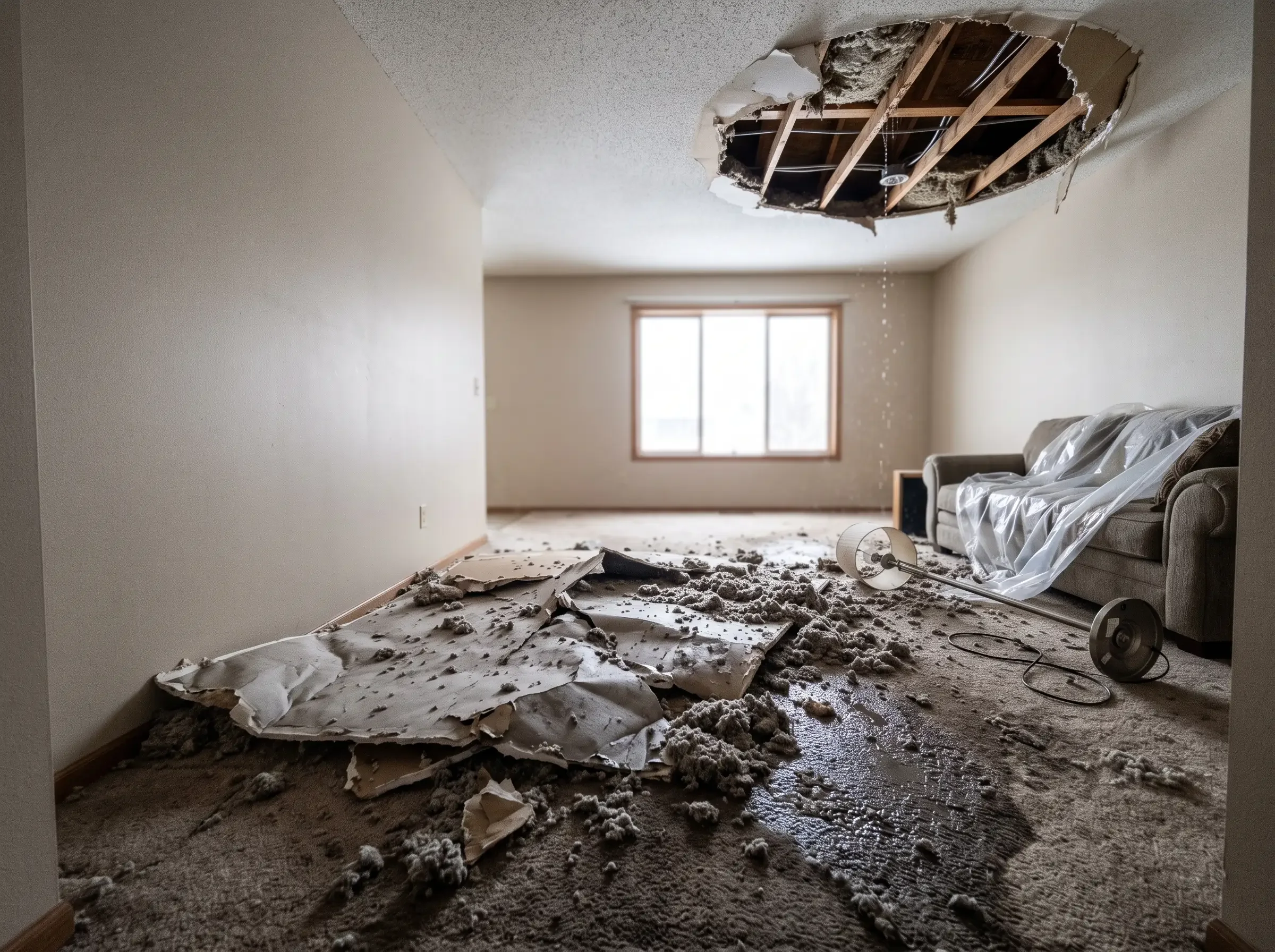
Public adjusters also know where to look for hidden damage that general contractors and insurance adjusters often miss. Moisture behind walls, structural shifts under flooring, mold starting in attic insulation — these are real costs that belong in your claim.
In Pensacola specifically, older homes in neighborhoods like East Hill, North Hill, and the Cordova Park area often have construction details that complicate claims: plaster walls instead of drywall, pier-and-beam foundations, original wood-frame windows, and multi-layer roofing. An adjuster unfamiliar with these materials will underestimate repair costs. A local public adjuster knows what these repairs actually cost in the Pensacola market.
Step 7: Negotiate or Escalate
If the insurance company's offer does not cover the real cost of repairs, you have options:
- Request a reinspection — Ask them to send a senior adjuster or field manager to re-evaluate.
- Invoke the appraisal clause — Most Florida policies include an appraisal process where each side hires an appraiser and they select an independent umpire. This avoids litigation and is often faster than a lawsuit.
- Hire a public adjuster — A licensed public adjuster files a new estimate, negotiates directly with the carrier, and manages the entire claim on your behalf. Florida law caps public adjuster fees at 10% for emergency/catastrophe claims (within one year of a Governor's declaration) and 20% for standard claims.
- File a complaint — The Florida Department of Financial Services accepts complaints against insurers at MyFloridaCFO.com.
Step 8: Handle Supplement Claims as Repairs Uncover More Damage
This step is where many Escambia County homeowners lose the most money. Once a contractor begins repairs after a hurricane, they almost always find additional damage that was not visible during the initial inspection. Removing drywall reveals soaked insulation and mold. Pulling up flooring exposes a warped subfloor. Opening up a roof reveals rotted decking beneath the shingles.
This additional damage is called a supplement claim. You have the right to reopen your claim and file a supplement for the newly discovered damage. Your insurer is required to investigate and respond to supplements under the same timeline rules as the original claim.
The problem is that many homeowners do not know they can do this. They accept the original settlement, pay the contractor, and absorb thousands in unexpected repair costs out of pocket. A public adjuster handles supplement claims as part of the process — we stay on the case through final payment, not just the first check.
Common Mistakes Escambia County Homeowners Make
Waiting too long to file. Florida has a statute of limitations on insurance claims. The longer you wait, the harder it becomes to prove the damage was storm-related.
Accepting the first offer. Insurance companies routinely lowball the first settlement offer. Studies show that policyholders who negotiate or hire a public adjuster recover significantly more than those who accept the first check.
Not separating wind from flood damage. If your home suffered both wind and water damage (which is common in Pensacola hurricanes), the insurance company may try to classify wind damage as flood damage to push it onto your flood policy — or deny it entirely if you do not have flood coverage. Proper documentation of what caused each type of damage is critical.
Throwing away damaged materials. That wet drywall, warped flooring, and destroyed insulation is evidence. Keep it until the adjuster has seen it.
Signing an Assignment of Benefits without understanding it. Florida's 2022 insurance reforms significantly restricted AOB rights. Before you sign anything from a contractor or restoration company, understand what rights you are giving up. A public adjuster can review any document before you sign.
What Florida's 2022 Insurance Reforms Mean for Your Hurricane Claim
The Florida legislature passed major insurance reform in 2022 and 2023 that changed the rules for hurricane claims. The key changes that affect Escambia County homeowners:
60-day claim resolution. Insurers now have 60 days (down from 90) to pay or deny your claim after receiving notice. This is faster, but it also means you need to get your documentation in order quickly.
One-way attorney fee elimination. Before the reforms, if you sued your insurer and won, the insurer had to pay your attorney fees. That provision was eliminated. This makes litigation more expensive for homeowners, which means resolving your claim through strong documentation and negotiation — the work a public adjuster does — is more important than ever.
AOB restrictions. Assignment of Benefits contracts are now heavily restricted. This limits some options that were previously available to homeowners, but it also reduces fraud in the system.
When to Call a Pensacola Public Adjuster
You can handle a small claim on your own. But if your hurricane damage involves structural repairs, roof replacement, mold, or a payout over $10,000, the stakes are too high to go it alone. The insurance company has an entire team working their side. You deserve someone working yours.
Shoreline Public Adjusters is licensed in Florida (#G199012) and serves all of Escambia County, Santa Rosa County, and the greater Pensacola region. We handle your claim from inspection through final payment — including supplement claims — and we do not charge a fee unless we recover money for you.
Call 954-546-1899 or request your free claim review today.