Motorcycle Insurance Claims: Why Most Riders Get Underpaid
By: Shoreline Public Adjusters
Updated: March 2026 · 9 min read
In This Post:
- Why Motorcycle Claims Are Different From Auto Claims
- The Custom Parts Problem Insurers Count On
- How Diminished Value Works on Motorcycles
- When a Motorcycle Total Loss Offer Is Too Low
- What Shoreline Found on a Twin Cities Motorcycle Claim
- Common Mistakes Riders Make After an Accident
- Frequently Asked Questions About Motorcycle Insurance Claims
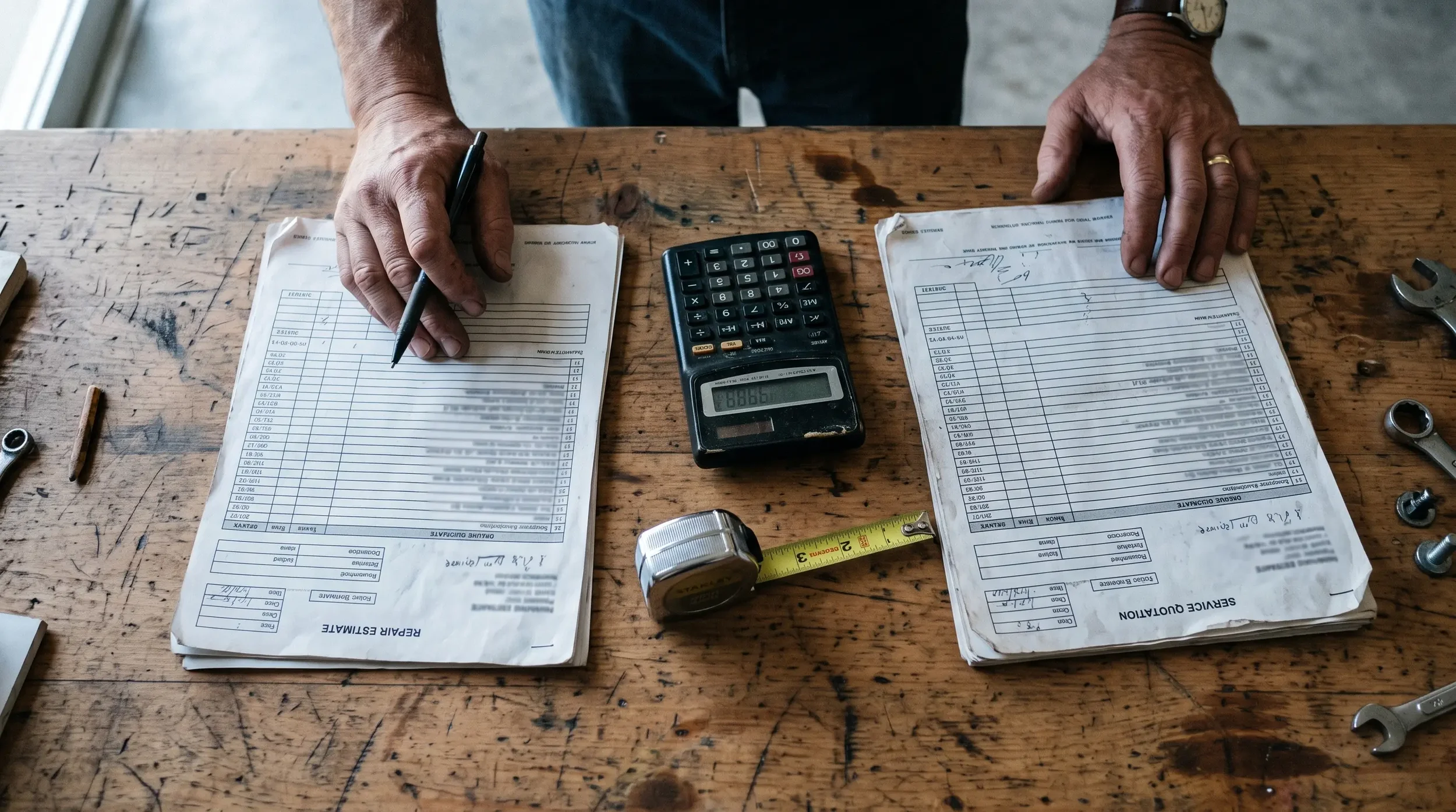
The insurer offered $6,200 on a motorcycle that had $4,800 in aftermarket parts alone. Their valuation tool didn't account for a single one of them. The rider had receipts for everything — a full exhaust system, crash bars, heated grips, a custom seat — and the insurer's estimate treated the bike like it rolled off the showroom floor with factory equipment.
This is what a motorcycle insurance claim looks like when the insurer controls the process. And it happens on nearly every file.
I've worked property and casualty claims across three states for over a decade, and motorcycle claims are some of the most consistently undervalued files I see. Not because the damage is hard to prove — it's usually obvious — but because the tools insurers use to value motorcycles weren't built for how riders actually own and modify their bikes. The gap between what a motorcycle is actually worth and what the insurer's system says it's worth is where most of the money disappears.
Why Motorcycle Insurance Claims Are Different From Auto Claims
A motorcycle insurance claim follows the same basic process as a car claim, but the outcomes are systematically worse for policyholders. The reason is straightforward: insurers value motorcycles using the same databases and adjustment tools they use for sedans and SUVs, and those tools consistently miss what makes a motorcycle worth what it's worth.
Standard valuation tools pull comparable sales data. For a 2019 Honda Civic, that works fine — there are thousands of identical vehicles on the market. For a 2019 Harley-Davidson Street Glide with $8,000 in aftermarket parts, a stage-two engine upgrade, and a custom paint job, there is no comparable. The insurer knows this. Their adjuster will still hand you a number based on a stock model with average mileage and call it fair.
⚠️ What Insurers Won't Tell You: Most motorcycle valuation tools only account for factory-installed options. If your bike has aftermarket exhaust, suspension, handlebars, or cosmetic upgrades, the insurer's initial offer almost certainly excludes them — even if they're listed on your policy's accessory coverage endorsement.
Motorcycle claims differ from auto claims in three specific ways that cost riders money. First, motorcycles depreciate on a steeper curve in insurer databases than they do in the real market — a well-maintained bike with low miles holds value far better than the insurer's system reflects. Second, damage to a motorcycle is proportionally more expensive to repair because labor rates for motorcycle-specific work are higher and parts availability is more limited. Third, protective riding gear damaged in an accident — helmets, jackets, gloves, boots — is either excluded entirely or capped at amounts well below replacement cost.
In Florida, Minnesota, and Wisconsin, your policy language controls what's covered. But the insurer's adjuster isn't going to point out coverage you're entitled to that they haven't included in the estimate. That's not their job. Their job is to close the file at the lowest defensible number.
The Custom Parts Problem Insurers Count On
Aftermarket parts and accessories are the single largest source of underpayment on motorcycle insurance claims. Most riders invest significantly in their bikes — exhaust systems, windshields, saddlebags, lighting, suspension upgrades, seats, and engine performance parts. When the insurer totals the bike or writes an estimate for repair, those parts vanish from the calculation unless the rider fights for them.
Here's how it works. Your policy may include an accessory coverage endorsement — a line item that covers aftermarket parts up to a set limit, often $3,000 to $5,000. The insurer won't automatically apply that coverage to your claim. You have to know it exists, invoke it, and provide documentation. Riders who don't keep receipts or who assume the insurer will account for modifications lose thousands.
Even when you have documentation, the insurer may depreciate aftermarket parts at the same rate as the bike itself. That makes no sense for parts installed two years into the bike's life. A $2,200 exhaust system installed 18 months ago doesn't lose 40% of its value because the bike is five years old. But the insurer's depreciation schedule won't distinguish between factory equipment that shipped with the bike in 2019 and an exhaust you bolted on last spring.
If you've invested in your motorcycle and your insurance claim isn't reflecting that value, the insurer is almost certainly using a valuation method that benefits them, not you.
How Diminished Value Works on Motorcycles
Diminished value is the difference between what your motorcycle was worth before the accident and what it's worth after repairs are completed. A repaired motorcycle carries an accident history that shows up in vehicle history reports, and buyers pay less for bikes with that history. That loss in resale value is real, measurable, and in many cases recoverable through your claim.
📊 By the Numbers: A motorcycle with a repaired-damage history typically sells for 15–30% less than an identical clean-title bike, depending on severity and make/model. On a $15,000 motorcycle, that's $2,250 to $4,500 in lost value the insurer won't mention unless you file a separate diminished value claim.
Motorcycle diminished value claims are stronger than most auto diminished value claims for one reason: the motorcycle resale market is more sensitive to accident history than the car market. Buyers shopping for a used Ducati or BMW adventure bike will walk away from an accident-history listing entirely. That makes the diminished value gap larger and more defensible.
Most insurers will not bring up diminished value voluntarily. You have to file a separate claim for it, and you need documentation — a professional motorcycle appraisal that establishes the pre-loss and post-repair market values with comparable sales data. Without that appraisal, the insurer will either ignore the claim or offer a token amount.
When a Motorcycle Total Loss Offer Is Too Low
Insurers declare a motorcycle a total loss when the cost to repair exceeds a percentage of the bike's value — typically 70–80%, depending on the state and the carrier. The problem isn't the threshold. The problem is how they calculate the bike's value to begin with.
Total loss valuations on motorcycles rely on the same databases that undervalue custom parts. The insurer pulls comparable sales for your make, model, and year, applies mileage and condition adjustments, and generates a number. If your bike had modifications, low miles relative to its age, or was in exceptional condition, the comparable-sales approach will undervalue it.
You have the right to challenge a total loss offer. In practice, this means providing your own comparable sales data, documenting every aftermarket part with receipts or photos, and — if the gap is large enough — commissioning an independent appraisal through a licensed insurance appraiser.
⏱️ Claim Deadline: In Florida, you generally have 4 years from the date of loss for property damage claims under Fla. Stat. § 95.11. Minnesota allows 6 years under Minn. Stat. § 541.05. Wisconsin provides 6 years under Wis. Stat. § 893.43. But your policy's notice requirement — typically 24 to 72 hours — is the deadline that matters first.
What Shoreline Found on a Twin Cities Motorcycle Claim
A rider in the Twin Cities was rear-ended while stopped at a traffic light. The impact knocked the bike down, and the at-fault driver's insurer assessed the damage at $3,400 — frame scratches, a cracked fairing, and a bent handlebar. The bike was a 2020 Indian Scout Bobber with $5,200 in aftermarket upgrades: a stage-one intake, slash-cut exhaust, custom grips, and a gel seat.
The insurer's estimate used factory replacement parts for the fairing and handlebar. It didn't include the exhaust system that was gouged in the slide. It didn't account for the tank's custom paint that was scuffed beyond touch-up. And it made no mention of diminished value on a bike that now carried an accident history.
Shoreline re-documented the damage with a full parts inventory, sourced actual replacement costs for every aftermarket component, obtained comparable sales data for the diminished value claim, and submitted a revised demand with a professional appraisal. The final settlement came in at $9,800 — nearly three times the initial offer. The difference was entirely in line items the insurer's adjuster never included.
[DRAFT — confirm or replace with a real case]
Is your claim looking like this? If your insurer's offer seems low — or your motorcycle insurance claim has already been denied — a free consultation with Shoreline takes 15 minutes and costs you nothing. Contact Us
Common Mistakes Riders Make After a Motorcycle Accident
1. Not documenting aftermarket parts before riding season Most riders can list every modification from memory. But memory doesn't hold up in a claim file. Without receipts, photos, or a pre-loss inventory, the insurer has no obligation to include aftermarket value in the settlement. What to do instead: Photograph your bike and keep a file of receipts for every modification. Update it annually.
2. Accepting the first total loss offer without checking comparables The insurer's valuation is a starting point, not a final answer. Riders who accept without reviewing comparable sales data routinely leave $2,000 to $5,000 on the table. What to do instead: Pull comparable listings from CycleTrader, NADA, and local dealer inventory. If the gap exceeds $1,500, consider a professional appraisal.
3. Forgetting to file a diminished value claim Diminished value doesn't appear on the insurer's estimate. If you don't file for it separately, you don't get it. Period. What to do instead: File a diminished value claim with supporting appraisal documentation as a separate demand.
4. Assuming gear is covered automatically Helmets, jackets, boots, and gloves may or may not be covered depending on your policy endorsements. Many riders assume it's included and never submit a claim for damaged gear. What to do instead: Review your policy's personal property or accessory endorsement. File for gear replacement with original purchase documentation.
5. Waiting too long to involve a professional The longer you negotiate alone, the more positions the insurer locks in. Once you've accepted a check or signed a release, your options narrow dramatically. What to do instead: Get a free claim review before accepting any settlement offer.
Frequently Asked Questions About Motorcycle Insurance Claims
Does motorcycle insurance cover aftermarket parts?
It depends on your policy. Most standard motorcycle policies exclude aftermarket parts unless you've purchased an accessory coverage endorsement. Even with the endorsement, coverage limits are often capped at $3,000–$5,000 and the insurer won't apply it unless you specifically invoke it during the claim.
How do I file a diminished value claim on my motorcycle?
File a separate demand with your insurer for the loss in resale value caused by the accident history. You'll need a professional appraisal showing pre-loss market value versus post-repair value with comparable sales data. Most insurers won't process a diminished value claim without documentation.
Can a public adjuster help with a motorcycle insurance claim?
Yes. A public adjuster works exclusively for the policyholder — not the insurance company. On motorcycle claims, a public adjuster documents aftermarket value, identifies excluded line items, files diminished value claims, and negotiates directly with the insurer. Shoreline Public Adjusters handles motorcycle and auto claims across Florida, Minnesota, and Wisconsin.
What should I do if my motorcycle total loss offer seems low?
Challenge it. Pull your own comparable sales data from NADA, CycleTrader, and local dealers. Document every aftermarket modification with receipts and photos. Request the insurer's valuation report in writing. If the gap between their offer and your documented value exceeds $1,500, a professional appraisal is worth the investment.
How long do I have to file a motorcycle insurance claim?
Your policy's notice requirement — usually 24 to 72 hours after the accident — is the first deadline. The statute of limitations varies by state: 4 years for property damage in Florida, 6 years in Minnesota, and 6 years in Wisconsin. But waiting reduces your leverage and makes documentation harder. File as soon as possible.
Don't Settle for Less on Your Motorcycle Claim
If your insurer handed you a number that doesn't cover your bike's actual value — including every modification, every piece of gear, and the diminished value you'll lose at resale — that's not the end of the process. That's where Shoreline starts.
We work exclusively for policyholders, and we don't collect a fee unless you do. But motorcycle insurance claims have the same deadlines as any property damage claim, and waiting shrinks your options. If your accident happened in Florida, Minnesota, or Wisconsin, we're licensed and ready to review your file today.
Contact Us | Learn about our auto claims services
You may also find these helpful:
- How Long After an Accident Can You File an Insurance Claim?
- Can You Negotiate With an Insurance Adjuster on a Total Loss?
- What Do Public Adjusters Do? A Complete Guide
Shoreline Public Adjusters, LLC is licensed in Florida (FL G199012), Minnesota (MN 40962416), and Wisconsin (WI 21156868).
Shoreline Public Adjusters, LLC
780 Fifth Avenue South
Suite #200
Naples, FL 34102
Email: hello@teamshoreline.com
Phone: 954-546-1899
Fax: 239-778-9889