
South Dakota Public Adjuster
Claim Advocates for South Dakota Homeowners and Businesses
✓ No Fee Unless We Recover
✓ Featured in Forbes, Realtor.com & Insurance.com
✓ 5 Stars on Google
Fill Out the Form Below to Get Started With your Free Claim Review:
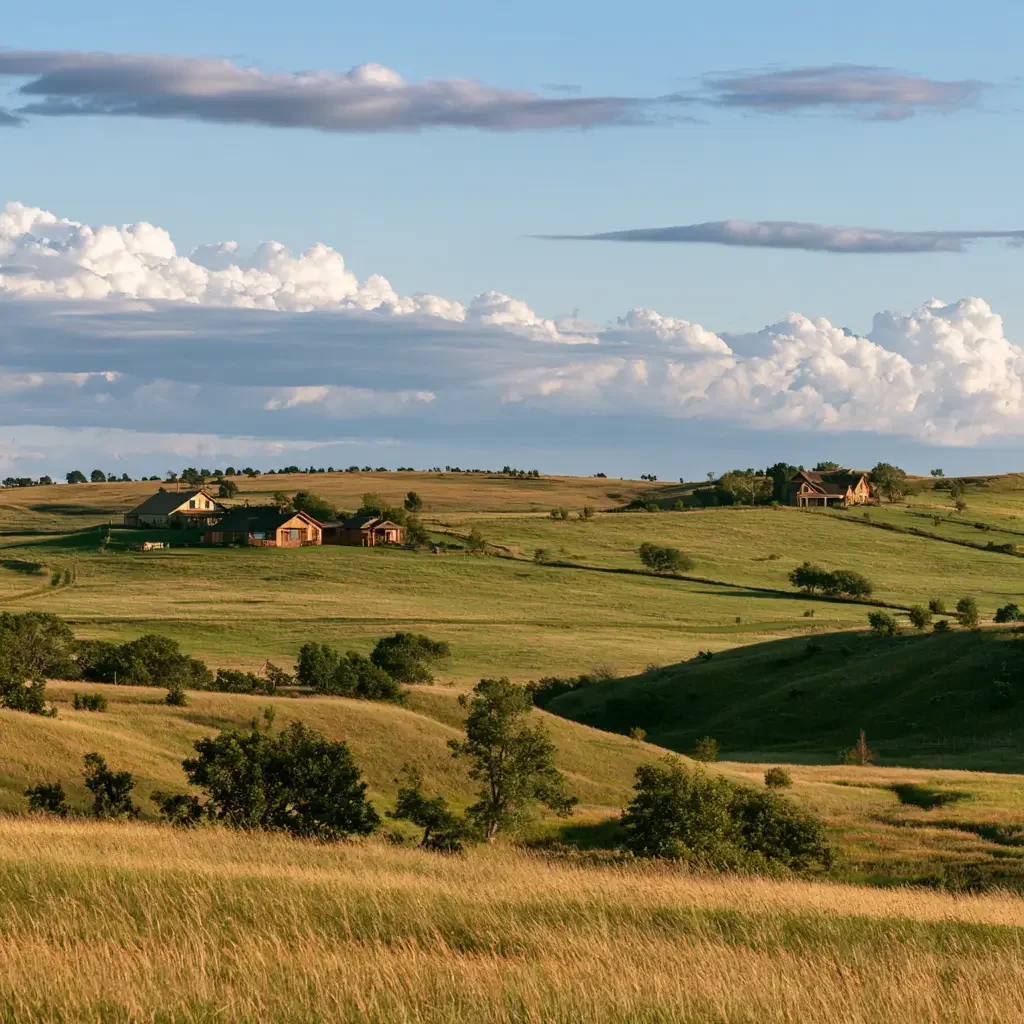
Shoreline Public Adjusters represents policyholders — not insurance companies — in property damage claims across all 66 South Dakota counties. Whether you are a Rapid City homeowner whose roof took baseball-sized hail, a Sioux Falls business owner watching a storm claim stall, or a rancher west of the river with damaged outbuildings, we handle your entire insurance claim from start to finish so you can focus on everything else.








As Seen On:










Get Help With Your Claim:



Why South Dakota Property Owners Hire a Public Adjuster
When storm damage hits, most South Dakota policyholders assume the insurance company will handle it fairly. Your insurer assigns a company adjuster to decide what your loss is worth — someone who works for them, not for you. A public adjuster is retained by you and works only for you.
That matters more in South Dakota than most people realize. Between 2021 and 2025 the National Centers for Environmental Information logged more hail here than in all but seven states in the country — ahead of Iowa, Illinois and Wisconsin, in a state with a fraction of their population. Hail is also the loss most often settled short, because the damage is spread across a building rather than concentrated in one obvious place.
We do not work for any insurance company. We do not sell policies. Our job is to document your damage completely, prepare the claim accurately, and negotiate until the settlement reflects what your policy actually owes.
Start your Claim Consultation
We are extremely proud to serve the following states:
South Dakota Is a Hail State, and the Numbers Are Not Close
Between 2021 and 2025 the National Centers for Environmental Information recorded 1,890 hail reports in South Dakota — about 378 a year, more than double North Dakota's rate over the same period. Of those, 199 involved stones two inches or larger. The biggest came down over Pennington County in August 2021 at 4.5 inches, roughly the size of a softball. Every one of South Dakota's 66 counties recorded hail in that window, and alongside it the state logged 2,678 thunderstorm wind events, 1,519 separate high-wind events and 105 tornadoes.
The pattern underneath them is what should change how your claim gets handled — because South Dakota's hail is overwhelmingly a West River problem. Six of the seven counties with the most hail reports sit in or around the Black Hills: Pennington with 259, Custer with 124, Meade with 120, Lawrence with 65, Fall River with 60 and Butte with 51. Minnehaha County — Sioux Falls, and by far the state's largest population center — recorded 63.
The highest-frequency hail region in South Dakota is also its most rural and most spread out, which means West River losses are the ones most likely to be inspected quickly, scoped from the ground or from a drone, and settled from a desk hundreds of miles away. If you are in Rapid City, Spearfish, Sturgis, Custer or Belle Fourche, a fast, low estimate is the pattern to expect and the one worth challenging.
Types of Property Damage We Handle in South Dakota

-
A hail damage claim is not just the roof, and that is where most of the money goes missing. Siding, gutters, downspouts, fascia, window wraps, screens, air-conditioner condenser fins, decks, outbuildings, grain bins and vehicles all take hail damage that first-pass estimates routinely omit. We document every elevation and every accessory structure, not only the slope that was easiest to photograph.
-
With 2,678 thunderstorm wind events, 1,519 high-wind events and 105 tornadoes recorded in five years, wind is nearly constant in South Dakota. A wind damage claim gets reduced through partial scoping: repairing one slope rather than replacing a roof, or patching siding that no longer matches what surrounds it. Tornado claims run the same way once the obvious structural loss is settled and the rest of the property goes unscoped.
-
Roof claims turn on whether damage is "functional" or "cosmetic," a distinction carriers lean on heavily in hail states and one that frequently does not survive a properly documented inspection. Test squares, brittleness, mat bruising, and manufacturer repairability all matter, and none of them show up in an aerial report.
-
Once hail or wind opens a roof or a window wrap, water follows. The visible ceiling stain is rarely the extent of the loss — insulation, wall cavities, subfloor and framing carry moisture that only shows up on a meter. Our approach to water damage claims is to map the full path the water travelled and document what it reached, rather than settling the part of it that happens to be visible from the room.
-
South Dakota logged 331 winter storms, 307 blizzards, 184 heavy snow events and 55 ice storms over the same five years. Ice dams, frozen and burst pipes, and snow-load stress on roofs and outbuildings are all real claims here, particularly East River and along the I-29 corridor — and all of them are commonly written off as maintenance rather than damage.
-
Fire involves two separate losses — the burn and the smoke. Soot and odor travel into contents and areas the fire never reached, and the contents inventory is usually where the underpayment lives. Our fire and smoke damage work inventories contents as seriously as it scopes structure, because that is where the gap almost always opens.
-
Grain bins, machine sheds, livestock buildings, center pivots, elevators and main-street commercial buildings all carry exposures a residential adjuster will miss — business interruption, code upgrade, and equipment losses among them.
-
A hail storm rarely hits one building in an association and stops. It hits every roof and every elevation, along with the carports, fencing and clubhouse beside them, and the carrier's first estimate frequently covers a fraction of that. These claims also turn on a line drawn in the declarations rather than in the policy itself: what the master policy owes versus what falls to the individual owner. We read the two documents against each other, scope every building rather than a representative sample, and — because South Dakota has no matching law — put the color and profile mismatch on record before a partial repair quietly becomes the settlement.
What South Dakota Law Says About Your Claim
Most public adjuster pages skip this part. South Dakota has several policyholder protections that are unusually strong, and one rule that quietly changes how a claim dispute gets resolved here compared with almost anywhere else.
That deadline printed in your policy is probably not enforceable
Nearly every property policy says you have one or two years to sue. In South Dakota, that clause is void.
State law makes void any contract term that shortens the time you have to enforce your rights in court. The South Dakota Supreme Court held exactly that about a fire policy's short suit clause as early as 1904, and has reaffirmed the rule in the years since. What applies instead is the general contract deadline: six years.
This matters more than anything else on this page. If a carrier has told you your claim is too old because the policy gave you two years, that is very likely wrong here. Do not let a printed deadline talk you out of a claim without having someone read it.
SDCL 53-9-6, 21-25A-3, 15-2-13(1)
Nobody can force you into appraisal — and this is genuinely unsettled
In most states, when you and your carrier cannot agree on the size of a loss, either side can demand appraisal and the result binds you both. South Dakota is different, and the difference is worth understanding before you agree to anything.
South Dakota law voids policy provisions that require arbitration, and the state's Division of Insurance treats appraisal the same way — it must be optional, agreed by both sides, and no appraisal outcome can be made binding. That is not a historical footnote: the Division says so on its own website today, and the model appraisal wording it currently approves for use in South Dakota policies says a decision "will not be binding." South Dakota policies are generally written to match.
To be straight with you about the limits of that: no South Dakota court has actually decided the question. The regulator's position is clear. The case law is empty, because it has never been litigated here.
What it means practically is that your carrier very likely cannot push you into a private process and call the result final — but appraisal is also not a lever we can reliably pull on your behalf, the way we can in Minnesota, Wisconsin or Florida. A South Dakota claim is won on documentation and negotiation, and in court if it comes to that. That is exactly why the quality of the file matters more here.
SDCL 21-25A-3; SD Division of Insurance Bulletin 98-5
If the refusal was unreasonable, the carrier can end up paying your attorney
South Dakota lets a court order the insurance company to pay your legal fees when it has refused to pay the full amount of a loss and that refusal was vexatious or without reasonable cause.
Fee-shifting changes the arithmetic of a disputed claim. A carrier deciding whether to hold a low number has to weigh paying for the other side's lawyer as well as the claim.
Two limits worth knowing before you count on it. Farm mutual insurers are exempt — and because farm mutuals write a great deal of rural South Dakota property, this protection does not reach every policy. And the fees a court awards are the ones tied to enforcing the policy itself; winning a bad faith claim does not automatically carry your legal bill with it. In a 2025 case the South Dakota Supreme Court upheld an award of about half what the policyholder had requested.
SDCL 58-12-3; 58-35-57(9)
South Dakota recognizes bad faith — with a realistic bar
If your insurer denies or underpays without a reasonable basis, South Dakota recognizes a bad faith claim separate from the contract claim. The question the courts ask is whether the insurer lacked a reasonable basis for the denial and knew it.
Be realistic about the bar. South Dakota law lets an insurer challenge a claim that is fairly debatable. A disagreement about scope or value is not bad faith. A refusal to investigate, or a denial the carrier knows it cannot support, is a different matter.
Fiechtner v. American West Insurance Co., 2025 S.D. 60
Interest runs from the day of the loss, not the day of judgment
If a court awards you prejudgment interest, it runs from the day the damage happened rather than the day the case ends. The rate is whatever your contract sets; where the contract is silent, the statutory rate is ten percent a year. Delay is not free for the carrier, and on a large claim that runs for years the interest alone becomes a number worth arguing about.
SDCL 21-1-13.1, 54-3-16(2)
Thirty days to respond, and thirteen things your carrier may not do
South Dakota gives your insurer thirty days to acknowledge and act on claim communications, and separately lists thirteen prohibited claim practices: failing to attempt a prompt and fair settlement, refusing to pay without a reasonable investigation, offering substantially less than what a lawsuit would recover in order to force you into one, and failing to give a reasonable explanation for a denial or a lowball offer, among others.
Read that list with one qualification attached. The statute is aimed at conduct done flagrantly and in conscious disregard of the rules, or often enough to amount to a general business practice — a single mistake on a single file is not a violation of it. What the list is genuinely useful for is showing a pattern, which is why we document the carrier's conduct on your claim as carefully as we document the damage.
One honest qualification, because it gets misstated constantly: these are primarily regulatory rules, and the main route to enforcing them is a complaint to the South Dakota Division of Insurance rather than a lawsuit built on the statute itself. The claims that carry real leverage for you are the contract claim and the bad faith claim above. We build the record for all of it from the first day of the file.
SDCL 58-33-67(1), 58-12-34, 58-12-32
A total fire, tornado or lightning loss pays the policy limit
South Dakota has a valued policy law, though it is not called that. If real property is completely destroyed by fire, tornado or lightning, the amount written on the policy is conclusively the value of the loss. No depreciation argument, no fight about market value.
Read the scope carefully, because it is narrow. Fire, tornado and lightning only — not hail, not straight-line wind, not water. Total losses only. The loss has to occur at least ninety days after the policy was written or its limits raised substantially. And it does not reach buildings insured under a commercial blanket form, which takes a good deal of commercial and farm property out of it. Most South Dakota storm claims fall outside this statute. When it does apply, it ends the argument.
SDCL 58-10-10
What South Dakota does not give you: a matching law
Several states force a carrier to make a repaired building look whole again. Minnesota does it through case law — see our Minnesota public adjuster page — and Wisconsin does it by rule. Both treat a visible mismatch as part of the loss rather than something the owner absorbs.
South Dakota has neither. No statute, no administrative rule, no Supreme Court decision. We read the full text of Title 58 and the insurance rules to be sure. North Dakota is in the same position, so if your property sits near that line, the answer does not change by crossing it.
That changes what wins here, and South Dakota's version of the argument is almost always hail on siding. A carrier scopes the elevation that was struck, leaves the other three, and the building ends up two-toned or patched with a profile nobody makes anymore.
With nothing in the statute to point at, the fight is won on evidence. A manufacturer letter confirming the profile is discontinued. Side-by-side panels showing the color difference between old stock and new. Photographs framed from where a person actually stands in the yard rather than from the top of a ladder. And it matters more, not less, when the damaged elevation faces the road. Build that record before the adjuster's estimate hardens into a position, because it is far harder to reopen a number than to shape one.
How We Handle Your South Dakota Insurance Claim
-
We walk the property — every elevation, every slope, every outbuilding — rather than working from an aerial report. On a South Dakota hail file the scope work is specific: test squares on each slope, mat bruising and granule loss documented rather than asserted, brittleness noted where age matters, and every accessory structure inventoried. That inventory is the difference between a roof-only settlement and the actual loss.
-
Limits, endorsements, exclusions, deductibles — including any percentage wind or hail deductible on your policy, which is one of the most frequently misunderstood terms in a storm-exposed state. You should know what you are owed before the negotiation starts, not after.
-
A complete estimate in Xactimate — the same platform your carrier uses — so the numbers are argued on their terms rather than dismissed as an outside opinion. Photographs, measurements, moisture readings, contractor input where it helps, and a contents inventory when contents are involved.
-
Most claims settle in negotiation. When they do not, South Dakota changes the playbook. In most states the appraisal clause is the lever that breaks a stalemate; here the Division of Insurance takes the position that appraisal must be voluntary and cannot be made binding, so it is not a lever we can count on. What replaces it is a documented record: a complaint to the Division where the carrier's conduct warrants it, and the contract and bad faith claims where it does not resolve.
-
Claims are not finished when the first check clears. Hidden damage surfaces once repairs begin, and supplements recover it. We keep the file open until the work is actually paid for.
Who We Serve in South Dakota
Homeowners — hail, wind, roof, water, fire and winter storm claims that were denied, underpaid, or closed before the damage was fully found.
Commercial, ranch and agricultural property owners — including business interruption, outbuildings, machine sheds and grain storage.
HOA and condominium associations — multi-building claims where the declarations and master policy must be read together.
Contractors, attorneys and appraisers — professionals who need a loss documented and valued properly.
Areas We Serve Across South Dakota
We work statewide, across all 66 counties.
Black Hills and West River
Hail damage in Rapid City and Box Elder, plus Spearfish, Lead, Deadwood, Sturgis, Belle Fourche, Custer and Hot Springs. If you are looking for a public adjuster in South Dakota after a Black Hills hail storm, this is the region that needs one most. Counties: Pennington, Lawrence, Meade, Custer, Fall River, Butte, Harding, Perkins, Corson, Dewey, Ziebach, Haakon, Jackson, Bennett, Oglala Lakota, Todd, and Mellette. This is the most hail-exposed region in the state — Pennington County alone recorded more hail reports from 2021 to 2025 than any other county in South Dakota.
Sioux Falls Metro and Southeast South Dakota
Sioux Falls, Brandon, Harrisburg, Tea, Dell Rapids, Yankton, Vermillion, Mitchell, Madison and Canton. Counties: Minnehaha, Lincoln, Turner, Union, Clay, Yankton, Bon Homme, Hutchinson, McCook, Lake, Moody, Davison, Hanson and Miner. The state's population center, and where most South Dakota commercial and multi-family claims originate.
Northeast South Dakota and the I-29 Corridor
Aberdeen, Watertown, Brookings, Milbank, Sisseton, Webster, De Smet and Redfield. Counties: Brown, Codington, Brookings, Grant, Roberts, Day, Marshall, Spink, Clark, Deuel, Hamlin, Kingsbury, Edmunds, McPherson and Faulk. Agricultural and commercial property throughout, with Brown County among the state's higher-frequency hail counties.
Central South Dakota and the Missouri River
Pierre, Fort Pierre, Huron, Chamberlain, Murdo, Winner, Mobridge and Gettysburg. Counties: Hughes, Stanley, Sully, Potter, Walworth, Campbell, Hyde, Hand, Beadle, Buffalo, Brule, Aurora, Jerauld, Sanborn, Jones, Lyman, Tripp, Gregory, Charles Mix and Douglas.
What It Costs
A percentage of what we recover for you, and nothing at all if we recover nothing. No hourly billing, no retainer, no charge for the inspection or the policy review, and no fee on money your carrier had already paid before we were involved. The percentage is written into the agreement in plain figures before you sign it, and you keep a copy.
We put the number in writing for a reason that is specific to this state. South Dakota does not regulate public adjusters, which means there is no prescribed contract form and no statutory fee schedule behind anyone working here. In Minnesota, Wisconsin, Florida and North Dakota the terms of an adjuster's contract are constrained by law. In South Dakota the contract itself is the only thing defining the deal — so ours is written to be read in full, in ordinary language, before anything is signed.
South Dakota Public Adjuster FAQs
Questions South Dakota Property Owners Ask About Public Adjusters
-
Shoreline Public Adjusters is licensed in Florida (#G199012), Minnesota (#40962416), Wisconsin (#21156868) and North Dakota (#3004392416). Every one of those can be checked against the issuing state's regulator, and our individual adjusters hold their own licenses in the states that require them.
-
Yes. Shoreline is a licensed public adjusting firm and we handle claims throughout South Dakota. Because South Dakota issues no public adjuster license of its own, the credentials worth asking any adjuster about here are the ones from states that do license — ours are in Florida, Minnesota, Wisconsin and North Dakota, and every one can be checked against the issuing regulator.
-
The company adjuster is an employee or contractor of your insurer and represents your insurer's interest in the claim. A public adjuster is retained by you and represents only yours. The practical difference is who is paying the person writing your estimate — and whether anyone independent has walked the roof, opened a wall, or read your policy's loss settlement provision before a number was agreed.
-
Usually yes, and in South Dakota the window is wider than most people are told. Denied and underpaid claims get reopened and supplemented routinely, and the suit deadline printed in your policy is very likely unenforceable here — SDCL 53-9-6 voids contract terms that shorten the limitation period, so the general six-year contract deadline applies. That does not mean waiting is free: evidence degrades, roofs get replaced, and memories fade. But being told you are out of time is not the same as being out of time.
-
A percentage of what we recover, written into the agreement in plain figures before you sign, with nothing owed if we recover nothing — no retainer, no hourly billing, and no charge for the inspection or the policy review. In South Dakota the contract is what defines the arrangement, so ours is written to be read in full, in ordinary language, before anything is signed.
-
That is the most common situation we see in South Dakota, and it is usually the most recoverable. Underpayment typically comes from scope, not from denial — one slope instead of the roof, the roof without the siding, or the structure without the outbuildings.
-
Almost certainly not. South Dakota law voids contract terms that shorten your time to enforce your rights in court, and the state Supreme Court applied that rule to a fire policy more than a century ago and has upheld it since. What applies instead is the general six-year contract deadline. If a carrier has told you that you are out of time, get it checked before you accept that.
-
No. We do not take referral fees from contractors and we do not choose who does your work. You do.
-
All 66 counties — Sioux Falls and the southeast, Rapid City and the Black Hills, Aberdeen, Watertown and Brookings along I-29, and Pierre, Huron and Mitchell through the center of the state.
Insurance Claim Denied?
Learn more about how Shoreline Public Adjusters can help dispute home insurance claims and business insurance claims.
Get Your Free South Dakota Claim Review
A South Dakota claim review costs you nothing and commits you to nothing.
If a South Dakota carrier has already told you the file is closed, or that your policy gave you two years to sue and the window has passed, that is exactly the situation worth a second look — because in this state that deadline is very likely void and six years applies instead. Bring the denial letter, the estimate, and the policy declarations page. Those three documents usually tell us within a call whether there is more owed.
Higher Claim Settlements: Policyholders who use a public adjuster for their insurance claims receive, on average, 747% higher settlements compared to those who don't.
Increased Claim Payouts: Public adjusters help policyholders recover 574% more on claims related to hurricane damage than when the insurance company adjuster is used alone.
Office of Program Policy Analysis and Government Accountability (OPPAGA) Report, Florida
Claim Approval Likelihood: Public adjusters significantly increase the likelihood of claim approval, particularly in complex cases such as fire, water damage, and storm claims.
Time Efficiency: Public adjusters help expedite the claim process, reducing the time from filing to settlement by 30% on average.
Shoreline Public Adjusters
Serving Policyholders Across South Dakota