Minneapolis Hail Damage: Why You Should Call a Public Adjuster Before a Roofing Contractor
Updated Date: February 23, 2026
Read Time: 11 min read
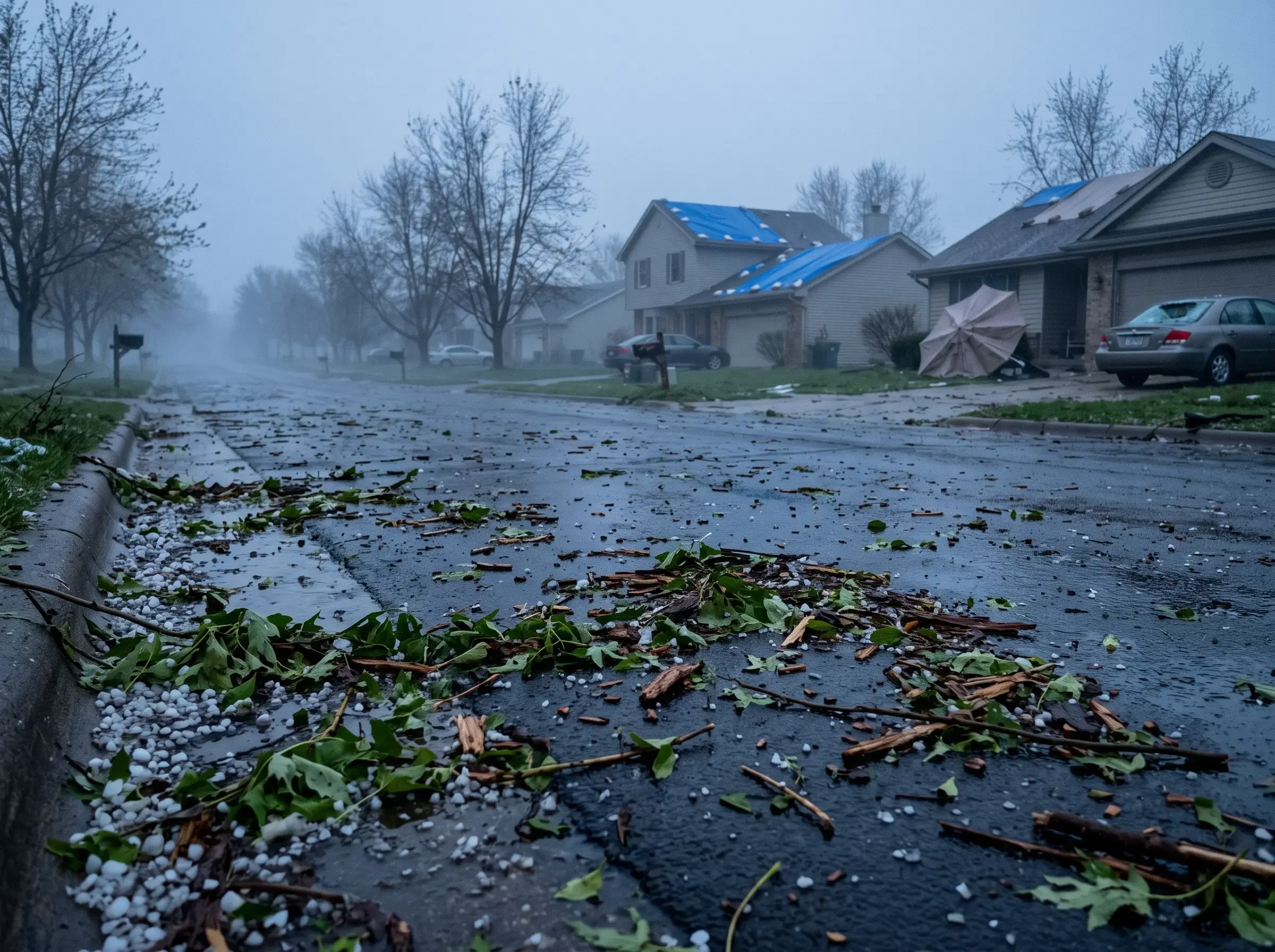
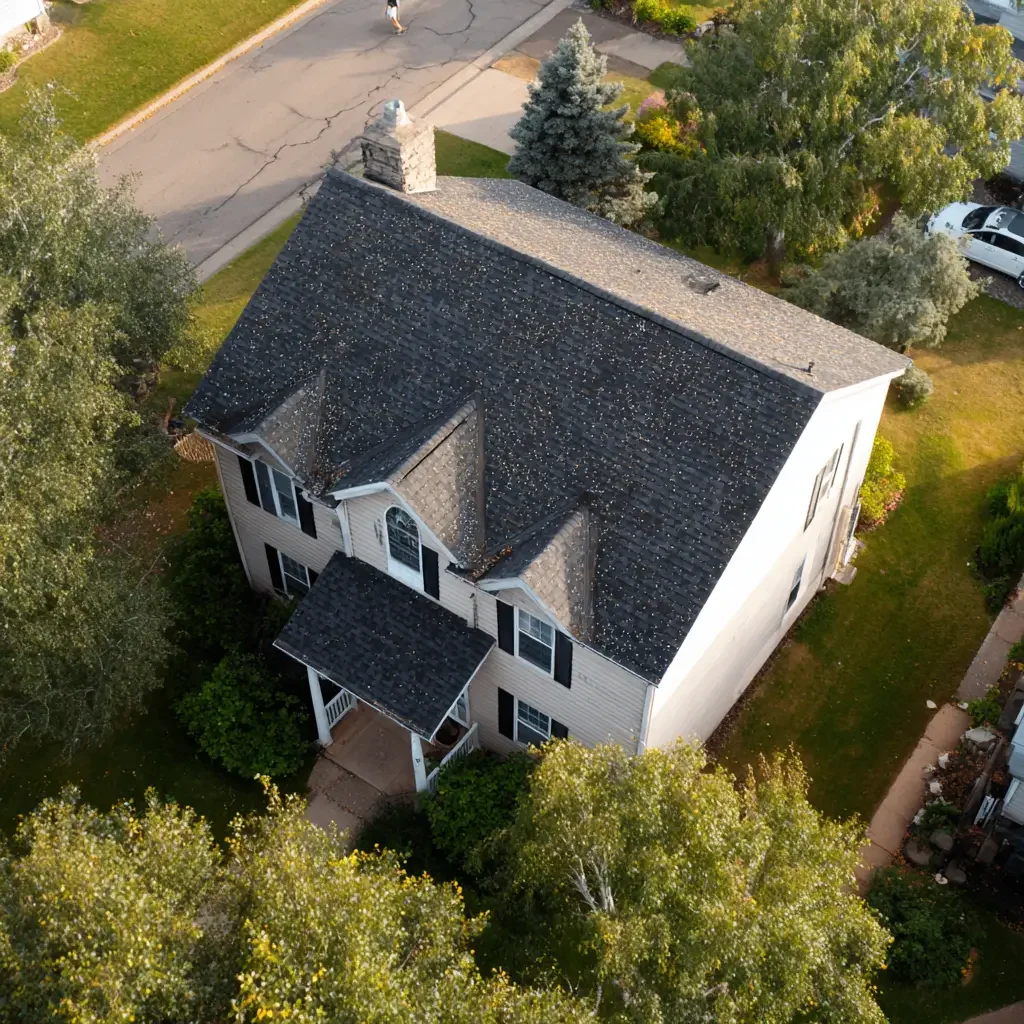
A hail storm rolls through the Twin Cities in late June. By the next morning, your roof has bruised shingles, cracked flashing, and gutters full of granules. Within 48 hours, three roofing contractors have already knocked on your door offering free inspections. It feels like the natural next move — call one back, get the damage assessed, file the claim, and get the roof fixed.
That sequence of events costs Minneapolis homeowners thousands of dollars every year. Sometimes tens of thousands.
The problem is not the roofer. The problem is the order of operations. Once a contractor touches your roof — documents certain damage, misses other damage, or begins any repair — your insurance claim is already being shaped by someone whose expertise is installation, not insurance policy negotiation. The adjuster the insurance company sends shortly after will use that contractor's incomplete assessment as a baseline. By the time a licensed public adjuster in Minneapolis could argue for the full scope of your damage, the ceiling has already been set too low.
This guide explains exactly what Minneapolis hail damage claims require, what Minnesota law entitles you to recover, and why calling Shoreline Public Adjusters before a roofing contractor is the move that puts the most money back in your pocket.
What Makes Minneapolis Hail Damage Claims Different From Other States
Minneapolis sits in one of the most active hail corridors in the country. The Twin Cities metro averages multiple significant hail events per season, with storms regularly producing hailstones between 1.0 and 2.5 inches in diameter. At that size, impact damage to asphalt shingles is not always immediately obvious to an untrained eye — which is exactly what insurance company adjusters count on.
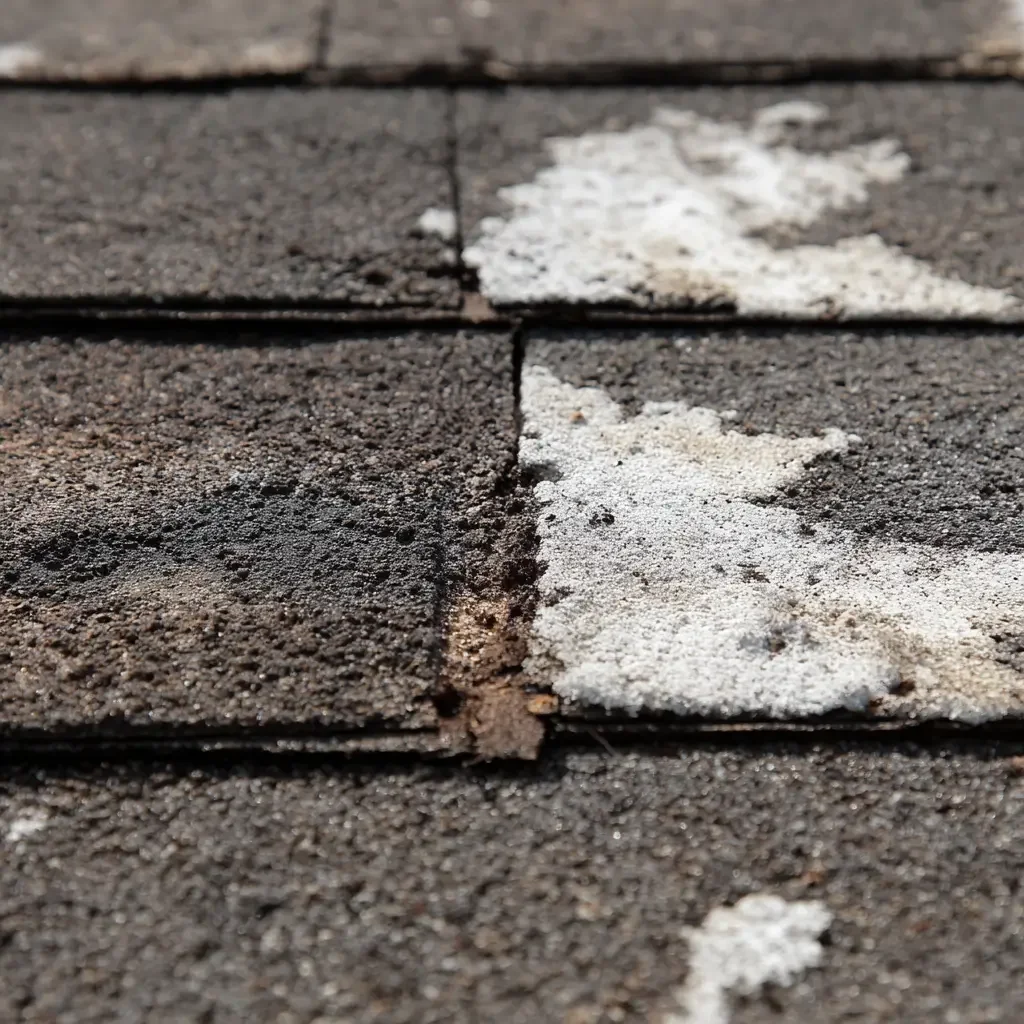
Functional damage versus cosmetic damage is the core battleground in virtually every Minneapolis hail damage claim. Insurance carriers routinely classify hail dents on asphalt shingles as "cosmetic" — meaning they argue the damage affects appearance but not the roof's ability to function. If that classification sticks, they owe you nothing for replacement. If it is overturned and the damage is reclassified as "functional" — meaning the shingle's structural integrity, granule adhesion, or waterproofing capability has been compromised — they owe you a full scope.
The 2025 Cannon Falls decision reinforced that what appears cosmetic on the surface often fails functional testing. Shoreline's licensed adjusters use thermal imaging cameras, moisture meters, and FAA-licensed drone inspections to document subsurface granule displacement, bruising that accelerates shingle aging, and waterproofing failure that is not visible from the ground. That documentation package is the difference between a "cosmetic" classification and a full replacement authorization.
Understanding how much hail damage it actually takes to replace a roof — and how insurers try to avoid that threshold — is essential reading before you file any claim.
The Cedar Bluff Matching Rule: Minnesota's Most Powerful Hail Claim Tool
Here is the statute most Minneapolis homeowners have never heard of — and that insurance companies hope they never do.
The Cedar Bluff matching rule, established in Minnesota case law in 2014, holds that when hail damages a portion of a roof and replacement shingles cannot reasonably match the existing undamaged sections in color or appearance, the insurer may be required to replace the undamaged sections as well. The reasoning: a material mismatch itself constitutes a direct physical loss to the undamaged portion, because the homeowner's property no longer has a reasonably uniform appearance.
In practical terms: if your Minneapolis home has a 3,000-square-foot roof and hail damages 40% of it, the insurer cannot simply patch those sections with whatever shingles are currently available if they will not match. Depending on the age, color, and manufacturer availability of your existing shingles — and Cedar Bluff is invoked precisely in those situations — the insurer may owe you a full roof replacement.
Our Minneapolis hail damage insurance claim guide covers the full range of insurer tactics used to avoid the matching rule and how Shoreline counters each one.
Roofing contractors rarely raise Cedar Bluff. It is not their job. Licensed public adjusters raise it every time it applies.
The 2024 Campbell decision added further weight by confirming that § 65A.10 of the Minnesota statutes requires insurers to cover code-required upgrades to undamaged components when those upgrades are integral to the repair. If your roof replacement triggers a requirement to upgrade underlayment, ice barrier installation, or ventilation to current building code, your insurer owes those upgrades — not you.
Why Calling a Roofer First Damages Your Claim
This is the part most homeowners only learn after the fact.
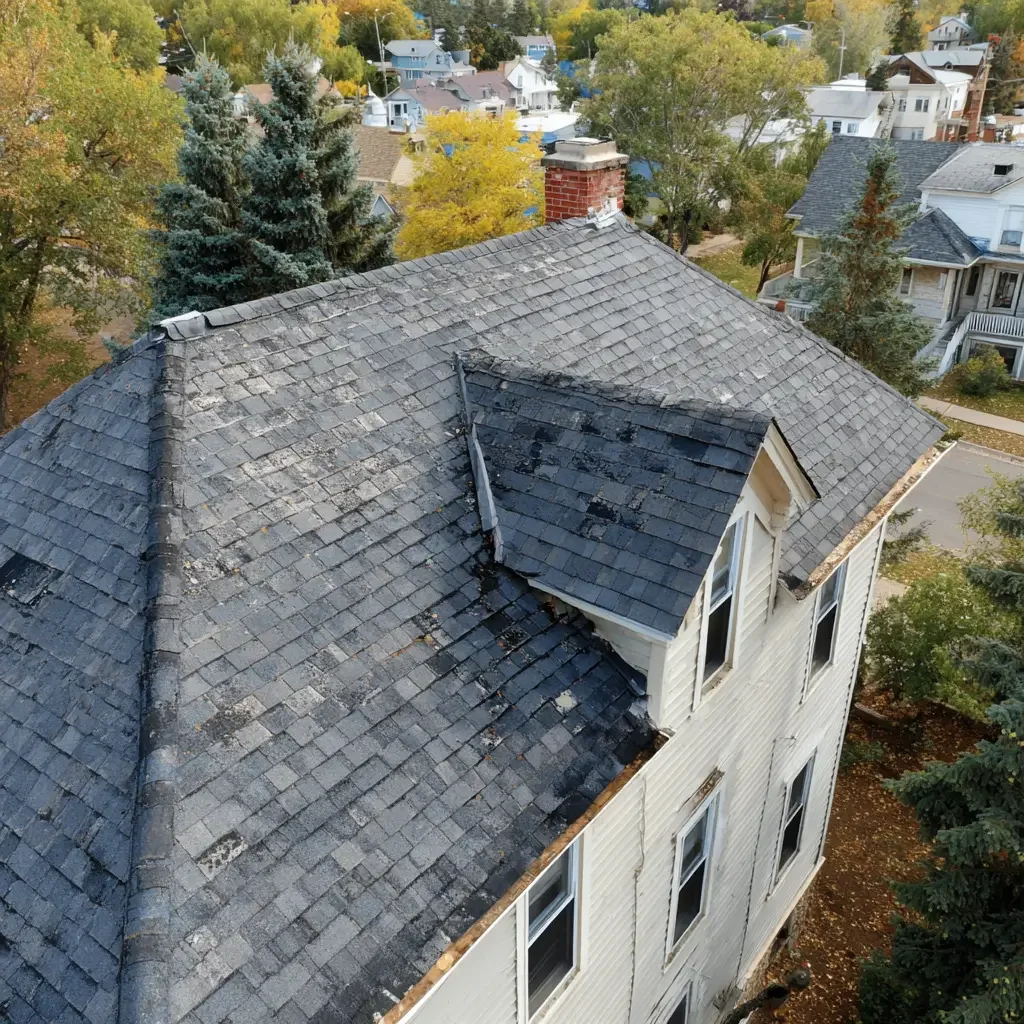
When a roofing contractor conducts a pre-claim "free inspection," they are typically looking for visible, accessible surface damage they can put in a repair or replacement proposal. They are not analyzing your policy's actual coverage language. They are not documenting damage in the format Xactimate estimating software requires for maximum claim value. They are not preserving the roof's pre-repair condition in a way that supports the matching rule argument or functional damage analysis.
When the insurance company's staff adjuster arrives — usually within a few days of your claim submission — they will often accept the roofing contractor's scope as a reference point. Any damage not in that initial contractor report becomes harder to add later. Any section already patched or tarped may be deemed "repaired" and excluded from the replacement calculation.
The correct sequence for a Minneapolis hail damage claim:
- Document everything yourself immediately after the storm — photos and video from all accessible angles, including gutters, downspouts, AC units, window screens, and any other soft metal that shows impact evidence
- Call Shoreline Public Adjusters for a free policy review before contacting a contractor or filing a claim
- Allow Shoreline to conduct a complete professional inspection using thermal imaging, moisture meters, and drone documentation
- File the claim with a complete, professionally documented scope
- Let Shoreline manage the insurance company adjuster's inspection — on-site, simultaneously, comparing findings in real time
- Engage a roofing contractor once the claim scope has been agreed to in writing
That sequence is the difference between a claim that pays for a patch job and a claim that pays for a full roof replacement.
Minnesota Insurance Law: What Your Insurer Is Required to Do
Minneapolis hail damage claims are governed by specific statutory timelines and obligations that most policyholders never enforce — because they do not know they exist.
§ 72A.201 of the Minnesota statutes establishes the following mandatory insurer obligations:
- Acknowledge your claim in writing within 10 business days of submission
- Accept or deny the claim within 60 days of receiving your completed Proof of Loss
- Provide a written explanation for any denial or partial payment
Violations of these timelines are not administrative inconveniences. Under Minnesota's Bad Faith statute § 604.18, a policyholder who proves their insurer acted in bad faith in denying or delaying a legitimate claim can recover up to $250,000 in excess proceeds plus up to $100,000 in attorney fees. That statute exists because the legislature recognized that insurance companies have a systematic financial incentive to delay and underpay.
Shoreline documents every communication, every timeline, and every insurer response from the moment we open your file — precisely because § 604.18 is a tool that changes the calculus for insurance companies who might otherwise be inclined to low-ball a Minneapolis hail damage settlement.
Shoreline's Minneapolis Hail Damage Claim Process
Shoreline Public Adjusters is licensed in Minnesota (#40962416) and has handled hail damage claims across all 87 counties, including the full Twin Cities metro and surrounding communities. Here is exactly what working with Shoreline looks like on a Minneapolis hail damage claim.
Step 1 — Free Policy Review Before anything else, we review your actual homeowner's policy. We identify coverage limits, ACV versus RCV provisions, matching rule applicability, code upgrade endorsements, and any exclusions the insurer is likely to cite. Most homeowners have never read their policy in full. We read it looking for leverage.
Step 2 — Professional Damage Inspection Our licensed adjusters conduct a comprehensive inspection using FAA-licensed drones, thermal imaging cameras, and moisture meters. We document every impact point, every area of granule displacement, every soft-metal dent that proves hail size and intensity. This documentation package is built to support the claim from day one — not retrofitted after a low offer.
Step 3 — Xactimate Scope Preparation We prepare a complete Xactimate estimate — the same software insurance companies use — so there is no ambiguity about what your claim should pay. We include Cedar Bluff matching arguments where applicable, Campbell code upgrade calculations, and functional damage analysis backed by field documentation. For a deeper look at how this process works across both Minnesota and Wisconsin, see our hail damage roof insurance claim guide for MN and WI.
Step 4 — Claim Filing and Insurer Adjuster Coordination We file your claim and attend the insurance company's on-site inspection simultaneously. Our adjuster and their adjuster review the roof together. This is one of the highest-leverage moments in any hail claim — disagreements about scope are resolved on the roof, not weeks later in correspondence.
Step 5 — Negotiation and Settlement We negotiate directly with the carrier until the settlement reflects the full scope of your documented damage. If the insurer invokes the appraisal process — as established under Quade v. Secura — we manage that process as well, including selection of an appraisal umpire if required.
Step 6 — No Recovery, No Fee Shoreline works on a contingency basis. We are paid only when your claim settles. There is no upfront cost, no retainer, and no fee if we do not recover for you. Minnesota's § 72B.135 provides a 72-hour right of rescission on public adjuster contracts, giving you full flexibility after signing.
What Changes When a Licensed Public Adjuster Handles Your Minneapolis Hail Claim
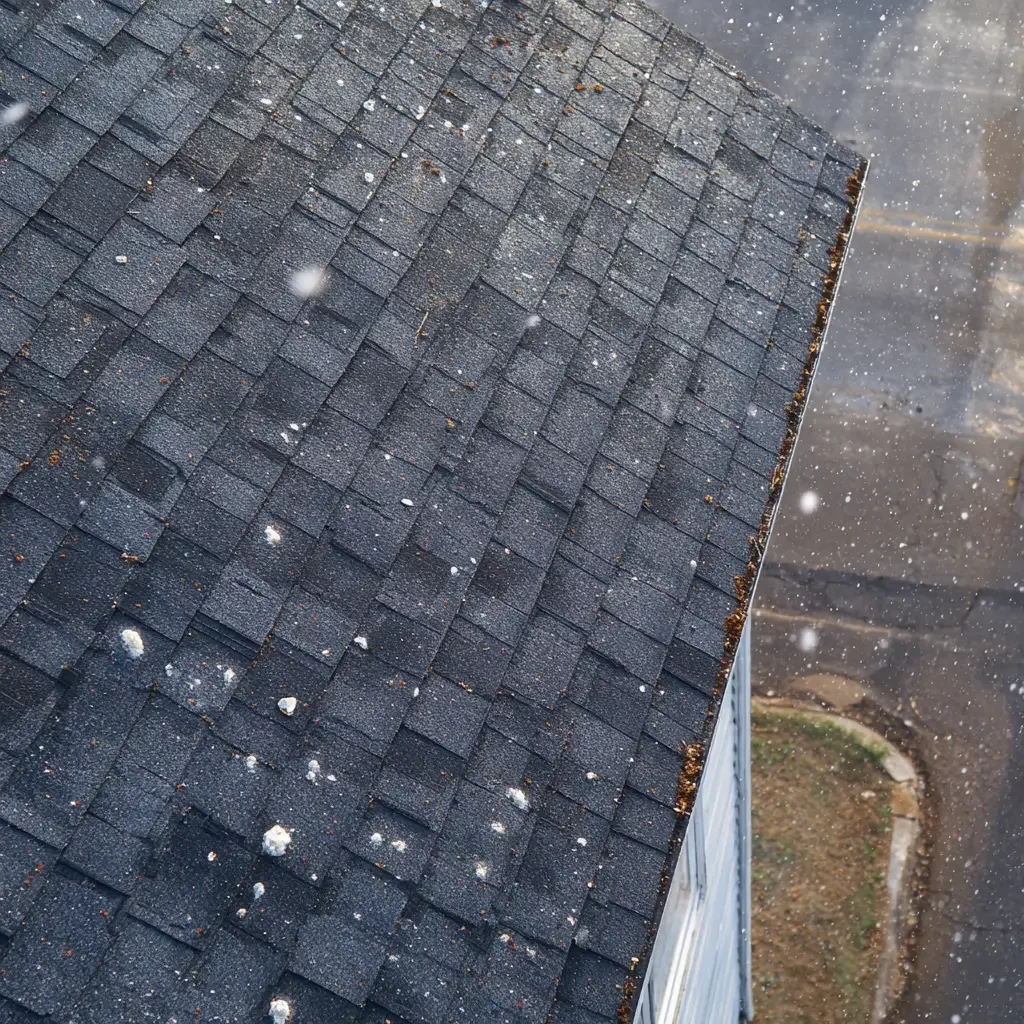
The data is clear and the source is authoritative. According to FAPIA, policyholders who work with licensed public adjusters recover up to 747% more on their settlements compared to those who handle claims alone. On hurricane claims specifically, OPPAGA data shows 574% more recovered with a public adjuster. The Insurance Information Institute documents that claims involving public adjusters resolve 30% faster than self-managed claims.
For a Minneapolis homeowner facing a $25,000 to $60,000 roof replacement, those percentages are not abstract. They represent the difference between a check that covers your out-of-pocket deductible and a check that covers the full scope of damage the storm caused.
The insurance company's adjuster — even when acting in good faith — is trained to identify covered damage under the policy as written. Shoreline's job is to find every dollar of covered damage, argue every applicable Minnesota statute, invoke every matching rule argument, and present a fully documented claim the insurer cannot reasonably dispute. Learn more about Shoreline's Minnesota public adjuster services and the full range of claims we handle statewide.
Frequently Asked Questions About Minneapolis Hail Damage Claims
How do I know if my roof has hail damage after a Minneapolis storm?
The clearest signs visible from the ground are granules collecting in gutters and downspouts, dented or dimpled soft metals (AC unit fins, flashing, ridge caps, satellite dishes), and cracked or missing shingles. However, functional hail damage to asphalt shingles is frequently not visible from the ground — it requires close physical inspection and often thermal imaging. The safest approach is a professional inspection before filing, so you know the full scope before the insurer sets expectations.
Does my homeowner's insurance cover hail damage in Minneapolis?
Most standard homeowner's policies in Minnesota cover hail damage under the dwelling coverage section. The key variables are whether your policy pays Actual Cash Value (ACV) or Replacement Cost Value (RCV), whether there is a separate wind/hail deductible, and whether the insurer classifies your damage as functional or cosmetic. A free policy review with Shoreline identifies exactly what your policy covers before you file.
What is the deadline to file a hail damage claim in Minnesota?
Minnesota homeowner's policies typically include a statute of limitations of two years from the date of loss to initiate legal action, but most policies require prompt notice of loss — meaning you should file as soon as damage is discovered. Waiting also allows secondary damage (water intrusion, mold, structural deterioration) to develop, which insurers may argue is a separate, excluded event rather than a consequence of the original hail loss.
Can a roofing contractor file my hail damage claim for me?
A roofing contractor can assist with documentation and provide estimates, but in Minnesota, only a licensed public adjuster, attorney, or the policyholder themselves may represent a policyholder in negotiating a claim settlement with an insurance company. Contractors who attempt to negotiate claim settlements on behalf of homeowners are operating outside their license. More importantly, a contractor's financial interest is in the repair contract — a licensed public adjuster's financial interest is in maximizing your settlement.
What if my Minneapolis hail damage claim was already denied?
A denial is not final. If your insurer denied your claim as "cosmetic damage," cited a prior repair exclusion, or argued your roof was past useful life, those determinations can be challenged. Read our full guide on what to do after a denied hail damage claim for a step-by-step breakdown of the counter-claim process. Shoreline reviews denied claims and builds the counter-argument using field inspection data, statute citations including § 604.18 bad faith protections, and Xactimate documentation. Contact us before accepting any denial as final.
How much does Shoreline charge to handle a Minneapolis hail claim?
Shoreline works on a contingency fee basis only. There is no upfront cost and no fee unless we recover on your claim. Our fee is a percentage of the settlement — you pay nothing unless we win.
Ready to Stop Leaving Money on the Table?
Shoreline Public Adjusters is licensed in Minnesota (#40962416) and fights for the full settlement your policy entitles you to. No upfront cost. We only get paid when you do.
Written by the Shoreline Public Adjusters Team — Licensed Public Adjusters serving Florida (#G199012), Minnesota (#40962416), and Wisconsin (#21156868). Members of FAPIA and NAPIA. Featured in Forbes, Investopedia, and Realtor.com.