Burst Pipe Insurance Claim: What's Covered and Why Frozen Pipe Claims Get Denied
TL;DR — Burst Pipe Insurance Claim: The Water Damage Is Covered. The Fight Is Over Why the Pipe Froze.
- The water damage is usually covered; the pipe usually is not. The standard homeowners form pays for what the water ruined and excludes the plumbing system it escaped from.
- Opening the wall to reach the break is part of the claim. The standard form pays to tear out and replace the part of the building needed to repair the system.
- Frozen pipe claims turn on reasonable care. The standard form excludes freeze damage unless you used reasonable care to keep the heat on, or to shut off the water and drain the system.
- Document before you demolish. Your policy requires you to protect the property and keep an accurate record of what you spend doing it.
- Written amounts start Wisconsin's payment clock. Wis. Stat. 628.46 gives the insurer 30 days from written notice of a covered loss and what it cost before the payment is overdue.
The Pipe Broke in a Minute. The Claim Turns on What Happened Before and After.
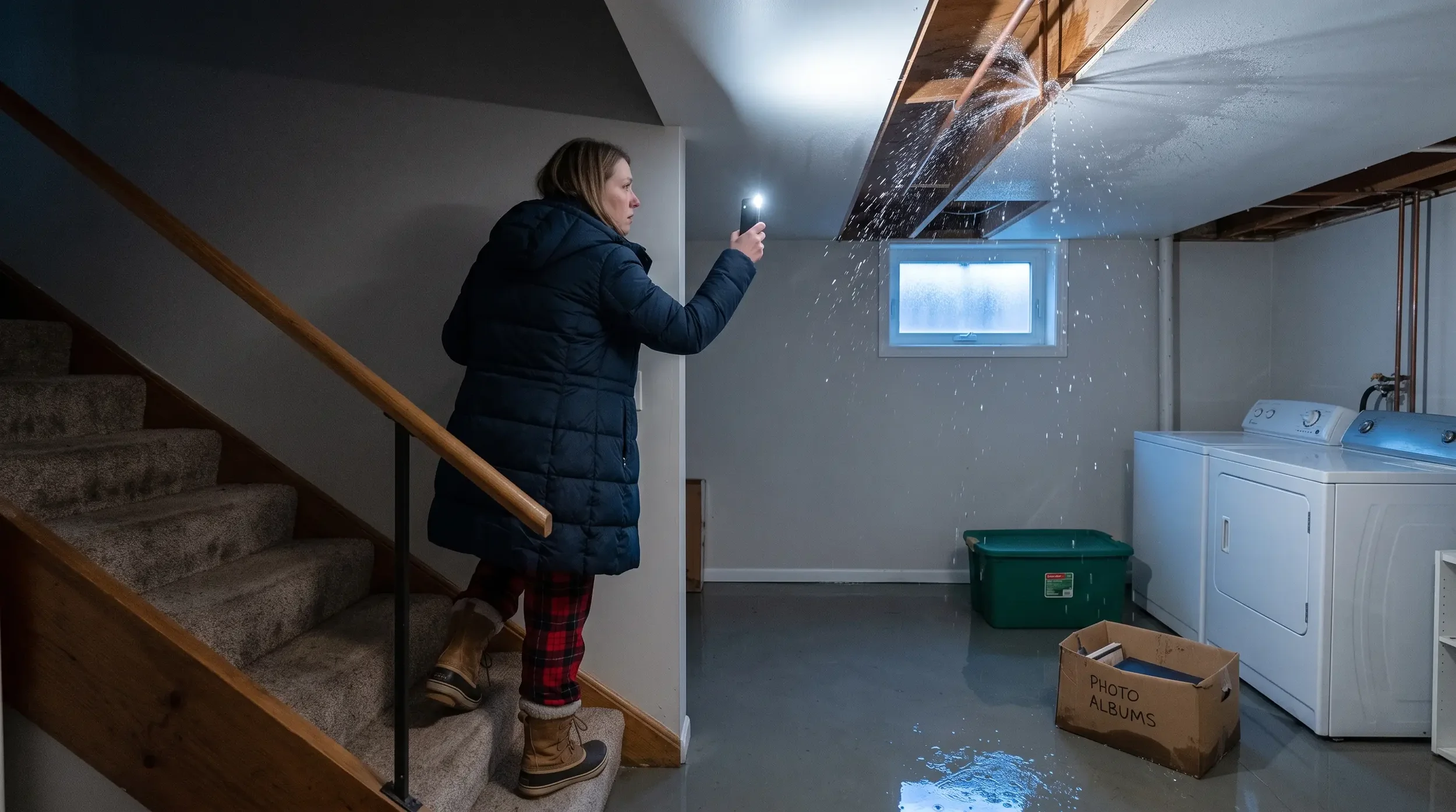
A burst pipe is over in an instant and keeps doing damage for hours. Water runs along joists, drops into wall cavities and soaks the subfloor under flooring that still looks fine from the doorway.
The claim that follows rarely turns on whether the pipe broke. It turns on two questions: why the pipe failed, and how much of the wet material anyone measured before the drying started.
The standard homeowners form published by Insurance Services Office (ISO) is a useful reference for both, because your policy may use the same wording or change it. Read your own policy alongside this guide, and treat the declarations page and any endorsements as part of the policy.
What a Homeowners Policy Pays After a Burst Pipe
In the standard special-form homeowners policy, the dwelling is covered against direct physical loss unless an exclusion applies. Water that escapes from a plumbing system at your home is treated as an accidental discharge, and the damage it causes to the house is covered unless another exclusion takes it away.
Personal property works on a named-peril basis in that form, and accidental discharge from plumbing is one of the named perils. Wet furniture, rugs and stored belongings go on an inventory, not in a dumpster.
- Covered: drywall, insulation, flooring, subfloor, cabinets, trim, and the contents the water reached.
- Usually not covered: the pipe, fitting or appliance the water escaped from.
- Separate question: water that backs up through a drain or overflows from a sump pump falls under a separate exclusion in the standard form, so ask whether your policy has a water backup endorsement.
The Pipe Is Not Covered. Opening the Wall to Reach It Is.
This is the line most often misread in a burst pipe settlement. The standard form excludes loss to the system the water escaped from, so the plumber's charge for the new section of pipe is generally yours.
The same form also pays the cost to tear out and replace any part of the building when that is necessary to repair the system. The drywall cut to reach the break, and its replacement, belong in the claim.
An estimate that pays for the wet drywall in one room but leaves out the wall opened to reach the pipe is short. So is one that treats the tear-out as part of the plumbing bill.
Why Frozen Pipe Claims Get Denied
Frozen plumbing has its own exclusion in the standard form. It does not cover freeze damage to a plumbing system, or water discharged because of the freezing, unless you used reasonable care to do one of two things: maintain heat in the building, or shut off the water supply and drain the systems and appliances.
So the question is not whether it was cold, and in that form it is not whether anyone was home. It is whether you took reasonable care. A house kept heated while the owners were away is a different claim from one where the furnace was turned off and the water left on.
If the building has an automatic fire sprinkler system, the form asks for more: reasonable care to keep the water supply on and maintain heat. Other policy forms and carrier-specific policies can add their own vacancy or occupancy conditions, so find the freeze and vacancy wording in yours before you file.
The evidence that answers the freeze exclusion is usually already in your accounts:
- smart thermostat history for the days before the break
- gas or electric usage for the billing period
- security system or camera logs showing the home was checked
- the name of anyone who checked the house, and when
- a furnace service record, or a technician's note if the furnace failed
Pull these records before you file, not after a denial letter arrives. Some thermostat apps and utility portals keep detailed history only for a limited time.
The second fight is over whether the leak was sudden. Your policy may exclude water that leaked repeatedly over a long period, and staining or rot around the break invites that argument. A dated plumber's note on how the pipe failed, such as a fresh freeze split, is the evidence that answers it.
The Damage You Cannot See Is Most of the Claim
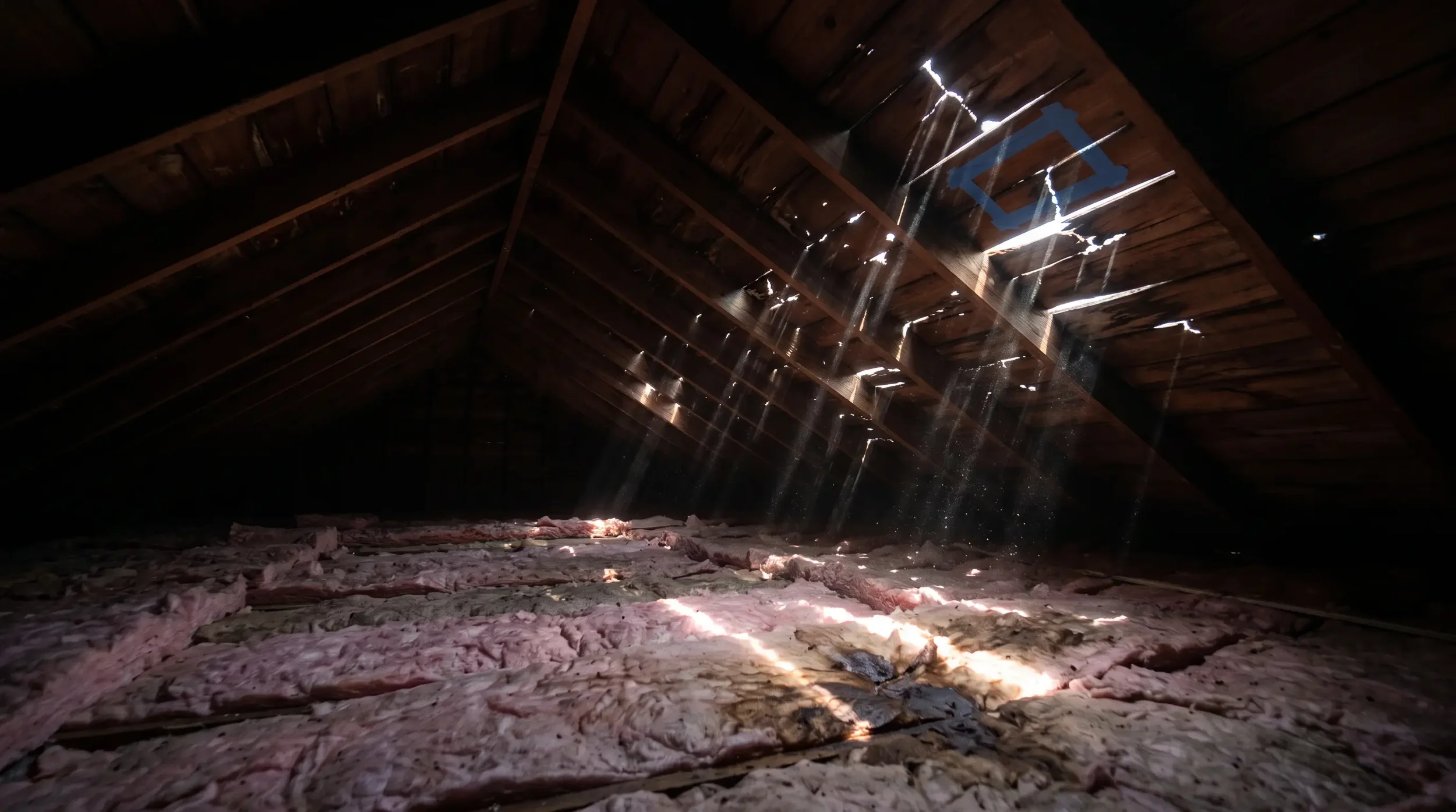
The visible stain is a fraction of the wet area. Moisture held in insulation and subfloor is what turns a water claim into warped flooring and mold a few weeks later.
The standard form excludes mold generally, but it covers mold hidden inside walls, ceilings or floors when it results from an accidental discharge from a plumbing system. Your policy may add its own mold limit, so check the declarations and endorsements.
Before anyone agrees on a scope, the file should hold moisture meter readings from the surrounding cavities and, on a larger loss, thermal images. Once the drying equipment has run and the walls are closed, that proof is gone.
From Our Files: The Money Runs on a Different Calendar Than the Bills
The story here is from a hail claim, not a water loss, but the part that carries over is the calendar.
On that claim, the first payment arrived just under three months after we were hired. The second payment came about three weeks after that.
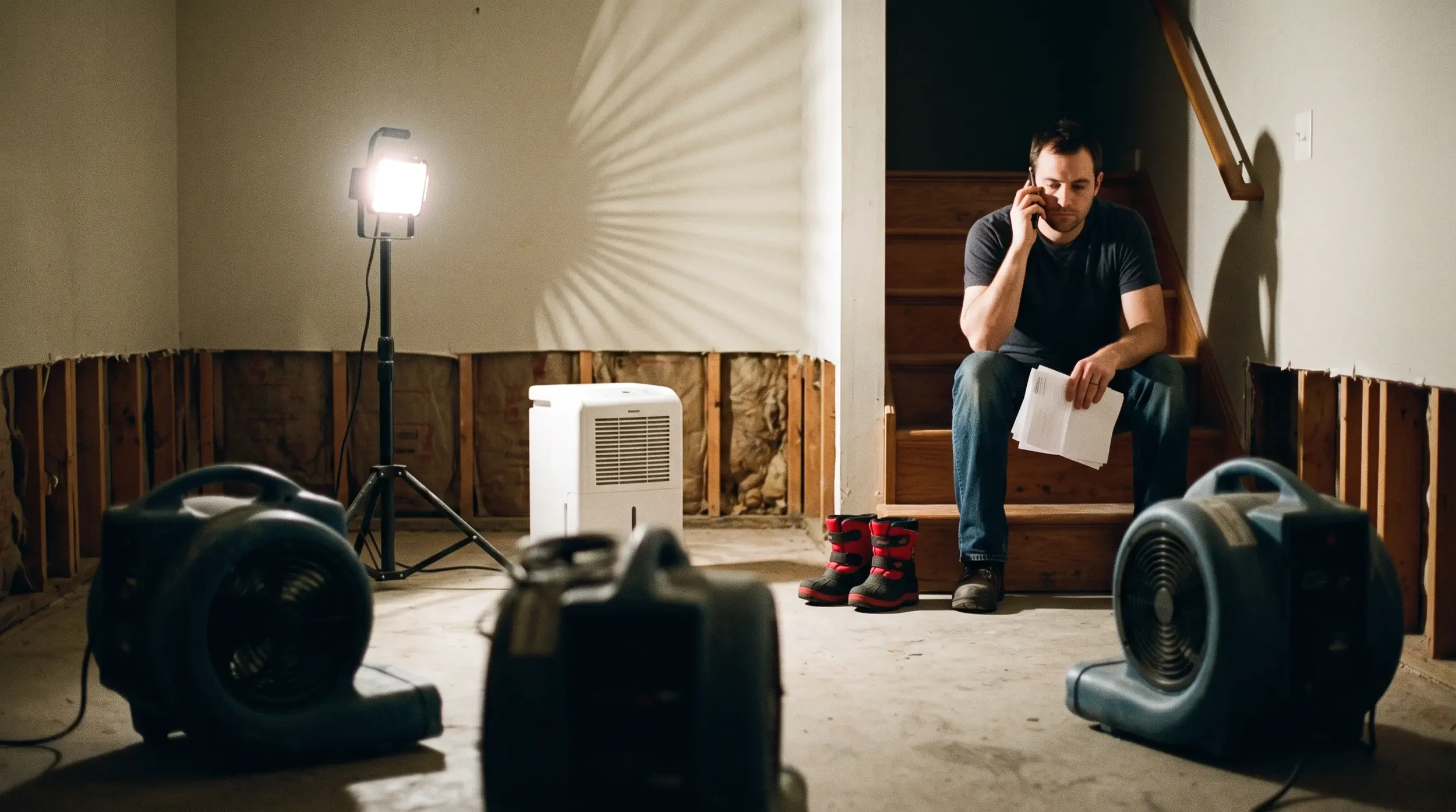
A burst pipe runs up its bills in the first week: the plumber, the drying equipment, sometimes a place to stay while the house dries. The carrier's money can take months, and a large invoice arriving early can push a homeowner toward accepting the first number just to pay it.
That gap is why the policy's own duties matter. Keep an accurate record of every repair expense from the first day, and do not let the drying company's invoice set the value of the claim.
What to Do in the First 48 Hours
1. Shut off the water and photograph everything before equipment arrives. Video every wet surface and every affected room, including the ceilings below.
2. Keep the failed section of pipe. Ask the plumber to note in writing how it failed and where it was.
3. Protect the property, and keep the receipts. The standard form requires you to make reasonable and necessary repairs to protect the property and keep an accurate record of repair expenses, and it pays the reasonable cost of those measures.
4. Pull the heat evidence now. Thermostat history, utility usage and security logs, while the detail is still available.
5. Report the claim promptly. Prompt notice is one of the duties the standard form lists after a loss.
6. Inventory damaged contents before they leave the house. The form asks for quantity, description and value, with bills and receipts attached.
7. Get moisture readings before the scope is agreed. Our water damage insurance claim calculator gives you a first check on what the loss may be worth.
The Clock the Insurer Is On
A burst pipe claim stalls in a predictable place: after the drying stops and before anyone agrees on the rebuild. That is when the state rules on timing are worth knowing.
Wisconsin. The 30-day clock in Wis. Stat. 628.46 starts when the insurer is furnished written notice that a covered loss happened and what it amounts to. That turns the drying invoice and a documented rebuild estimate into more than paperwork, because each amount you support in writing starts its own 30 days, and a policy that calls for a proof of loss starts the clock when the insurer receives it.
A late payment earns simple interest of 7.5 percent a year. It isn't late, though, when the insurer has reasonable proof it isn't responsible for it, so on a disputed freeze claim the heat evidence comes first and the clock second.
Minnesota. Under Minn. Stat. 72A.201, a carrier has 10 business days from notice to acknowledge the claim. Within 30 business days of notice, it must accept or deny the claim or explain why the investigation isn't complete and when it will be.
The rest of the Minnesota deadlines, including the 60-business-day decision after a proof of loss, are in our Minnesota settlement-timeline guide.
If the drying is finished, the scope is documented and the file has gone quiet, write to the adjuster and cite the rule that applies. That letter usually does more than another voicemail.
When the Offer Comes In Short
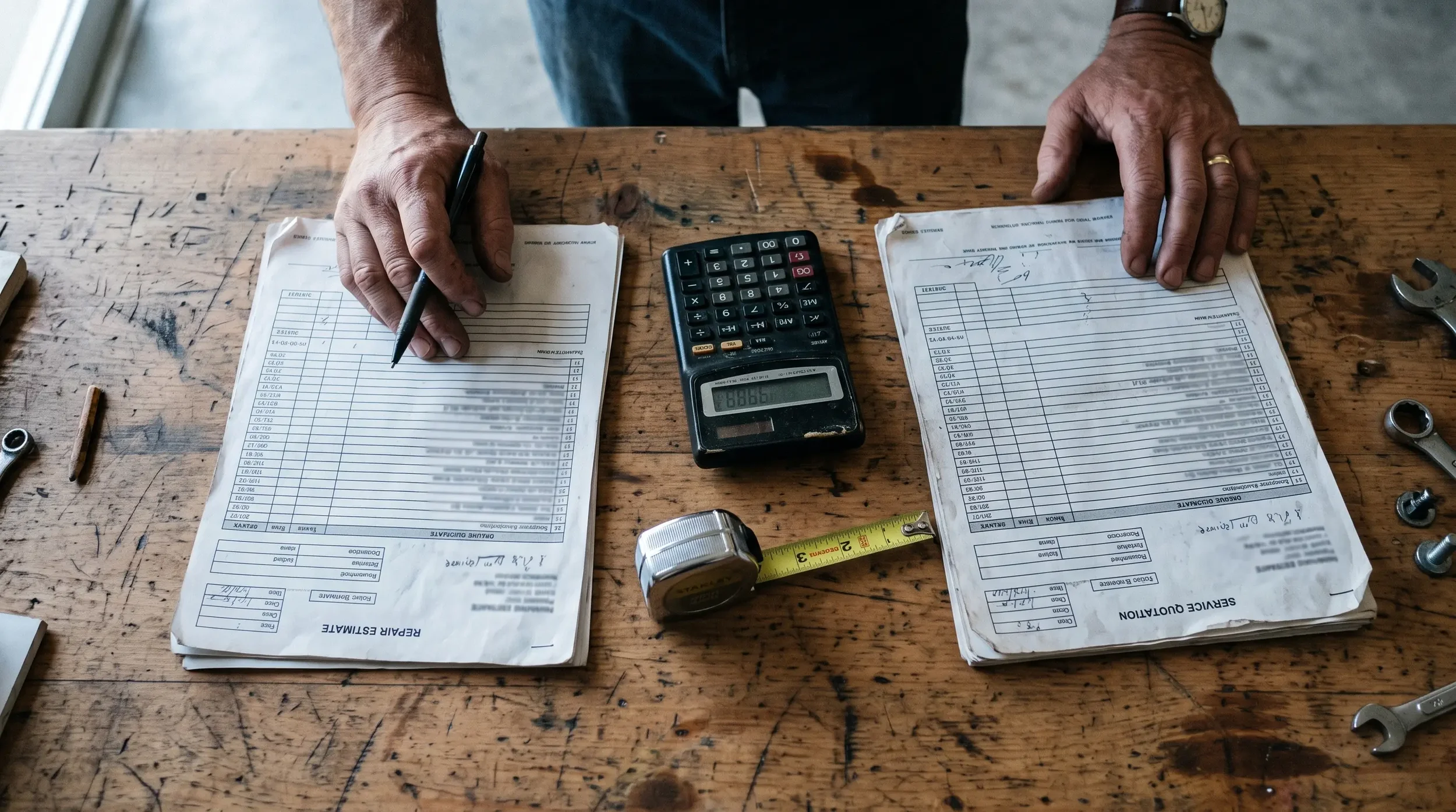
Low burst pipe offers usually share one cause: the estimate was written from what was visible on the day of the inspection. Cabinets get cleaned instead of replaced after the particleboard has swelled, flooring gets patched where no matching material exists, and insulation stays in because it looked dry from the doorway.
The fix is a documented counter-scope with moisture readings, photographs and line-item pricing, not an argument about the total. If the carrier paid part of the claim and stopped, our guide to an underpaid insurance claim walks through how to prove the gap.
Frequently Asked Questions About Burst Pipe Insurance Claims
Does homeowners insurance cover a burst pipe?
Usually, for the damage the water causes. In the standard ISO homeowners form, water that escapes from a plumbing system inside the home is an accidental discharge, and the resulting damage to drywall, flooring, cabinets and contents is covered unless another exclusion applies. The pipe itself is generally not covered. Check your own policy, because carriers can change the standard wording.
Does homeowners insurance cover frozen pipes?
It depends on reasonable care. The standard ISO homeowners form excludes damage from frozen plumbing unless you used reasonable care to maintain heat in the building, or to shut off the water supply and drain the systems. Some policies add vacancy or occupancy conditions. Thermostat history and utility usage are the usual evidence that the heat was on.
Why was my frozen pipe claim denied?
The most common reason is the freeze exclusion: the insurer is arguing you did not use reasonable care to keep the heat on or to shut off and drain the water. The other common reason is an argument that the leak was gradual rather than sudden. Ask for the denial in writing with the policy language it relies on, then answer it with thermostat, utility and plumber records.
Does insurance pay to open the wall to fix the pipe?
In the standard ISO homeowners form, yes. The accidental discharge coverage includes the cost to tear out and replace any part of the building when that is necessary to repair the plumbing system. The form does not pay for the pipe or fitting itself. An estimate that leaves out the wall opened to reach the break is missing part of the claim.
Is mold from a burst pipe covered?
Sometimes. The standard ISO homeowners form excludes mold in general, but covers mold hidden inside walls, ceilings or floors when it results from an accidental discharge from a plumbing system. Your policy may change that wording or add a separate mold limit, so check the declarations and endorsements, and get moisture readings early.
Should I tear out wet drywall before the adjuster sees it?
Protect the property first, but document before you demolish. The standard form requires reasonable and necessary repairs to protect the property and an accurate record of repair expenses. Photograph and video every wet surface, keep the failed section of pipe, and save samples of removed materials where you can, so the damage can still be proved later.
How long does an insurer have to pay a burst pipe claim in Wisconsin?
Wisconsin's prompt-payment statute, Wis. Stat. 628.46, gives the insurer 30 days from written notice of the covered loss and its amount, or from receiving a proof of loss the policy requires. After that the payment is overdue and earns simple interest of 7.5 percent a year. That interest does not run on an amount the insurer has reasonable proof it is not responsible for.
Can a public adjuster help with a burst pipe claim?
Yes. A licensed public adjuster represents the policyholder, never the insurer. On a burst pipe loss that means measuring the full wet area before it is dried and closed up, separating the covered tear-out from the excluded plumbing, assembling the heat evidence that answers a freeze denial, and writing a line-item counter-scope when the offer is short. The first days after the break are when it helps most.
Before the Drying Equipment Leaves
A burst pipe claim is easiest to prove while the walls are still open and the moisture readings still mean something. A review of the damage, the estimate or the denial letter costs nothing.
Our water and flood damage claim help covers burst pipe and frozen pipe losses in Minnesota, Wisconsin and North Dakota.
Send the estimate or the denial letter to Shoreline Public Adjusters, and we'll review it free. We represent policyholders only, and there is no fee unless we recover money for you.
Related Reading
- An underpaid insurance claim — what to do when the check does not cover the repair.
- Loss of use coverage — what your policy owes while the house dries out.
- Does HOA insurance cover water damage? — when the pipe that burst served more than one unit.
Shoreline Public Adjusters, LLC is licensed in Florida (FL G199012), Minnesota (MN 40962416), Wisconsin (WI 21156868), North Dakota (ND 3004392416), and South Dakota.
Shoreline Public Adjusters, LLC
780 Fifth Avenue South
Suite #200
Naples, FL 34102
Email: hello@teamshoreline.com
Phone: 954-546-1899
Fax: 239-778-9889