By: Shoreline Public Adjusters
Updated: April 2026 · 8 min read
In This Post:
- Why Tallahassee Claims Are Different From Coastal Florida
- What a Tallahassee Public Adjuster Actually Does on a Leon County Claim
- The Tree Damage Trap Most Homeowners Don't See Coming
- Hidden Damage Carrier Adjusters Routinely Miss
- When to Hire a Public Adjuster in Tallahassee
- A Representative Leon County Storm Claim Outcome
- Common Mistakes Tallahassee Homeowners Make
- FAQ
- Talk to a Licensed Adjuster
The carrier's first offer on a Leon County roof, tree, and interior water claim was $14,200. After a Tallahassee public adjuster reopened the file, the final settlement was $51,800. The difference came down to three line items the company adjuster never opened — fastener compromise across two roof slopes, secondary water intrusion through a flexed soffit, and a structural shift the carrier wrote off as "settling."
Tallahassee storm claims look like coastal Florida claims on the surface. They are not. The damage patterns are different. The policy language traps are different. And the carrier playbook for inland Big Bend losses leans hard on the assumption that homeowners will accept the first number they hear.
A licensed adjuster working for the policyholder is the counterweight to that playbook.
What a Tallahassee Public Adjuster Actually Does on a Leon County Claim
A Tallahassee public adjuster is a state-licensed claim professional who works for the policyholder — not the insurance company. The role is regulated under Florida statute, the firm is paid only out of recovered settlement funds, and the work covers everything from initial inspection through appraisal or litigation referral.
I've spent over a decade on the enterprise risk side, watching how large organizations protect themselves from the same information asymmetry that shows up in residential and commercial insurance claims. The pattern is consistent: the side with the better documentation, the better damage scope, and the better understanding of policy language wins the negotiation. Tallahassee homeowners usually have none of those three. The carrier has all of them.
📋 Florida Law: Under Fla. Stat. § 627.70131, your insurer has 14 days to acknowledge your claim, must begin investigation within 14 days of receiving proof of loss, and must pay or deny the claim within 60 days (reduced from 90 days under the 2023 reforms). Missing those deadlines may support a bad-faith argument under § 624.155. Source: Florida Statutes Online
Why Tallahassee Claims Are Different From Coastal Florida
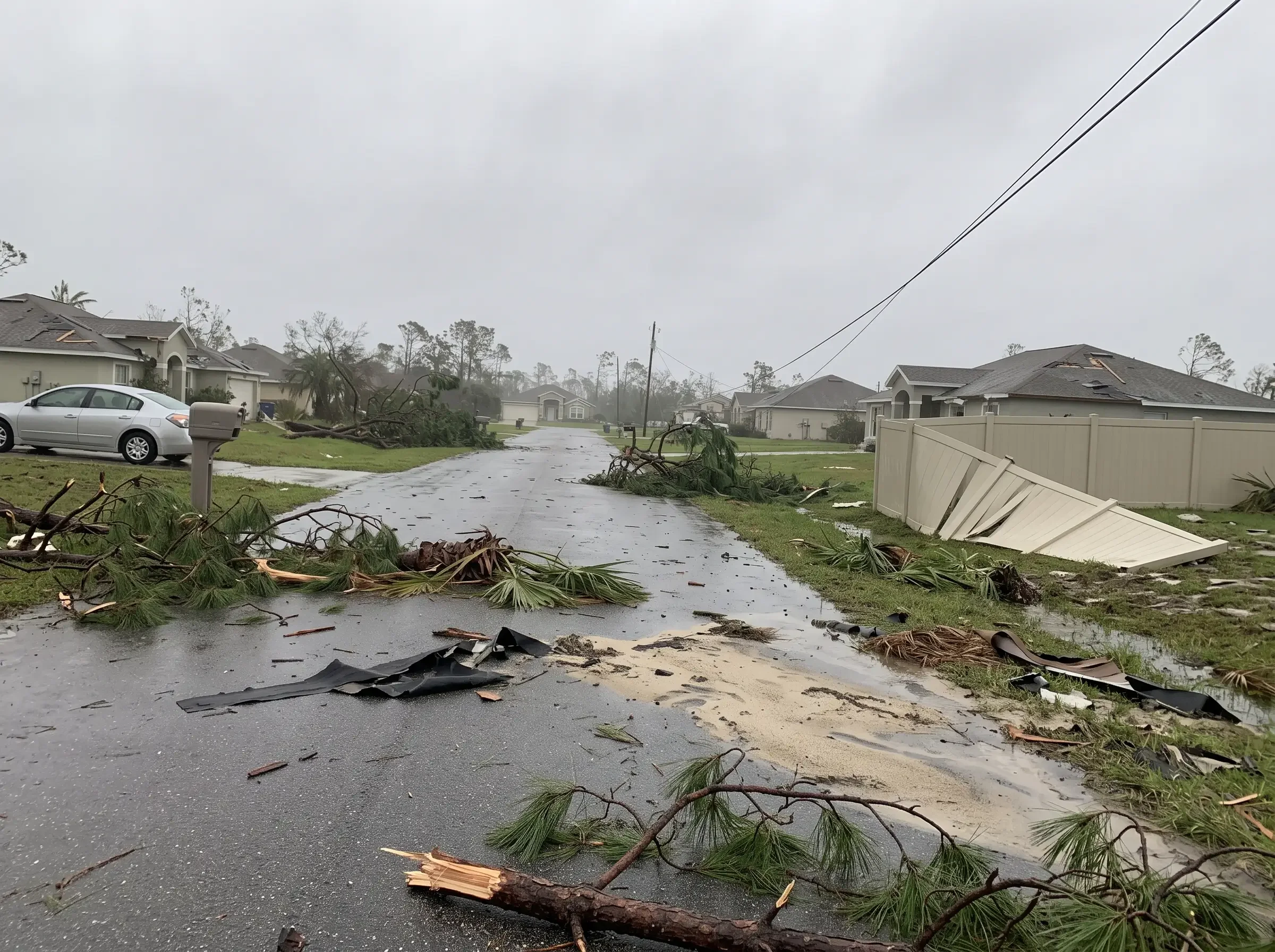
Tallahassee sits in the Big Bend, where inland systems off the Gulf produce embedded tornadoes, derechos, hail, and severe straight-line wind events. Hurricane Helene's 2024 inland track through Leon County is a recent example of how badly coastal models underprice inland damage.
That distinction matters in three concrete ways.
Carrier adjuster training is coastal. Most national field adjusters deployed to Tallahassee after a major event have spent their careers writing wind-driven rain claims in Tampa, Naples, or Jacksonville. Inland tornado tracks, tree-impact mechanics, and the secondary damage profile of a rotational wind event are not in their default scope.
Tornado claims and hurricane claims are not interchangeable. A tornado creates rotational, concentrated, often parcel-specific damage. A derecho creates uniform straight-line wind across a corridor. Carriers sometimes apply hurricane-deductible logic to tornado losses or argue that tornado damage is "atypical" — neither is consistent with how the policy actually reads.
Tree canopy density changes the loss profile. Leon County's oak, pine, and magnolia canopy creates impact damage, root damage, and follow-on water intrusion at rates coastal claims don't see. Carrier estimates routinely under-scope tree-related secondary damage by tens of thousands of dollars.
A local adjuster on the policyholder's side builds the file around these inland realities from the first inspection. A national TPA adjuster does not.
The Tree Damage Trap Most Homeowners Don't See Coming
Tree damage is the single most common coverage dispute on Tallahassee claims, and it's the one where homeowners lose the most money before they realize they had a problem.
Three scenarios come up repeatedly:
Your tree falls on your house. Your homeowner policy covers the structural damage. The carrier's estimate often bundles the tree removal and roof patch into a single number that ignores secondary interior water damage, soffit and fascia loss, and fastener compromise across the rest of the roof.
Your neighbor's tree falls on your house. Most standard HO-3 policies cover this under your own policy as a "natural" tree loss. The neighbor's carrier almost always denies, citing no negligence. Homeowners who don't know this lose months trying to chase the wrong policy.
A tree falls on something other than the dwelling. Driveways, fences, detached structures, sheds, and pool screens often sit under sub-limited coverage. Tree debris removal itself is typically capped at $500–$1,000 per tree under most Florida policies, regardless of actual cost.
⚠️ What Insurers Won't Tell You: A tree-impact roof claim and the resulting interior water damage are separate scope items, not a single bundled number. Carriers consistently combine them to suppress the total payable.
A Tallahassee public adjuster reads the policy, separates the scope into properly itemized line items, and forces the carrier to value each one against current Xactimate pricing.
Hidden Damage Carrier Adjusters Routinely Miss in Leon County
Inland storm damage is layered. Carrier adjusters are often paid by the file, on a tight schedule, with no incentive to find more damage. The result is a predictable pattern of missed scope.
Roof fastener compromise. A rotational wind event can lift shingles enough to break the seal and stress the nails without removing the shingle. From the ground, the roof looks intact. A close-up inspection — uplift testing, pattern photography of fastener heads — proves the integrity is gone. Without that documentation, the carrier writes "no visible damage" and closes.
Structural movement. Severe straight-line winds put real lateral load on framing. The signs are sticking doors, hairline drywall cracks at corners, separated baseboard, and windows that no longer seat. Carrier adjusters call this "settling" or "pre-existing." A licensed structural engineer's report calls it what it is.
Tree root and underground utility damage. When a mature oak or pine uproots, the root mass tears through buried plumbing, septic lines, and sometimes foundation footings. The visible damage is the tree on the ground. The expensive damage is what the roots took with them — and it usually shows up months later as a denial citing "wear and tear."
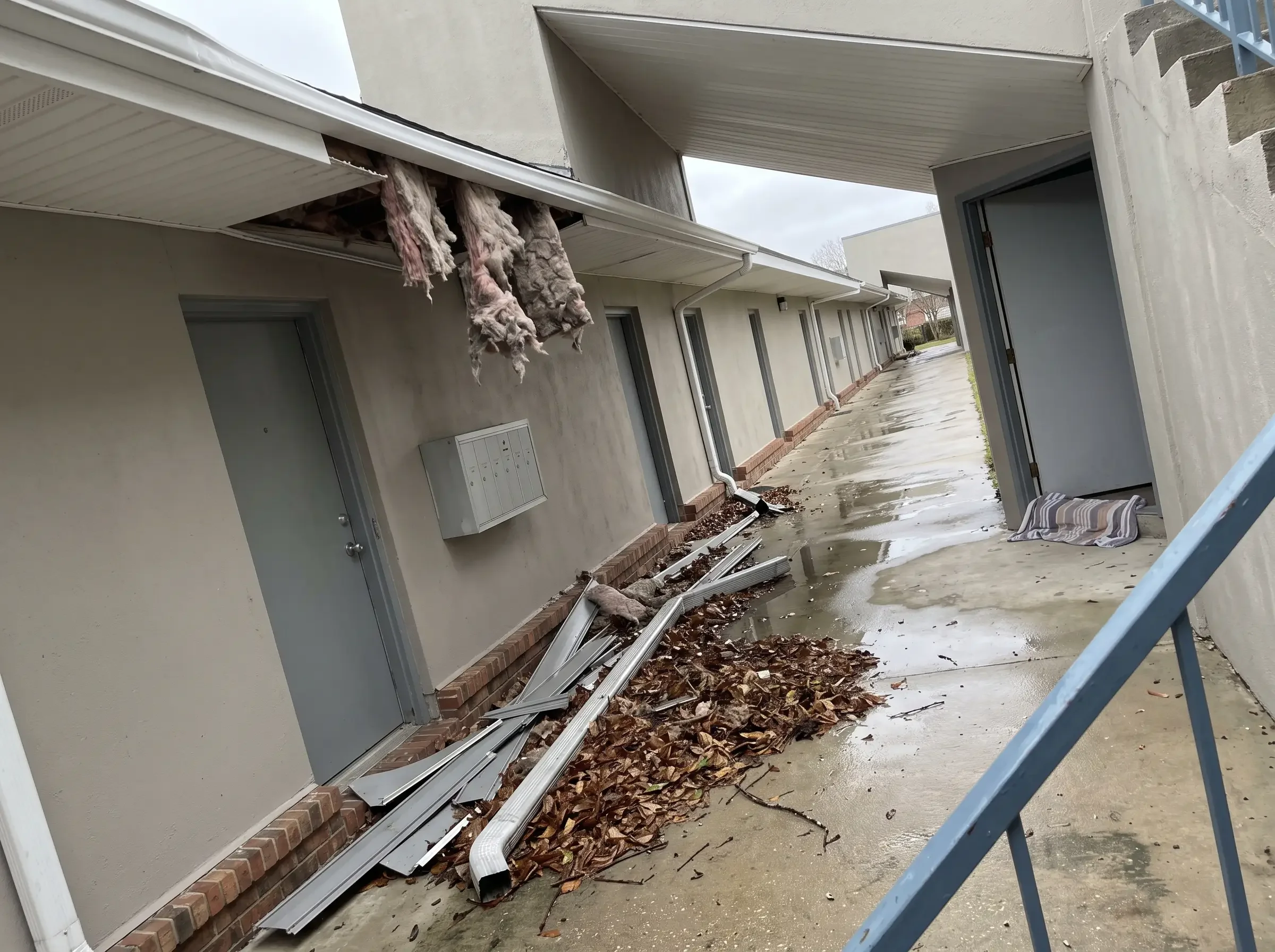
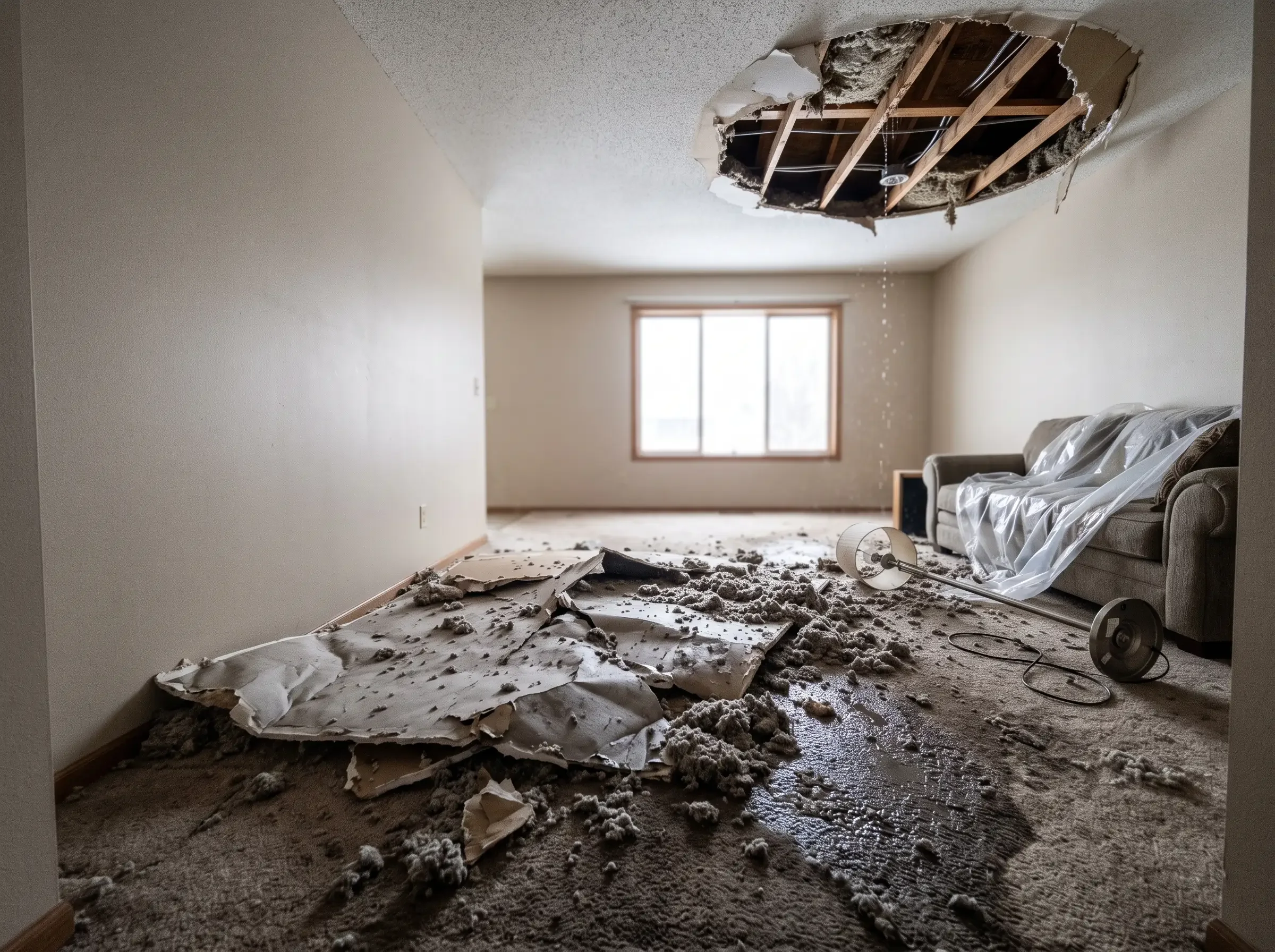
Hidden water intrusion. Wind-driven rain finds its way past flashing, around vents, and through stressed soffits. By the time visible interior staining appears, drywall, insulation, and framing are already compromised. Moisture mapping during the initial inspection catches this; a five-minute carrier walkthrough does not.
This is where local Tallahassee expertise — combined with engineers and certified arborists when the file calls for them — separates a real adjuster file from a paperwork exercise. For a deeper look at how the appeals process unfolds when these items get wrongly denied, see the Florida anti-concurrent causation playbook.
When to Hire a Public Adjuster in Tallahassee
The right time is earlier than most homeowners think.
| Stage | Why Local Representation Helps |
|---|---|
| Before filing | Policy review, photo documentation strategy, scope planning before the carrier sees anything |
| After the carrier inspection | Supplemental scope, line-item review, pricing challenge with current Xactimate data |
| After a low offer | Written response, demand for reinspection, appraisal preparation |
| After a denial | Coverage analysis, Department of Financial Services complaint support, attorney referral if bad faith is in play |
| Reopened claim | Re-documentation, supplemental loss filing under § 627.70132's 18-month window |
Florida's claim deadlines tightened sharply under the 2022 reforms. For most property losses, the policyholder has one year from the date of loss to file initial notice of claim, and 18 months to file supplemental or reopened claims, under Fla. Stat. § 627.70132. Earlier engagement preserves more options.
For a broader look at expected timelines, see how long an insurance claim actually takes in Florida. And if your carrier is dragging the file, the stalling playbook walks through your statutory leverage.
A Representative Leon County Storm Claim Outcome
A Leon County homeowner in the College Terrace area filed a claim after a severe wind event drove an oak limb through the rear roof slope. The carrier's first inspection produced a $14,200 estimate covering visible roof damage, debris removal at the policy sub-limit, and minor interior repair to one bedroom ceiling.
The carrier's adjuster did not climb the roof, did not test fasteners on undamaged slopes, and did not open the wall cavity behind the visibly stained drywall. The estimate referenced 2021 Xactimate pricing.
A licensed public adjuster brought a roofing inspector and a moisture meter to the second inspection. The findings: fastener uplift across the front and side slopes consistent with the same wind event, a soffit return that had separated and let wind-driven rain into the wall cavity, mold remediation requirements behind the master bedroom wall, and current Xactimate pricing for North Florida labor that ran roughly 28% higher than the carrier's outdated estimate. A supplemental scope was filed, the carrier disputed, and the file went to appraisal.
Final settlement: $51,800 — a 265% increase over the original offer. The public adjuster's contingency fee came out of the recovered amount; the homeowner's net recovery still ran more than 3x the carrier's first number.
Representative outcome based on common inland claim patterns. Actual results depend on policy language, damage scope, and carrier behavior.
Is your Tallahassee claim looking like the first number, not the second? If the carrier's offer feels low — or your claim has already been denied — a free consultation with a licensed Tallahassee public adjuster takes 15 minutes and costs you nothing. Contact Us
Tornado damage claims represent some of the most contested filings a licensed Florida public adjuster handles — short-duration, high-velocity events leave damage patterns that carriers routinely misclassify as wind-related cosmetic loss instead of structural peril. Tallahassee's history with EF-2 events makes this the single biggest claim issue in Leon County.
Common Mistakes Tallahassee Homeowners Make
1. Accepting the first carrier estimate without a second opinion. The opening offer is a negotiation anchor, not a final number. Carriers expect supplemental scope on any meaningful loss. What to do instead: Treat the first estimate as a draft and have it independently reviewed before signing anything.
2. Repairing damage before the adjuster documents it. Emergency mitigation (tarping, board-up, water extraction) is required and reimbursable. Permanent repairs before inspection wipe out evidence of scope. What to do instead: Mitigate, document everything with photo and video, then wait on permanent repairs until the file is closed or a public adjuster has inspected.
3. Assuming a neighbor's tree means a neighbor's claim. Standard Florida HO-3 policies cover tree impact under your own policy regardless of which yard the tree grew in. What to do instead: File on your own policy first; pursue the neighbor only if their negligence is documentable and your loss exceeds your coverage.
4. Letting the carrier choose the contractor. Preferred contractor networks work the carrier's price book, not the homeowner's actual scope. What to do instead: Get an independent contractor estimate and compare it line-by-line against the carrier's Xactimate.
5. Missing the one-year notice deadline under § 627.70132. The 2022 reforms cut the window in half. Late notice is a hard denial. What to do instead: File initial notice within weeks of the loss, even if the full damage scope isn't yet known.
Frequently Asked Questions
Do I need a Tallahassee public adjuster for a small claim?
Not always. For losses under roughly $5,000–$8,000 with no carrier dispute, the math may not favor representation. For any claim with denied scope, a low offer, structural damage, water intrusion, or storm-related secondary damage, a public adjuster's recovery typically exceeds the contingency fee several times over.
How much does a Tallahassee public adjuster cost?
Florida public adjusters work on contingency, paid as a percentage of the recovered settlement. Florida law caps fees at 20% on standard claims and 10% on declared-emergency claims for the first year. There is no out-of-pocket cost to the policyholder.
When is it too late to hire a public adjuster in Tallahassee?
Generally, you can engage a public adjuster at any point before the claim is fully closed and released. Even after a denial, representation is often available for supplemental filing or appraisal. Florida's § 627.70132 sets a one-year notice window for new claims and 18 months for supplemental claims.
What's the difference between a public adjuster and the carrier's adjuster?
The carrier adjuster works for the insurance company and is paid by the company. A Tallahassee public adjuster works only for the policyholder, is independently licensed, and is paid only from the settlement recovery. The two roles have opposite financial incentives.
Can a public adjuster help if my Tallahassee claim was already denied?
Yes. Denied claims are reopenable in many cases — often through supplemental filing, coverage reanalysis, or formal appraisal demand. The most common denial reasons in Tallahassee (wear and tear, pre-existing condition, settling) are also the most commonly reversed when documented properly.
Talk to a Licensed Adjuster About Your Tallahassee Claim
If you're reading this because your Tallahassee claim came back wrong — that's not the end of the file. That's where the real adjusting starts. We work exclusively for Florida policyholders, never for carriers, and we don't collect a fee unless you do.
Florida's claim deadlines are shorter than they used to be. Under § 627.70132, initial notice is due within one year of the date of loss. Waiting shrinks options.
A free 15-minute consultation will tell you whether your claim is on track or being underpaid. We'll show you what's missing from the file before you decide on representation.
Get Your Free Tallahassee Claim Review — licensed evaluation, no cost, no obligation. Or contact us directly to start the conversation.
You may also find these helpful:
- Anti-Concurrent Causation: How Florida Carriers Use It to Deny Claims
- How Long Does an Insurance Claim Take in Florida?
- Public Adjuster vs. Insurance Company Adjuster: Who Actually Works for You
Shoreline Public Adjusters, LLC is licensed in Florida (FL G199012), Minnesota (MN 40962416), and Wisconsin (WI 21156868).