Auto Insurance Claim Trends: Why Your Payout Is Shrinking and What to Do About It

By: Shoreline Public Adjusters
Updated: March 2026 · 9 min read
In This Post:
- The Trend That's Costing Drivers Thousands
- Fewer Claims, Higher Severity: The Numbers
- Why ADAS Is Making Every Repair More Expensive
- The Total Loss Squeeze: How Insurers Use Thresholds Against You
- The Claim Most Drivers Miss: Diminished Value
- How to Fight an Underpaid Auto Insurance Claim
- A Real Claim: What the Data Looks Like in Practice
- Common Mistakes After an Auto Insurance Claim
- Frequently Asked Questions About Auto Insurance Claim Trends
- When to Bring In an Insurance Appraiser
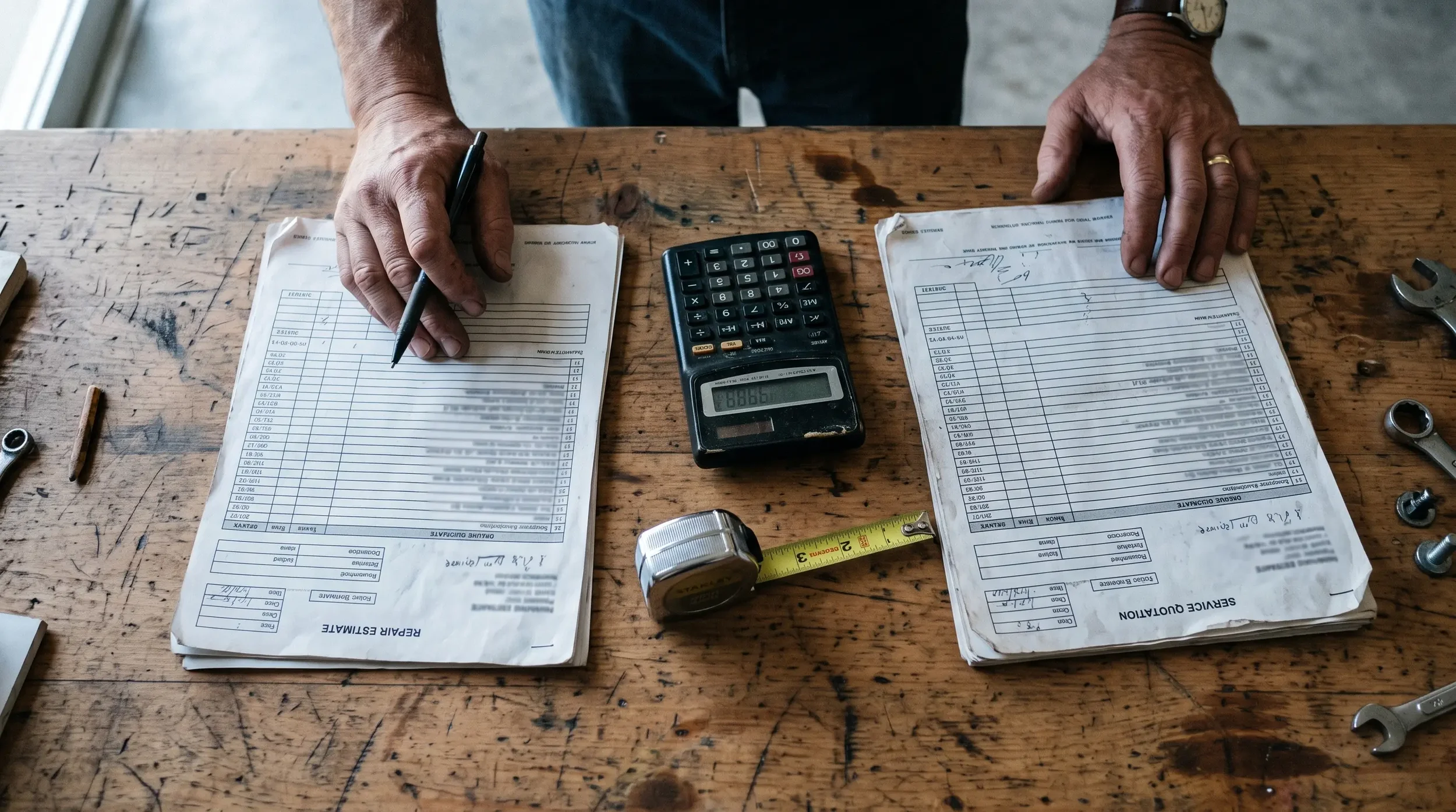
The insurer's repair estimate was $3,100. The body shop's was $7,400. The difference wasn't cosmetic — it was a missing ADAS sensor recalibration, an overlooked structural pull, and a labor rate from 2019 that no shop in the state still charges.
This is what auto insurance claims look like in 2026. Accidents are down. Repair costs are up. And the gap between what insurers pay and what repairs actually cost is wider than it's been in a decade.
At Shoreline Public Adjusters, we handle auto insurance claims and diminished value claims across Florida, Minnesota, and Wisconsin. What we're seeing in real claim files matches what the industry data is now confirming — and it should concern every driver who assumes their insurer will make them whole after a collision.
The Trend That's Costing Drivers Thousands
The core auto insurance claim trend in 2026 is a paradox: fewer accidents, but worse claim outcomes. Collision claim frequency has been falling for three straight years, driven by improved vehicle safety systems and changing driving patterns. But the claims that do get filed are more expensive, more complex, and more likely to be disputed.
According to CCC Intelligent Solutions, which processes over 18 million auto claims annually, the average total cost of repair reached $4,730 in 2024 and continued climbing through 2025. Labor rates rose 3.2% year-over-year. Parts prices jumped over 6% at midyear as tariffs and overseas sourcing costs worked through the supply chain.
📊 By the Numbers: Repairable claims dropped 10.4% through mid-2025, while total loss declarations hit 22.6% of all claims — a record high. Fewer cars are getting fixed. More are getting totaled. Source: CCC Intelligent Solutions Crash Course Q4 2025
Meanwhile, insurers have been posting record profits. The gap between what they collect in premiums and what they pay out in claims has widened. That's not a coincidence — it's a business model. And the policyholder absorbs the difference.
Fewer Claims, Higher Severity: The Numbers
Collision claim frequency fell roughly 2.5% year-over-year into 2025, continuing a steady decline since the post-pandemic spike. Property damage claim frequency dropped below 4% for the first time in years. Bodily injury claims held flat at around 1%.
But severity tells the opposite story. Bodily injury severity spiked 9.2%. Property damage severity climbed 2.5%. The share of low-dollar claims (under $2,000) collapsed from 41.5% in 2019 to just 25.5% by mid-2025. That means the average claim that does get filed is significantly more expensive than it was even three years ago.
Part of this is structural. Consumers are choosing higher deductibles — the $500 deductible dropped 6 percentage points since 2021, while $1,000 deductibles gained nearly 5. Drivers aren't filing small claims anymore because the math doesn't work. The claims that remain are the big ones — and those are exactly the ones insurers fight hardest.
Why ADAS Is Making Every Repair More Expensive
Advanced Driver-Assistance Systems — forward-collision warning, automatic emergency braking, lane-keeping assist, blind-spot monitoring — are now standard on most new vehicles. They're reducing accident frequency. They're also making every repair dramatically more expensive when an accident does happen.
In 2017, only 0.9% of repairable auto claims included an ADAS calibration line item. By 2025, that number was 23%. Nearly 70% of all repairable claims now include a diagnostic scan. A windshield replacement that used to cost $300 can now run $800 or more once you add the forward-facing camera recalibration.
⚠️ What Insurers Won't Tell You: Research shows over 60% of vehicles need ADAS recalibration after a collision, but many insurer estimates still don't include it. If your vehicle's safety systems aren't recalibrated after a repair, they may not function correctly — and your insurer may not have paid for the work.
Here's where it gets worse for policyholders. Many adjusters are still using outdated pricing models that don't account for ADAS complexity. Shops that perform the calibration without pre-authorization from the insurer often get stuck fighting for reimbursement. And drivers who don't know to ask for it leave the shop with malfunctioning safety systems and no idea anything is wrong.
This is one of the most common auto insurance claim trends we see in our files: the estimate looks complete on paper, but it's missing a $400–$800 calibration that the vehicle manufacturer requires after the repair.
The Total Loss Squeeze: How Insurers Use Thresholds Against You
The percentage of auto claims declared a total loss hit a record in 2024 and kept climbing through 2025. There are legitimate reasons — the average U.S. vehicle is now 12.8 years old, and older cars are losing value while repair costs rise. But there's also a strategic reason insurers are totaling more vehicles: it's often cheaper for them.
Every state sets rules for when a vehicle can be declared a total loss. Florida uses an 80% threshold — if repair costs reach 80% of the vehicle's actual cash value, the insurer can total it. Minnesota and Wisconsin use a total loss formula, where repair costs plus salvage value are compared to the car's ACV.
The problem isn't the threshold. The problem is how insurers calculate the ACV. They pull comparable vehicle values from databases that may not reflect your car's actual condition, mileage, options, or local market. A car worth $14,000 in your market might get valued at $11,500 by the insurer's algorithm — and suddenly the repair estimate crosses the total loss threshold.
⚠️ What Insurers Won't Tell You: You have the right to challenge a total loss valuation. Most auto policies include an appraisal clause that allows you to hire an independent appraiser to dispute the insurer's number. Most drivers never invoke it.
If your vehicle was totaled and the payout feels low, it probably is. An independent insurance appraiser can pull true local market comparables, account for your vehicle's actual condition and equipment, and present a defensible valuation that the insurer's algorithm missed.
The Claim Most Drivers Miss: Diminished Value
Your car was in an accident. It got repaired. The insurer paid the shop. You think you're done.
You're not. Even after a perfect repair, your vehicle is now worth less than an identical car that was never in an accident. That loss in market value is called diminished value — and in most states, you have a right to claim it from the at-fault driver's insurer.
This is the most overlooked auto insurance claim in America. Most drivers don't know it exists. Most insurers don't volunteer the information. And without a professional diminished value appraisal, most policyholders have no way to quantify what they're owed.
The amount varies by vehicle. A five-year-old sedan with moderate damage might lose $2,000–$4,000 in market value. A newer luxury or performance vehicle with structural repair can lose $8,000–$15,000 or more. The key is getting an independent appraisal that documents the loss with real market data — not a generic formula.
At Shoreline Public Adjusters, we handle diminished value claims as part of our auto claim services. The process starts with a professional appraisal, backed by comparable sales data and repair documentation, that gives the insurer a number they can't easily dismiss.
How to Fight an Underpaid Auto Insurance Claim
If your auto claim payout doesn't cover the actual cost of repair — or if your total loss valuation seems low — you have options. Here's the process that works.
1. Get an independent repair estimate. Don't accept the insurer's estimate as final. Get a detailed written estimate from a certified body shop that includes all necessary work — ADAS calibrations, OEM parts if applicable, current labor rates, and any structural repairs.
2. Request the insurer's full estimate. Ask for the complete Xactimate or CCC estimate, not just the summary. Compare it line by line against the shop's estimate. The gaps are usually in labor rates, part type (aftermarket vs. OEM), and missing operations like calibration, corrosion protection, or blend panels.
3. Invoke the appraisal clause. If you can't reach agreement, most auto policies allow either party to invoke appraisal. You hire an appraiser, the insurer hires one, and if they can't agree, an umpire decides. This is binding and often produces a significantly higher payout than the insurer's original offer.
4. File a DOI complaint if needed. If the insurer is stonewalling, file a complaint with your state's Department of Insurance. In Florida, that's the Department of Financial Services. In Minnesota, the Department of Commerce. In Wisconsin, the Office of the Commissioner of Insurance.
Dealing with an underpaid auto claim or a total loss valuation that doesn't add up? A free consultation with Shoreline takes 15 minutes and costs you nothing. We handle auto claims, diminished value claims, and insurance appraisals across FL, MN, and WI. Contact Us
A Real Claim: What the Data Looks Like in Practice
A driver in Fort Myers, Florida was rear-ended at a traffic light. The other driver's insurer accepted liability and sent an adjuster who wrote a repair estimate for $4,200 — bumper cover, tail lamp assembly, and a quarter-panel blend.
The body shop's estimate came in at $9,800. The difference: the insurer's estimate used aftermarket parts priced 40% below OEM, excluded the ADAS recalibration required after the bumper-mounted parking sensor was replaced, missed a reinforcement bar that was bent on impact, and used a labor rate $12/hour below the local market average.
The driver contacted Shoreline Public Adjusters. We ordered an independent appraisal, documented the line-item discrepancies, and submitted a demand with the shop's repair plan and OEM position statements requiring calibration. The insurer revised the repair estimate to $8,900 — more than double their original number.
The driver also had a diminished value claim. The vehicle was a 2022 model with 31,000 miles, and our appraiser documented $3,400 in diminished value based on comparable market sales.
The insurer initially offered $500. After Shoreline Public Adjusters submitted the full appraisal report with supporting data, they settled at $2,800.
Total recovery: $11,700 on a claim that started at $4,200.
Common Mistakes After an Auto Insurance Claim
1. Accepting the first estimate without comparison The insurer's initial estimate is a starting point, not a final offer. Always get an independent shop estimate before agreeing to anything.
2. Not asking about ADAS calibration If your vehicle has any driver-assistance features — and most vehicles built after 2018 do — ask the shop specifically whether calibration is needed after the repair. If it is, make sure the insurer is paying for it.
3. Ignoring diminished value If someone else was at fault, you likely have a diminished value claim. The insurer won't remind you. The clock is ticking on your right to file.
4. Signing the total loss check without challenging the valuation Insurers' ACV calculations routinely undervalue vehicles by $1,500–$4,000. An independent appraisal costs a fraction of what you stand to recover.
5. Waiting too long to dispute Every state has deadlines. Florida gives you four years for a property damage claim against a negligent driver. Minnesota gives you six. Wisconsin gives you three for injury and six for property damage under most circumstances. But internal insurer timelines are shorter — and your negotiating position weakens fast.
Frequently Asked Questions About Auto Insurance Claim Trends
Why are auto insurance claims getting harder to settle?
Repair costs are rising faster than insurer estimates keep pace. ADAS technology, parts inflation, and labor rate gaps mean the average claim now has multiple line-item disputes that didn't exist five years ago.
Can I challenge my auto insurance company's repair estimate?
Yes. You can get an independent estimate from a certified shop and submit it to your insurer. If you still can't agree, most policies include an appraisal clause that lets you hire an independent appraiser to resolve the dispute.
What is a diminished value claim and am I eligible?
Diminished value is the loss in your vehicle's market value after an accident, even with a perfect repair. You can file a diminished value claim against the at-fault driver's insurer in most states. You'll need a professional appraisal to document the loss.
How do I know if my total loss valuation is fair?
Compare the insurer's offer against actual local market listings for vehicles matching your year, make, model, mileage, and condition. If the gap is more than $1,000, an independent insurance appraisal is worth pursuing.
Does insurance cover ADAS recalibration after an accident?
It should. If the repair displaced or replaced any ADAS-related components — sensors, cameras, radar modules, windshield — calibration is a necessary part of the repair. If the insurer excluded it from the estimate, push back with the manufacturer's repair procedures.
Should I hire a public adjuster or appraiser for an auto claim?
If the gap between the insurer's estimate and the actual repair cost is more than $2,000, or if your total loss valuation seems low, a professional insurance appraiser typically recovers several times their fee. For diminished value claims, a professional appraisal is effectively required — insurers don't take self-assessed claims seriously.
When to Bring In an Insurance Appraiser
Auto insurance claim trends in 2026 all point in the same direction: insurers are paying less per claim while repair costs climb. The gap is structural, and it's not closing on its own.
If your repair estimate doesn't cover the work your shop says is needed, if your car was totaled and the payout seems low, or if you were hit by another driver and no one mentioned diminished value — those are the moments where an independent appraiser changes the outcome.
Shoreline Public Adjusters handles auto claims, total loss disputes, diminished value claims, and insurance appraisals across Florida, Minnesota, and Wisconsin. We work for the policyholder, never the insurer. And we don't collect a fee unless you do.
Contact Us for a free claim review.
You may also find these helpful:
- Diminished Value Claims & Auto Insurance
- Insurance Appraiser Services
- What Do Public Adjusters Do? Do I Need One?
Shoreline Public Adjusters, LLC is licensed in Florida (FL G199012), Minnesota (MN 40962416), and Wisconsin (WI 21156868).
Shoreline Public Adjusters, LLC
780 Fifth Avenue South
Suite #200
Naples, FL 34102
Email: hello@teamshoreline.com
Phone: 954-546-1899
Fax: 239-778-9889